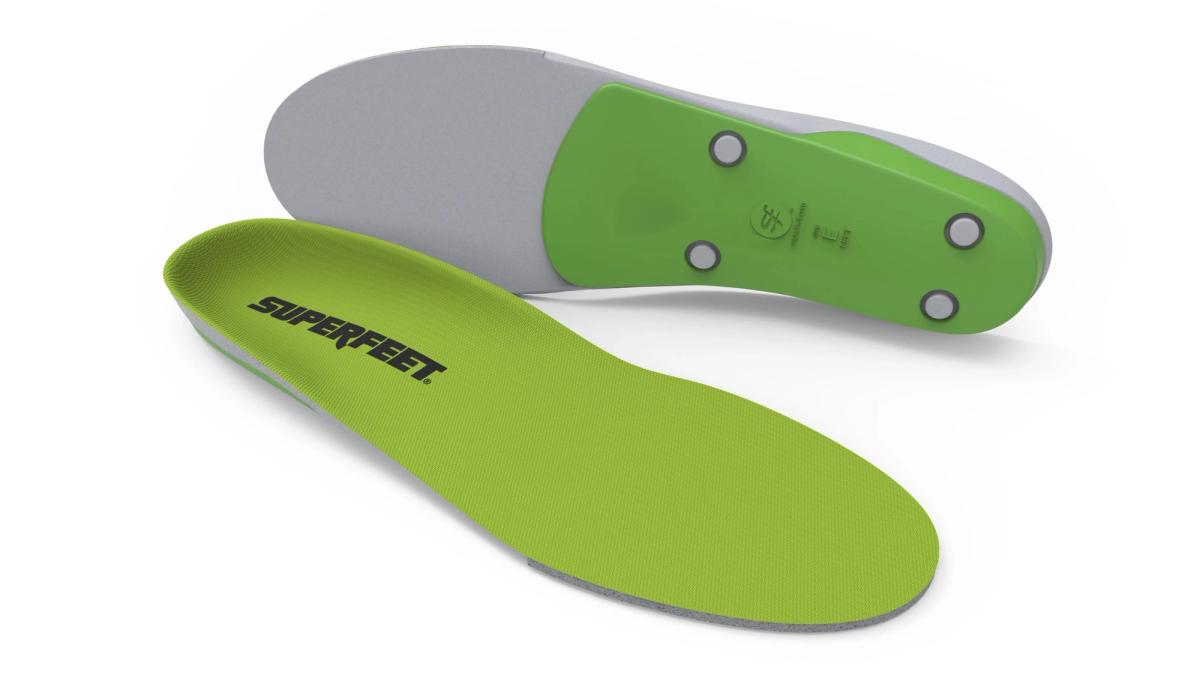
What Is Superfeet
Superfeet makes shaped inserts that add arch support and cushioning inside your shoes. Turn one over and you'll see the structured heel cup beneath the cushioning. The green one you've probably seen is now called All-Purpose Support High Arch, and there are medium- and low-arch versions too.
All three list at $59.99 a pair. Casual Pain Relief, which Superfeet markets for plantar fasciitis and high-arch pain, costs $69.99. The newer ME3D Personalized Insoles start at $109.99 and are shaped from a scan of your own feet. You can get that scan with an iPhone 13 or newer, or on an in-store device.
With a painful foot condition, the support and cushioning under your foot are the features that matter medically. Our insoles and orthotics eligibility guide covers the whole category. Here, it's just Superfeet's over-the-counter inserts.
Why Superfeet Qualifies for HSA/FSA
Superfeet insoles qualify when a licensed provider connects them to your health condition in a Letter of Medical Necessity. The letter explains how the inserts help you manage that condition, which is why HSA or FSA money can pay for them.
IRS Publication 502 includes the “diagnosis, cure, mitigation, treatment, or prevention of disease” in its definition of medical expenses. With insoles, the link is arch support, cushioning and spreading pressure more evenly. These four are some of the common foot conditions a provider can document:
- Plantar fasciitis. Mayo Clinic says store-bought or custom-made arch supports can help distribute pressure more evenly across your feet. A 135-person trial in Archives of Internal Medicine found small improvements in foot function after three months with prefabricated inserts compared with sham inserts. Superfeet markets Casual Pain Relief for this condition.
- Painful flat feet. MedlinePlus lists store-bought arch supports among the options that may help painful flexible flat feet. For flat feet, Superfeet's FAQ points to its more flexible shapes, such as All-Purpose Support Low Arch.
- Painful high arches. Cleveland Clinic explains that arch supports can help people with high arches and lists over-the-counter inserts as an option for mild symptoms. Superfeet's Casual Pain Relief names high-arch pain right in its description.
- Metatarsalgia. This is pain in the ball of your foot. Mayo Clinic says arch supports might lessen stress on the metatarsal bones. Superfeet describes pressure redistribution as the reason for using its insoles for forefoot pain.
Have a different foot condition? If your provider connects Superfeet to that condition in your letter, the insoles qualify all the same.
How to Get Superfeet Covered With a Letter of Medical Necessity
There are two ways to get a Letter of Medical Necessity for your Superfeet insoles:
- Through Crates, typically in under 24 hours. The online health assessment about your foot condition takes 2 to 3 minutes. A licensed provider reviews it, and if you qualify, your letter is issued for the Superfeet insoles. The letter covers a full 12 months and renews each year.
- Through your own doctor, a few days to a few weeks. Book a visit and ask for a letter so you can use HSA/FSA funds for the insoles; you may pay a copay. Ask your provider to document how arch-support insoles help prevent, manage, or reverse your condition. Check that the letter is signed and dated.
How to Buy Superfeet With HSA/FSA Funds
Letter first, insoles second: buy Superfeet wherever you like, then get your money back. Our HSA vs. FSA guide explains the difference between the two accounts.
- Get your Letter of Medical Necessity first. Go through Crates or your own doctor, as described above.
- Buy Superfeet anywhere. Pay with your personal card, online or in store, and keep the itemized receipt showing the insoles and amount paid.
- Get your funds back. After buying your pair, you can have Crates file the claim using one-click reimbursement or upload the letter and receipt yourself; for an HSA purchase, keep both documents with your tax records.
Heads up: Superfeet.com doesn't take HSA/FSA payments directly right now, so use your own card and get reimbursed as above. Already bought a pair? It's not too late to get a letter. Which purchases you can file is a question of your account dates and the letter, and for your next pair, get the letter first.
Which Superfeet Insoles Qualify
Superfeet's over-the-counter insoles qualify with a letter for your health condition, the personalized ME3D line included. Pick the model that suits your feet; eligibility comes from the medical purpose your letter documents, not the model. Here are current examples:
| Superfeet insole | What it is | Regular U.S. list price per pair | HSA/FSA eligibility |
|---|---|---|---|
| All-Purpose Support High Arch | High-arch support with a sculpted heel cup | $59.99 | Yes, with an LMN |
| All-Purpose Support Medium Arch | Structured medium-arch support for everyday footwear | $59.99 | Yes, with an LMN |
| All-Purpose Support Low Arch | Low-arch support for slimmer footwear | $59.99 | Yes, with an LMN |
| Casual Pain Relief | Cushioned insert with a removable heel stabilizer | $69.99 | Yes, with an LMN |
| Hike Support | Structured support for hiking footwear | $59.99 | Yes, with an LMN |
| ME3D Personalized Insoles | Scan-based insert with two foam options | $109.99–$139.99 | Yes, with an LMN |
Regular list prices checked October 18, 2026, on Superfeet's own site, including its Casual Pain Relief, Hike Support and ME3D pages.
ME3D's scan personalizes the insert, and you order it from your phone or in a store. APMA counts the “custom-made” insoles you can order online or at retail stores as shoe inserts, not custom orthotics, which are “prescribed by a doctor and crafted for your specific foot.” So ME3D follows the same LMN route as the other Superfeet inserts here.
Pre-tax HSA or FSA dollars can shave up to 30% off the real cost. With combined taxes at 30%, a $59.99 pair saves you about $18 in taxes. Your actual savings depend on your tax rates and how you fund the account.
Buying footwear too? Our shoe eligibility guide explains how shoes qualify for a health condition.