Are Shoes HSA or FSA Eligible?
Yes, and the verdict comes from a definition, not a list. IRS Publication 502 defines medical expenses as "the costs of diagnosis, cure, mitigation, treatment, or prevention of disease and for the purpose of affecting any part or function of the body." Nothing in it sorts footwear into an eligible column and an excluded one. What decides the question is purpose: a pair bought for style is personal spending; the identical pair bought to help prevent or manage a specific named condition sits inside the definition. Administrators call items like this dual-purpose, and documentation resolves the ambiguity: a Letter of Medical Necessity (LMN) from a licensed provider recording your condition and the footwear's role in managing it. An LMN is not a prescription, and no shoe is ever "FSA approved" on its own; the letter approves the purchase, not the brand. The rule works identically for HSAs and FSAs (see our HSA vs FSA guide), while Limited-Purpose and Dependent-Care FSA funds never reach footwear at all. And the paperwork is not uniform: two whole tiers below need no letter at all.
The 5 Tiers: What Shoes, Socks, and Insoles Actually Qualify
Footwear splits into five tiers: standard and orthopedic-labeled shoes need an LMN, diabetic shoes belong to a different benefit entirely, compression socks split by pressure rating, and insoles need only a receipt.
| Tier | What you're buying | LMN required? | Where the rule comes from |
|---|---|---|---|
| A | Standard athletic and everyday shoes | Yes, for a specific named condition | IRS Publication 502's medical-care definition |
| B | Shoes labeled "orthopedic" | Yes, same as Tier A; the label doesn't change the paperwork | FSAFEDS lists them at the LMN tier |
| C | Diabetic and therapeutic shoes | Medicare pays first; your account covers what it doesn't | Medicare Part B plus IRS Publication 969 |
| D | Compression socks and stockings | Split by pressure: medical-grade needs no letter, mild does | FSAFEDS and other published eligibility lists |
| E | Insoles, orthotics, and arch supports | No; a detailed receipt is enough | FSAFEDS and other published eligibility lists |
Tiers A and B are one rule wearing two labels. An "orthopedic" tag describes construction and marketing, not tax standing: FSAFEDS lists orthopedic shoes at the same letter-required tier as every other dual-purpose item.
Tier C starts with insurance and ends with your account. Medicare Part B covers therapeutic shoes and inserts for people with diabetes and severe diabetes-related foot disease, one pair per calendar year, certified by the doctor managing the diabetes. Part B pays its share, and the share it does not pay is exactly what your HSA or FSA is for: IRS Publication 969 defines qualified medical expenses as amounts "not compensated for by insurance or otherwise," which covers your Part B deductible and the 20 percent coinsurance on those same shoes. If you are not on Medicare and you buy therapeutic footwear out of pocket, you are back in the Tier A and B letter path. Ask your administrator how it wants the Medicare paperwork submitted alongside the receipt.
Tier D carries real clinical weight. Cleveland Clinic notes compression stockings for varicose veins "squeeze your lower legs to improve circulation," and says of chronic venous insufficiency that "compression therapy helps ease swelling and discomfort in your legs." Its edema guidance recommends compression socks to keep fluid from building up, and Mayo Clinic gives pregnancy swelling the same advice: "Wear compression stockings." The paperwork follows the pressure rating. FSAFEDS, the federal employees' plan, treats compression socks as directly eligible starting at 20-30 mmHg, with a detailed receipt enough, and requires a Letter of Medical Necessity only at milder 10-20 mmHg pressures. Some eligibility lists set their own bar higher, at 30-40 mmHg and above. There is no single number every administrator agrees on, so check your plan's own bar before assuming a pair qualifies without a letter.
Tier E is the one everyone overcomplicates. FSAFEDS lists orthotics and orthopedic inserts as eligible with a detailed receipt and no additional document, and other published eligibility lists say the same for insoles and arch supports. No letter, no assessment: keep the itemized receipt and file it.
What Conditions Qualify Shoes for an LMN?
The letter behind tiers A and B needs a named condition. Six clear the medical bar, each with published clinical guidance a provider can point to; the roster gates the letter tiers only, since medical-grade compression socks and insoles never depend on it.
- Plantar fasciitis, the stabbing heel pain that greets your first steps of the morning. Cleveland Clinic identifies it as the most common cause of heel pain, and its self-care advice starts with footwear: "Wear sturdy, well-cushioned shoes," with unsupportive flats explicitly off the list.
- Severe overpronation and flat feet, the inward ankle roll that leaves arches aching. Cleveland Clinic's running-shoe guidance notes that "some runners benefit from stability features that help control excessive inward rolling (overpronation)," the job stability shoes exist for.
- Achilles tendinitis, the stiff, burning cord above your heel. Cleveland Clinic recommends "supportive shoes, heel lifts or custom orthotics" for managing it, and well-fitted supportive shoes to keep it from coming back.
- Knee osteoarthritis, knees that punish every step. A double-blinded three-month trial published in Sensors found that a cushioned sport shoe "alleviates pain and improves functionality compared to a regular shoe" in people with knee OA.
- Bunions, the bony bump that forces the big toe inward. Mayo Clinic puts footwear first among its non-surgical options: "Wear roomy, comfortable shoes that give your toes plenty of space."
- Metatarsalgia, the bruised, burning ball of the foot. Mayo Clinic says self-care measures "might be all you need," beginning with rest, different shoes, and arch supports.
How to Get Your Shoes, Compression Socks, or Insoles Covered by HSA or FSA
Which steps you need depends on the tier. Shoes in tiers A and B start with the letter. Medical-grade compression socks and insoles start, and end, with a receipt.
The letter-first path for shoes and mild compression
For any shoe purchase, and for compression socks below your plan's medical-grade bar, the sequence is fixed: letter first, purchase second. Your LMN must be dated before your purchase, and it stays valid for 12 months. Two paths get you one.
Option 1: Through Your Doctor
If you already see a provider for your condition, they can write the letter:
- Book a visit and say you want to buy a pair of shoes with HSA/FSA funds
- Ask them to document how it helps prevent, manage, or reverse your condition
- Make sure the letter is signed and dated
- Timeline: same day to a couple of weeks, and you may owe a copay
Option 2: Through Crates
Crates streamlines the same process online:
- Complete a short health assessment, about 2 to 3 minutes
- A licensed provider reviews it, typically within 24 to 48 hours
- If you qualify, your Letter of Medical Necessity is issued for the shoes
- Buy the shoes with your personal card at any retailer
- Submit with one-click reimbursement to process your HSA/FSA claim
- Your LMN stays valid for 12 months and renews each year
You do not need a pharmacy prescription; the letter itself is what establishes eligibility.
The receipt path for medical-grade compression socks and insoles
Tiers D and E skip everything above. If your compression socks sit at your plan's qualifying pressure, or you are buying insoles, orthotics, or arch supports, there is no letter to request. Buy the item, keep the detailed itemized receipt, and submit it; no provider visit was ever part of the process.
One boundary keeps the aisle honest: checkout behavior is a payment detail, never an eligibility ruling. Some shoe retailers display eligibility badges or run a health questionnaire at checkout; others decline benefits cards outright because they are not coded as medical merchants. None of it moves the line: eligibility lives in your condition and the letter documenting it, or, for tiers D and E, the receipt, and a checkout page can neither grant nor revoke it.
So buy wherever you normally would, Amazon, a brand's site, or the local running store, paid with your personal card. Submit the letter and receipt to your administrator, or use Crates one-click reimbursement to file the claim for you. Women's and men's versions of any model carry the same answer at every step; the verdict follows the condition and the paperwork, never the gender on the label.
Which Shoe Brands Are HSA or FSA Eligible?
The brand on the box never decides eligibility; the Letter of Medical Necessity does, and for socks and insoles the receipt does. Every shoe brand people ask about qualifies the same way, so the table below is short on suspense.
| Brand | Known for | Eligible? |
|---|---|---|
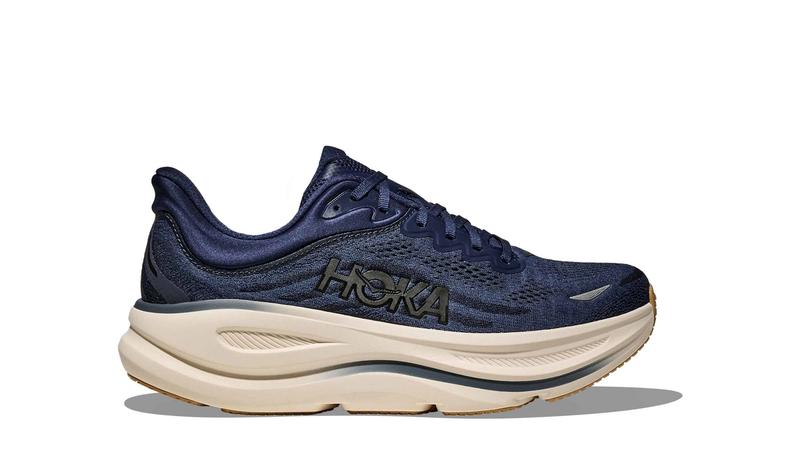
| HOKA | Maximalist-cushion running and everyday shoes | Yes, with an LMN for a qualifying condition |
| On | Lightweight cushioned running shoes (the Cloud line) | Yes, with an LMN for a qualifying condition |
| Brooks | Running shoes, including stability lines built for overpronation | Yes, with an LMN for a qualifying condition |
HOKA earned its own page: our full HOKA eligibility guide covers models, prices, and condition mapping in depth. Orthofeet, Nike, New Balance, Altra, Clove, and every other brand work exactly the same way: get the letter for your condition, then buy the pair that fits. Crates handles the letter identically for every brand.
How Much Can You Save?
The savings are pre-tax arithmetic. Say a provider documents your plantar fasciitis in an LMN, you replace supportive shoes twice a year at about $150 a pair, and you keep three pairs of medical-grade compression socks in rotation, about $60 total. That is $360 spent from pre-tax dollars; at a combined rate near 30% (federal, state, and payroll taxes together), roughly $108 stays with you. Prices are approximate, checked against current retail listings in July 2026.
| Purchase | Price | 22% bracket | 32% bracket | 37% bracket |
|---|---|---|---|---|
| Athletic or orthopedic shoes (Tier A or B) | ~$150 | ~$33 | ~$48 | ~$56 |
| Medical-grade compression socks, 3 pairs (Tier D) | ~$60 | ~$13 | ~$19 | ~$22 |
| Orthotic insoles or arch supports (Tier E) | ~$55 | ~$12 | ~$18 | ~$20 |
Diabetic and therapeutic shoes are missing on purpose: they're primarily a Medicare Part B benefit rather than a typical HSA/FSA out-of-pocket purchase, so the pre-tax math above doesn't describe them. The share Medicare doesn't pay is a different story, and your account can cover it.
What Doesn't Qualify
- Fashion and comfort-only shoes with nothing documented. A pair bought because it looks good or feels nice, with no named condition and no letter, is personal spending. The carve-out cuts both ways: general comfort with no condition is out, while the identical pair tied to a named, recognized condition and documented in an LMN is in.
- Mild or fashion compression bought bare. Below your plan's medical-grade bar, compression socks fall back into dual-purpose territory and need a letter naming a condition such as edema or chronic venous insufficiency. Shapewear-style compression for generally tired legs, with no condition and no letter, does not qualify.
- Purely decorative shoe accessories. Items with no orthotic or arch-support function fall outside the direct-eligible tier. FSAFEDS lists orthotics and orthopedic inserts by name, and the entry is broad, but it covers functional insoles, orthotics, and arch supports rather than decoration.
- LPFSA and DCFSA funds, under every tier. Limited-Purpose FSAs cover dental and vision only, and Dependent-Care FSAs cover childcare. Neither ever reaches shoes, compression socks, or insoles.