Your HSA or FSA pays for medical care. Publication 502 defines it: “Medical expenses are the costs of diagnosis, cure, mitigation, treatment, or prevention of disease and for the purpose of affecting any part or function of the body.”
A sauna, gym membership, air purifier or tens of thousands of other wellness products can serve a health condition as well as everyday comfort. The letter records the medical purpose a licensed provider confirms for your particular purchase.
Get Your Letter of Medical Necessity Online
You can get a Letter of Medical Necessity online: a licensed provider reviews your health information remotely, with no office visit. At Crates, that starts with a 2 to 3 minute health assessment, and you see your result before paying. If our licensed medical team approves your request, your letter is issued typically in under 24 hours.
Here is what you get:
- Your letter, signed by a licensed medical professional.
- We file the claim for you.
- Valid 12 months. Recurring payments stay covered.
- Your result before you pay.
- No letter, no charge.
- $39 once, no subscription.
Your letter records our licensed medical team's recommendation for your specific purchase, including what it covers and for how long.
What Is a Letter of Medical Necessity?
A Letter of Medical Necessity is a provider's written explanation of why a particular purchase serves your health condition. It names the item, explains the medical reasoning and records the provider's recommendation, so someone reviewing the expense can understand its purpose without guessing from a receipt.
Publication 502 sets the test: “Medical care expenses must be primarily to alleviate or prevent a physical or mental disability or illness. They don’t include expenses that are merely beneficial to general health, such as vitamins or a vacation.” The IRS's nutrition and wellness FAQs apply that distinction to wellness purchases, including a sole purpose test for gym memberships.
Lively, an HSA and FSA administrator, uses the term dual-purpose on its form for this distinction. The letter documents your medical purpose. There is no master list of conditions for a letter: the provider judges the pairing, such as asthma and an air purifier, or chronic back pain and a supportive mattress.
One letter can document the purchase for either account. What you do with it differs: you keep HSA records and provide documentation for an FSA claim, as the account-handling section below explains.
Who Can Write a Letter of Medical Necessity
A licensed healthcare provider who reviews your health information and signs the recommendation can write your letter. Further, an HSA and FSA administrator, defines it this way: “Letter of medical necessity - This is a letter that must be signed by your doctor or eligible licensed health care provider to certify that the item or service is medically necessary.”
An online letter has the same foundation: a licensed provider performs the review. MedlinePlus explains telehealth as health care provided from a distance, including sending health information electronically for review.
The reviewer checks your condition, whether the item fits it, and whether the proposed use and duration make sense. If the connection does not hold, they decline. You can explain your symptoms and the purchase you have in mind; the clinical recommendation and signature come from the reviewing provider. A letter you sign yourself does not supply that independent review.
A Letter of Medical Necessity Is Not a Prescription
A prescription is an order for medication. Further defines one as “a signed written order, or an oral order reduced to writing, given by a practitioner licensed to prescribe drugs”. Its definition also specifies the patient, drug, directions and prescriber's details.
A Letter of Medical Necessity dispenses nothing. You buy the item wherever you choose, and the letter explains its medical purpose. Together, the letter and itemized receipt show what the purchase was for and what you paid.
Is a Letter of Medical Necessity for Insurance the Same Thing?
No. An insurance letter of medical necessity is a different document with a different reader: your provider writes to your insurer, usually inside a prior-authorization or appeal process, to justify coverage of care or a medication under your policy.
This page covers the HSA/FSA version, which documents the medical purpose of a purchase you make yourself. If an insurer asked you for documentation, that request runs through your insurer and your provider's office.
What a Letter of Medical Necessity Includes
A complete Letter of Medical Necessity identifies the patient, the provider, the purchase and the medical reason for it. It also states the period covered and carries the provider's signature, giving the reviewer the facts needed to connect your health condition with the expense and its dates.
The parts appear in this order in our sample:
- Provider details: name, license and contact information identify the clinician responsible for the recommendation and make that clinician reachable.
- Date: the issue date establishes when the provider documented the recommendation.
- Patient and account holder: both names, when different, connect the person receiving care with the account used to pay.
- Health condition: the named condition, with an ICD-10 code when included, identifies the medical need.
- Item or service: the specific purchase and how it is used connect the recommendation to the expense.
- Clinical rationale: the provider explains why the item fits this patient's condition and needs.
- Period covered: start and end dates show the span of the recommendation.
- Medical-purpose statement: the letter states that the purchase is for the condition, rather than general health or appearance.
- Signature and date: the provider signs and dates the recommendation.
Administrators' forms can add fields such as employer, member ID or denied-claim numbers, helping match the recommendation to your account or claim. The directory below links those forms and their particular requirements.
Letter of Medical Necessity Example
This sample uses our real letter, in the format members receive when their administrator has no form of its own. It shows a gym membership letter for high blood pressure, with a made-up patient. We have shortened it to fit and hidden the patient's name and the provider's details.
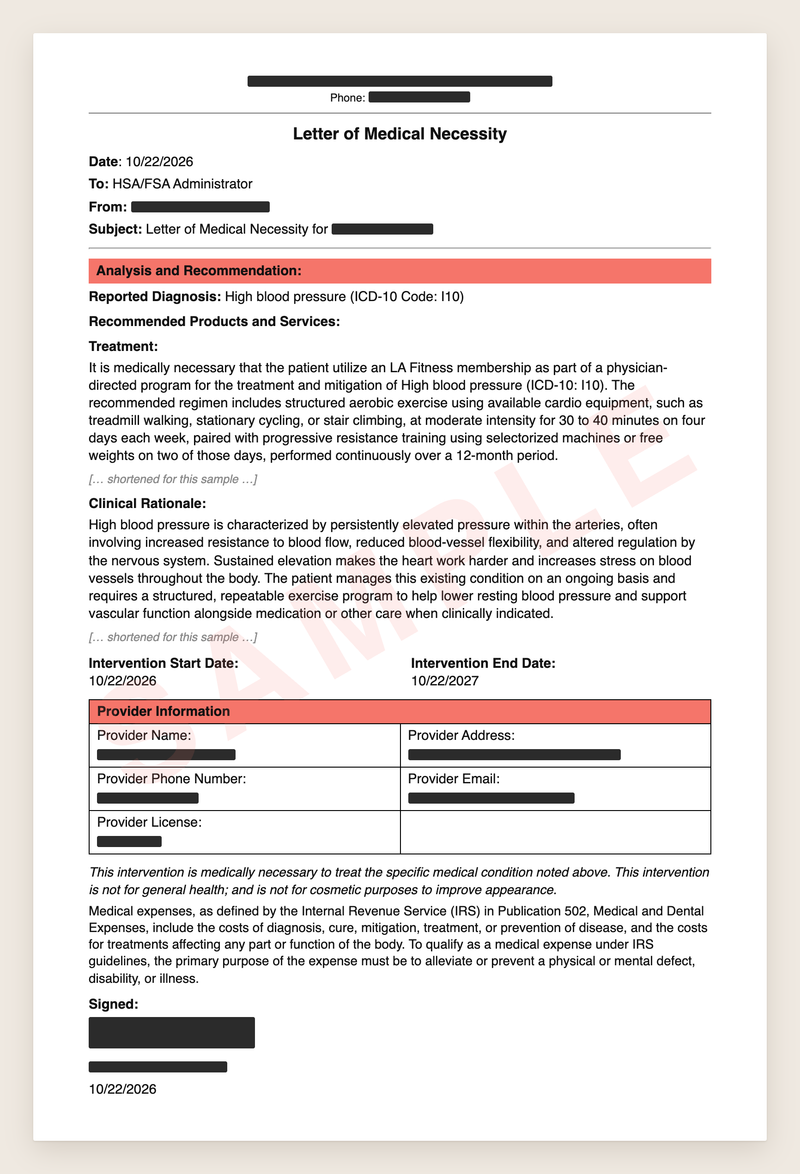
The condition, recommended service and clinical rationale correspond to the parts above. The coverage dates and medical-purpose statement show what the recommendation covers.
How to Get a Letter of Medical Necessity
There are two ways to get your letter: online through Crates, typically in under 24 hours, or through your own doctor, a few days to a few weeks. Both involve a licensed provider reviewing your health information and documenting the medical reason for the purchase.
| What to expect | Online through Crates | Through your own doctor |
|---|---|---|
| How you start | A 2 to 3 minute health assessment | Book a visit to discuss the purchase and your condition |
| Who reviews your request | Our licensed medical team | Your own doctor |
| Time to your letter | Typically in under 24 hours, if approved | A few days to a few weeks |
| Cost | $39 once, no subscription; no letter, no charge | A visit copay may apply |
Online Through Crates
Crates takes your request from product to licensed review online. You describe what you want covered and answer a few health questions, then see your result before deciding to pay.
- Name your product. Tell us the product or service you want a letter for, so the request concerns the purchase you have in mind.
- Check your eligibility. Answer the health questions about your request. The assessment takes 2 to 3 minutes.
- Get your result. See it first, then pay for your letter: $39 once.
- Get your letter. Our licensed medical team reviews every request. If approved, your signed letter is issued typically in under 24 hours.
If the medical team declines your request, you get a full refund: no letter, no charge. Add more products after your first letter, or choose unlimited letters for the year. Each request still needs the medical connection the provider reviews.
Through Your Own Doctor
Your own doctor can write the letter after reviewing the purchase and your condition. Allow a few days to a few weeks for the visit and paperwork.
- Book a visit.
- Say you want to buy the item with HSA or FSA funds.
- Ask them to document how it helps prevent, manage, or reverse your condition.
- Make sure the letter is signed and dated.
- You may owe a copay for the visit.
For example, you might ask: I'm managing asthma and buying a HEPA air purifier to help with it. Could you write a letter of medical necessity for my HSA records? Ask that it include the parts listed above, from the health condition to the clinical reasoning and signature.
With Your Administrator's Form
The 12 administrators below publish forms or instructions your provider can use. FSAFEDS accepts a provider's own letter with the required information; BASIC's form says the same.
For several major administrators, including HealthEquity, Optum, Fidelity, HSA Bank, WEX and FSAFEDS, Crates can issue your letter on the administrator's own form. That applies when you choose your administrator from our list. If you type in a name instead, you receive our standard letter, shown in the sample above. In either format, the provider completes the medical recommendation.
What a Letter of Medical Necessity Costs
Through Crates, it is $39 once, no subscription. You see your result before you pay, and if the medical team declines, no letter, no charge.
Through your own doctor, the visit may carry a copay. The free letters you find online are administrators' blank forms: free paperwork that a provider still needs to complete and sign. Downloading a form gives you the fields to use; the provider's review supplies the recommendation. If you already have a doctor managing your condition, that visit is a way to discuss the purchase and request the documentation together.
Will My HSA or FSA Accept My Letter?
Usually, yes: with proper documentation, denials are rare, and the letter is what helps you get reimbursed. For an FSA claim, your administrator makes the final call and looks for a complete letter from a licensed provider. For an HSA, you keep the documentation with your records.
The forms show what reviewers look for: the provider, the health condition, the item matched to the receipt and dates within the covered period. The rationale connects those details, explaining why this purchase serves your condition. A signed letter gives the reviewer the provider's medical explanation alongside the transaction details on your receipt.
At Crates, we work with all the major administrators, including HealthEquity, Optum, Fidelity, HSA Bank, WEX and FSAFEDS.
Official Letter Forms From 12 Administrators
Here are the official forms and instructions from 12 administrators, with the differences each publishes:
- HealthEquity: Its FSA/HRA form covers up to 12 months, renewed yearly; its separate HSA form stays with your records, not HealthEquity.
- Optum: Its letter form lasts one year, requires annual renewal and accompanies your claim.
- Fidelity: Its NetBenefits reimbursement account guide lists a Medical Necessity Form for FSA and HRA claims.
- HSA Bank: Its Medical Necessity Form has spaces for denied-claim numbers so those claims can be reprocessed.
- WEX: Its Mercer Marketplace 365 form covers services under Mercer Marketplace 365 plans and asks for a separate doctor's note for products.
- FSAFEDS: Its letter form allows “lifetime” as the duration for a chronic condition.
- Further: Its letter form asks for exact treatment start and end dates.
- Lively: Its help page and attached form allow “lifetime” on the form for a chronic condition.
- Inspira Financial (formerly PayFlex): Its letter form covers one year; a new treatment period needs a new letter.
- Navia: Its letter form includes a separate section for gym and health club memberships.
- BASIC: Its letter form accepts a provider's own letter with the same information, needs a copy with each claim and must be renewed each plan year.
- Chard Snyder: Its Medical Necessity Form is needed once per diagnosis and treatment; products need a separate doctor's note.
Common Mistakes & Why Letters Get Rejected
A letter can be rejected when its provider details, medical reasoning or dates leave the expense unsupported. A receipt mismatch or the wrong account can also cause a problem, so the reason given with a denial tells you which part of the documentation needs attention.
- Missing provider details: a missing signature or license number leaves the clinician's recommendation unverifiable.
- Generic wellness reasoning: a general wish for better health gives no specific condition or medical purpose to review.
- A purchase outside the letter's dates: the coverage period needs to include the expense you are documenting.
- The wrong account: a limited-purpose FSA usually covers only dental and vision care, and a letter does not widen that coverage. A dependent care FSA pays for dependent care.
- A receipt that does not match: the itemized receipt needs to identify the item named in the letter and its cost.
If the denial identifies a documentation problem, fix the flagged item and resubmit with the signed letter and itemized receipt.
How to Use a Letter of Medical Necessity for an HSA or FSA
A Letter of Medical Necessity supports the medical purpose of your purchase for either account, but HSAs and FSAs handle the paperwork differently. Your letter and itemized receipt work together: the letter explains the medical reason, while the receipt identifies the item and what you paid.
| Account | What you do with your letter |
|---|---|
| HSA | Keep the letter and itemized receipt with your tax records; do not send them with your tax return. |
| FSA | Upload the letter and receipt yourself with your claim, or Crates one-click reimbursement files the claim for you. Your administrator makes the final call. |
For an HSA: Publication 969 states: “You must keep records sufficient to show that: The distributions were exclusively to pay or reimburse qualified medical expenses, The qualified medical expenses hadn’t been previously paid or reimbursed from another source, and The medical expenses hadn’t been taken as an itemized deduction in any year.”
It adds: “Don’t send these records with your tax return. Keep them with your tax records.” HealthEquity's HSA form likewise says not to send it to HealthEquity.
Account timing matters: “For HSA purposes, expenses incurred before you establish your HSA aren’t qualified medical expenses.” Keep records until the tax assessment period ends, generally three years after filing the return, with longer periods in some cases (Topic No. 305).
For an FSA: Publication 969 says: “You must provide the health FSA with a written statement from an independent third party stating that the medical expense has been incurred and the amount of the expense.” You also confirm the expense was not reimbursed elsewhere. Some FSA card purchases meet substantiation requirements without paperwork.
Our HSA vs FSA guide explains the account differences. For other account questions, explore HSA and FSA basics.
How Long Is a Letter of Medical Necessity Good For?
A Letter of Medical Necessity covers the period it states. A Crates letter is valid 12 months, with recurring payments covered under the same letter; you renew it when it ends. Other administrators' forms specify their own periods, so a year is not a universal expiry.
| Letter or form | How long it covers |
|---|---|
| Crates letter | Valid 12 months; recurring payments stay covered; renew it when it ends. |
| HealthEquity FSA/HRA form | Up to 12 months; requires a new letter each year. |
| Optum | One year; requires annual renewal. |
| Inspira Financial | One year; a new treatment period needs a new letter. |
| BASIC | Requires renewal each plan year. |
| FSAFEDS | Allows “lifetime” for a chronic condition. |
| Lively | Allows “lifetime” for a chronic condition. |
| Chard Snyder | Once per specified diagnosis and treatment. |
The period belongs to the documented recommendation and the administrator's requirements, rather than to the words Letter of Medical Necessity alone.
If You Already Bought It
For Crates, a purchase made today is covered by a letter issued today. We cannot date a letter in the past, so a purchase before today is not covered by a new Crates letter. It covers purchases from today for 12 months; if you pay monthly, your next payment counts.
HSA expenses must follow account establishment. For an FSA, Publication 969 says: “Generally, distributions from a health FSA must be paid only to reimburse you for qualified medical expenses you incurred during the period of coverage.”
If your administrator denied a claim because no letter was on file, and the purchase falls within your letter's dates, HSA Bank, WEX's Mercer Marketplace 365 form and Chard Snyder have fields for the claim numbers so those claims can be reprocessed. Get your letter before you buy.
What Commonly Needs a Letter of Medical Necessity
Purchases that help prevent, manage, or reverse a health condition but also have everyday uses commonly need a letter documenting their medical purpose. That includes spending on gyms and fitness, equipment, wearables, sleep, nutrition and recovery, with the specific condition and purchase explained by your provider.
Wearables. Our Apple Watch article covers that device; the Oura Ring article explains the ring. If you use WHOOP, read its guide. We also cover Garmin watches, while the Fitbit article addresses that range. The fitness tracker guide brings the category together.
Fitness. Start with gym memberships if you pay for a place to exercise. For a home setup, read about workout equipment. The guide to standing desks covers the workspace purchase.
Recovery. Our guides cover saunas for heat-based spending, and red light therapy for light-based devices.
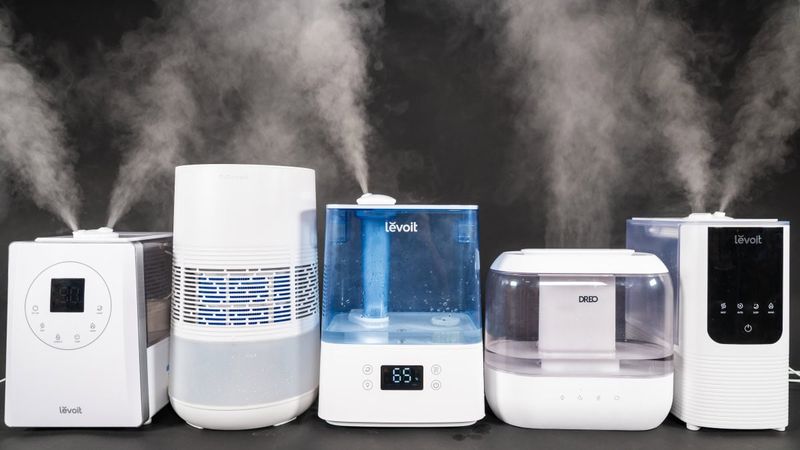
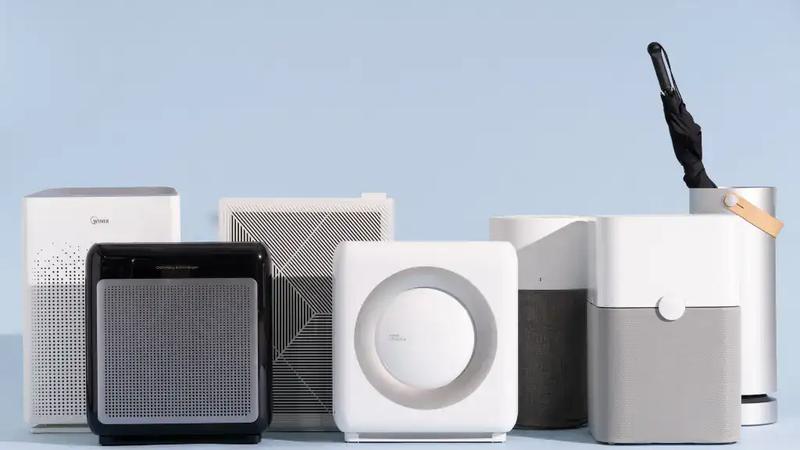
Home environment. Explore air purifiers for filtration or humidifiers for moisture.
Sleep. For your bed, read our guide to mattresses.
Nutrition. The vitamins and supplements guide explains the category, and the article on probiotics covers that specific purchase.
Over-the-counter drugs need no letter: since the CARES Act of March 2020, they are eligible without a prescription. Our FSA eligible items list shows which purchases need a letter and which do not.
Each product guide explains the health conditions a provider can document for that purchase, so you can understand the medical connection before starting your request.
Buying it soon? Get your letter first.