Why Pilates Reformers Qualify for HSA/FSA
A reformer's sliding carriage and adjustable resistance let you practice controlled movement and build strength at home. When that exercise helps manage a health condition, your provider can connect the machine to your medical care in a Letter of Medical Necessity.
IRS Publication 502 includes expenses for the "diagnosis, cure, mitigation, treatment, or prevention of disease." Its Personal Use Items rule covers an everyday item when it is "used primarily to prevent or alleviate a physical or mental disability or illness." For a home reformer, the letter records that medical purpose: why using the machine helps your particular condition.
Buying a reformer just to try a new workout is a personal expense. The same machine is eligible with an LMN when its primary use is managing a health condition, such as chronic low back pain.
This guide covers the reformer you buy for your home. If you want to attend studio sessions instead, our Club Pilates eligibility guide covers that purchase.
Which Health Conditions Qualify for a Pilates Reformer?
Chronic low back pain has direct equipment-based Pilates research behind it, including a comparison with mat Pilates. Other studies have tested reformers for neck pain, multiple sclerosis, and obesity. These are examples of conditions a provider can document, with the movements and resistance adapted to your care.
- Chronic low back pain. The carriage and resistance provide a way to practice trunk control and strengthening. An 86-person trial in Physical Therapy found that equipment-based Pilates improved disability and fear of movement more than mat Pilates at six months, while pain outcomes were similar. A 2022 network meta-analysis of 118 trials ranked Pilates the exercise most likely to reduce chronic low back pain and disability.
- Chronic neck pain. Reformer exercises combine controlled resistance with trunk stabilization, giving you a way to work on movement as part of a neck-pain program. A BMC Psychology trial in 54 women with chronic low back or neck pain found improvements in pain and fear of movement after six weeks of reformer exercise compared with no exercise. A 2025 systematic review found Pilates improved chronic neck pain and disability more than control groups.
- Multiple sclerosis. Reformer sessions can put balance, mobility, and trunk-strength work into the same exercise program. In a 38-person NeuroRehabilitation trial, the reformer and mat Pilates groups both improved balance, functional mobility, fatigue, and quality of life after eight weeks, with similar benefits on most measures. A 2019 systematic review called Pilates a feasible therapy for people with MS that can improve physical function.
- Obesity. A home reformer gives you a place for regular resistance exercise within a weight-management plan. A Scientific Reports trial involving 47 women with overweight or obesity found improved body composition, strength, and endurance after an eight-week reformer program with three sessions per week. A 2021 meta-analysis of 11 trials found Pilates reduced body weight, BMI, and body fat percentage in adults with overweight or obesity.
Another health condition counts too when your licensed provider connects reformer use to preventing or managing it in your letter.
How to Get a Letter of Medical Necessity for a Pilates Reformer
You can get your reformer letter through Crates or your own doctor. Both involve a licensed provider reviewing how the equipment helps your condition.
- Through Crates, typically in under 24 hours. Complete a 2 to 3 minute online health assessment. A licensed provider reviews your answers and, if you qualify, issues your letter for a Pilates reformer. The letter stays valid for 12 months and renews each year.
- Through your own doctor, a few days to a few weeks. Book a visit and explain that you want to buy a Pilates reformer with HSA/FSA funds. Ask your doctor to document how reformer exercise helps prevent, manage, or reverse your condition. Get the letter signed and dated. You may owe a copay.
How to Buy a Pilates Reformer With HSA/FSA Funds
You can buy your reformer wherever you like, then get your money back from your HSA or FSA. The purchase and the reimbursement are separate steps.
- Get your Letter of Medical Necessity first. Use either of the options above so your letter is ready before you buy the machine.
- Buy the reformer anywhere. Pay with your personal card, online or in a store. Keep the itemized receipt showing the reformer and the amount you paid.
- Get your money back. Crates one-click reimbursement files the claim for you, or upload the letter and receipt yourself. For an HSA, keep both with your tax records.
Publication 969 explains the account timing: HSA expenses must arise after the account is established, and FSA expenses must fall within your coverage period. Our HSA vs. FSA guide explains the differences in account ownership and unused funds.
Which Home Pilates Reformers Are HSA/FSA Eligible?
Full-size and foldable reformers qualify with an LMN for your condition. Any brand follows that same rule, including Balanced Body and Merrithew, so you can choose around your space and the exercise your provider recommends.
| Reformer type | What it is | Eligible with an LMN |
|---|---|---|
| Full-size home reformer | A fixed-frame machine with a sliding carriage, footbar, straps, and adjustable resistance | Yes |
| Foldable home reformer | A reformer whose frame folds to take up less space between sessions | Yes |
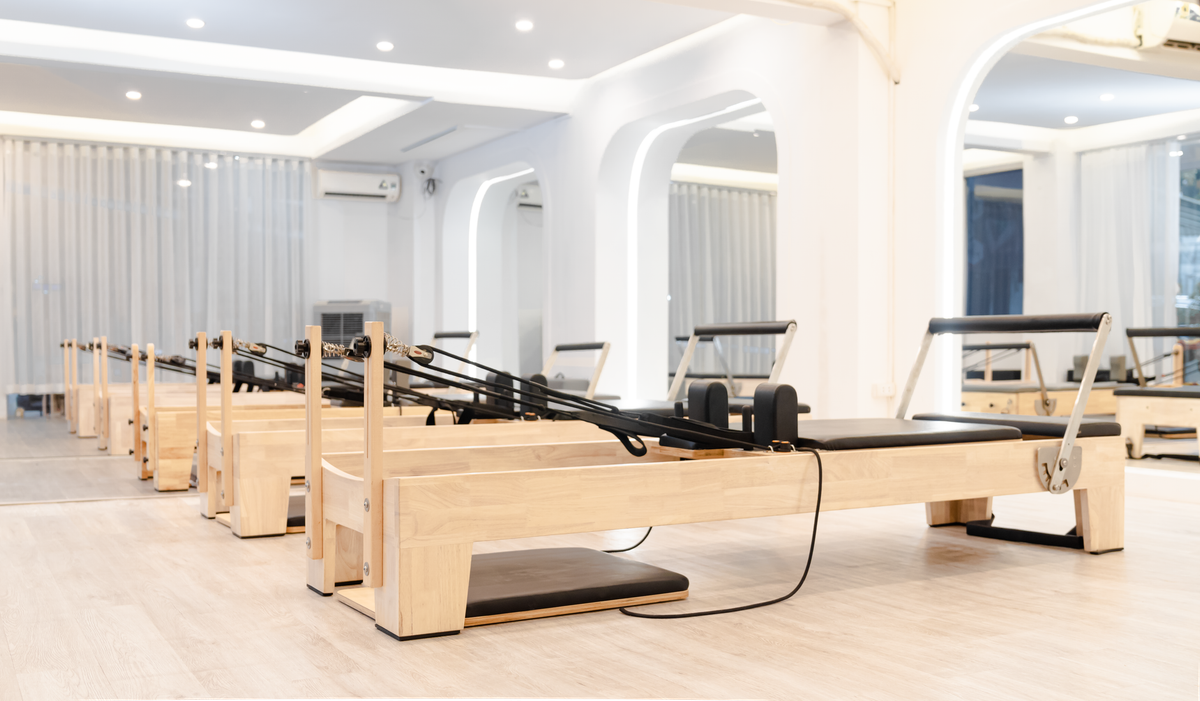
The carriage is the platform you sit, lie, or stand on. Springs or resistance cords control how it moves, while the footbar and straps give you different ways to push and pull. That adjustable setup is what separates a reformer from simply exercising on a mat.
A full-size machine suits a dedicated exercise space. A folding machine makes more sense when your workout room is also a bedroom or office, although it still needs its full footprint while you use it. Storage size, machine weight, and how easily it moves matter when you will put it away after each session.
Some reformers also have a tower for additional spring exercises. More attachments change the exercises available and the space needed; they do not replace the medical-purpose connection in your letter. The useful choice is the machine that supports your routine at home.
If you are comparing a reformer with weights, a treadmill, or another home setup, our workout equipment eligibility guide covers the broader options.
How Much Can You Save on a Pilates Reformer?
Using tax-free HSA/FSA funds can save you up to 30% on an eligible reformer, depending on your taxes and contribution arrangement. On a large equipment purchase, that can leave hundreds of dollars in your pocket.
For example, a $2,000 reformer at a combined rate near 30% saves you $600, bringing its effective cost to $1,400. The combined rate can include federal income tax, state income tax, and payroll taxes where applicable.
Each savings figure below is the example purchase price multiplied by the combined tax rate at the top of its column. These are illustrative machine prices, not current offers.
| Example reformer price | Savings at 20% combined rate | Savings at 25% combined rate | Savings at 30% combined rate |
|---|---|---|---|
| $1,000 | $200 | $250 | $300 |
| $2,000 | $400 | $500 | $600 |
| $3,000 | $600 | $750 | $900 |
| $4,000 | $800 | $1,000 | $1,200 |
The retailer still charges the purchase price. Reimbursement uses money in your HSA or FSA; the tax saving is the extra money you keep by using those funds. Provider or LMN fees are separate from these examples.