Why insoles and orthotics qualify for HSA/FSA
An insert can cushion a painful heel, support a fallen arch, or relieve pressure on the ball of your foot. When an over-the-counter insole is doing that job for a health condition you have, a Letter of Medical Necessity (LMN) ties the purchase to your care. That's how it works for retail orthotic insoles, arch supports and pain-relief shoe inserts.
IRS Publication 502 defines medical expenses to include the “diagnosis, cure, mitigation, treatment, or prevention of disease” and the equipment needed for that care. Over-the-counter insoles qualify when a licensed provider records their use for your condition in your Letter of Medical Necessity.
Prescription custom orthotics from your podiatrist qualify without an LMN. They're made for your feet specifically, and your prescription and provider receipt cover the paperwork. The American Podiatric Medical Association (APMA) distinguishes these from shoe inserts, which include the “custom-made” insoles you can order online or at retail stores. So a retail insert takes the LMN route, even one shaped from a foot scan.
Therapeutic inserts that a podiatrist or other qualified doctor orders for diabetic foot disease also qualify without a separate letter. Medicare describes therapeutic shoes and inserts as custom footwear that supports and protects feet affected by conditions such as a foot ulcer or deformity.
Do insoles and orthotics help foot pain?
Yes, insoles and orthotics can help with pain from specific foot conditions. A systematic review in Disability and Rehabilitation analyzed eight randomized trials involving 391 people with plantar fasciitis and found that foot orthoses reduced pain compared with control groups.
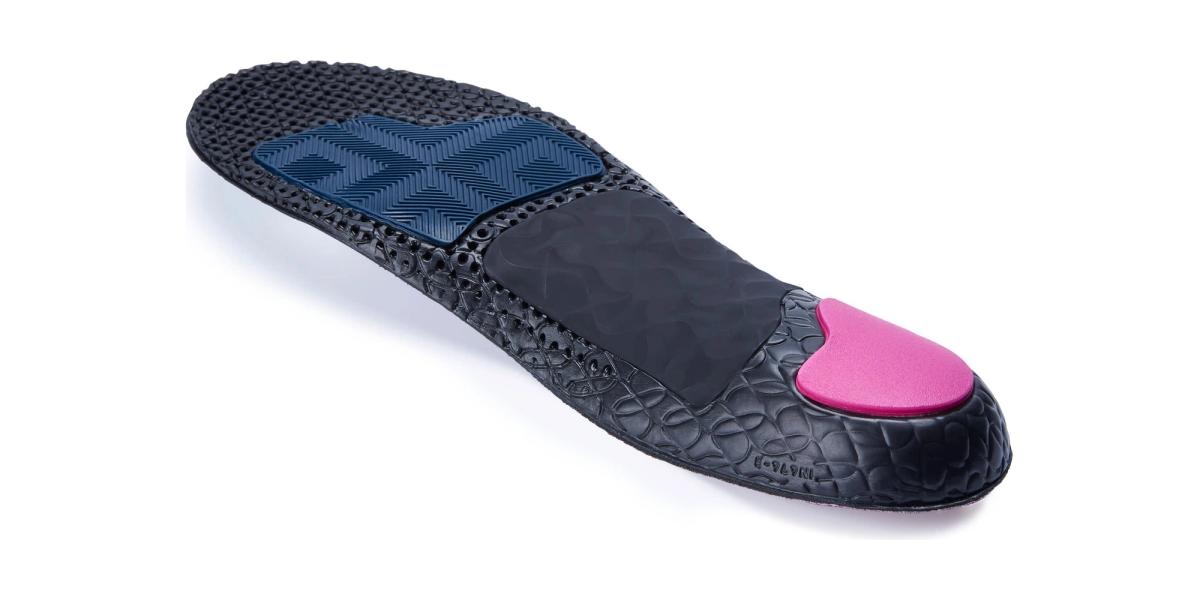
Different inserts do different jobs. Cushioning helps absorb pressure under the heel, arch supports hold up the arch, and forefoot pads cushion the ball of the foot. The right one depends on your condition and which part of your foot needs the help.
Which health conditions can qualify insoles and orthotics?
Here are some of the common conditions a provider can document for insoles. Plantar fasciitis and painful flat feet are two big ones; others come down to pressure on bones, nerves or vulnerable skin. Retail inserts need an LMN, while prescription orthotics made for you and medical therapeutic inserts already have your provider's paperwork behind them.
- Plantar fasciitis. A cushioned insert reduces tension on the plantar fascia as your heel meets the ground. The American Academy of Orthopaedic Surgeons (AAOS) includes premade and custom orthotics among helpful options, giving your provider a specific reason to recommend support for heel pain.
- Painful flat feet. Arch supports can help relieve the pain associated with flat feet. Mayo Clinic describes both nonprescription arch supports and custom supports molded to the foot. The store-bought kind is the one your LMN covers.
- Metatarsalgia. This is pain around the ball of the foot. Mayo Clinic explains that arch supports may lessen stress on the metatarsal bones, while metatarsal pads help keep pressure off the painful area. That pressure relief is the connection between the insert and the condition.
- Morton's neuroma. Padding beneath the forefoot can help when this nerve condition makes the ball of the foot painful. Mayo Clinic recommends a ready-made or custom-made shoe insert that cushions and supports the forefoot.
- Rheumatoid arthritis affecting the feet. Softer custom orthotics can relieve pressure around prominent bones. AAOS describes their role in reducing pressure, pain, and callus formation. If yours are prescription orthotics made for your feet, you won't need an LMN.
- Diabetes-related foot disease. Therapeutic inserts support and protect feet affected by ulcers or deformity. Medicare's therapeutic-footwear benefit addresses diabetes with severe diabetes-related foot disease, with the need certified and the footwear ordered by qualified clinicians. These medical inserts qualify without a separate LMN.
Your provider can also write an LMN connecting retail insoles to a health condition that isn't on this list, and the insoles qualify with that letter too.
How to get a Letter of Medical Necessity for insoles
There are two ways to get a Letter of Medical Necessity for over-the-counter insoles:
- Through Crates, typically in under 24 hours. You fill out a short online health assessment, which takes about 2 to 3 minutes. A licensed provider reviews it, and if you qualify, your letter is issued for the insoles. Once issued, it's valid for 12 months and renews each year.
- Through your own doctor, a few days to a few weeks. Book a visit, say you want to buy insoles with HSA/FSA funds, and ask them to document how the insoles help prevent, manage, or reverse your condition. They should put it in a signed and dated letter. You might have a copay for that appointment.
How to buy insoles with HSA/FSA funds
Once your letter's ready, buy your insoles online or in a store, then get your money back.
- Get your Letter of Medical Necessity first. Choose either route above.
- Buy the insoles anywhere. Pay with your personal card and keep the itemized receipt showing the item and amount paid.
- Get your funds back. With one-click reimbursement, Crates takes care of filing your claim; you can also upload the letter and receipt yourself. When you use an HSA, keep the letter and receipt with your tax records.
For prescription custom orthotics, your prescription and provider receipt are enough for reimbursement, no LMN needed. On timing, your HSA covers what you buy after the account opens, and your FSA covers what you buy within your coverage period, as Publication 969 explains. See our HSA vs. FSA guide for a comparison of the two accounts.
Which insoles and orthotics are HSA/FSA eligible?
Retail shoe inserts qualify with a letter documenting their medical purpose. Prescription custom orthotics qualify without a letter, because your podiatrist's prescription and receipt already document them. That holds whatever the brand, from a simple arch support to an insert shaped from a foot scan.
| Kind | What it is | HSA/FSA eligibility |
|---|---|---|
| Over-the-counter insoles and shoe inserts | Ready-made cushioning or support placed inside a shoe | Yes, with an LMN |
| Retail orthotic insoles | Structured inserts designed to support the foot or relieve pain | Yes, with an LMN |
| Arch supports | Inserts with raised support under the foot's arch | Yes, with an LMN |
| Retail 3D-scanned custom insoles | Retail inserts selected or shaped using a foot scan | Yes, with an LMN |
| Prescription custom orthotics | Devices made for one patient's feet following a podiatrist's evaluation and prescription | Yes, without an LMN |
| Medical therapeutic inserts for diabetic foot disease | Provider-ordered inserts that protect vulnerable feet | Yes, without an LMN |
APMA draws the line at a doctor's prescription and a device crafted for your specific foot. A retail insole shaped from a foot scan has no prescription behind it, so it follows the letter route.
Insole brands to compare
Both brands sell retail inserts that qualify with an LMN for your foot condition:
| Brand | Known for | HSA/FSA eligibility |
|---|---|---|
| Superfeet | Structured insoles with arch support and a stabilizing heel cup | Yes, with an LMN |
| Dr. Scholl's | Retail pain-relief insoles, arch supports, and fitted inserts | Yes, with an LMN |
Superfeet's All-Purpose Support High Arch insoles are one example of structured retail support. Our Superfeet HSA/FSA guide covers that brand's options. Other insole brands follow the same rule: an LMN documents the retail insert's use for your condition, so you can shop where you prefer. If your provider also recommends supportive shoes, our shoes HSA/FSA guide covers footwear.
How much can you save on insoles and orthotics?
Thanks to the tax advantages of an HSA or FSA, eligible insoles can come out up to 30% cheaper. Take a $60 pair of insoles: if your combined tax rate sits near 30%, that's $18 you don't pay in taxes. That rate can include federal income tax, state income tax, and payroll taxes where applicable. You still pay the store $60; the savings show up in the taxes you skip.
Each column multiplies the purchase price by the illustrated tax rate:
| Example purchase price | Savings at a combined 20% rate | Savings at a combined 30% rate |
|---|---|---|
| $30 | $6 | $9 |
| $60 | $12 | $18 |
| $150 | $30 | $45 |
| $400 | $80 | $120 |
These are example purchase amounts, not current offers. Reimbursement uses your own account funds; Publication 969 explains the tax advantages. How much you keep depends on your tax bracket and whether you contribute through payroll. Provider or LMN fees are separate.