What Is Nutrafol?
Nutrafol bills itself as the best-selling hair growth supplement brand, and even if you have never bought a bottle, you have probably met it somewhere: a dermatologist's shelf, a partner salon's counter, an ad that found you at 1 a.m. What you are actually buying is a daily nutraceutical: capsules built from vitamins, minerals, and botanicals like ashwagandha, saw palmetto, collagen, and curcumin rather than drug ingredients. The brand describes its formulas as physician-formulated and cites its own clinical studies; whether it lives up to the marketing is a conversation for you and your dermatologist.
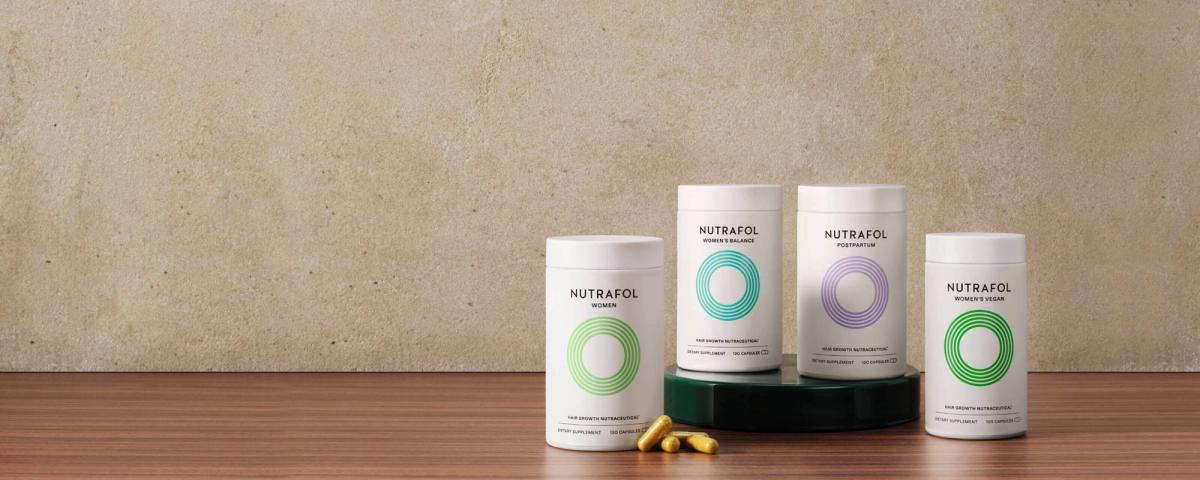
The lineup splits by life stage and biology instead of selling one universal pill: Core for Women, Women's Balance for the menopause transition, Men's, and Postpartum. A one-month supply runs about $88, sold through nutrafol.com as a one-time purchase or a subscription, and through retailers including dermatology practices and partner salons.
Here is the part that actually matters for this guide: to the IRS, none of that branding exists. Nutrafol is a dietary supplement, not an over-the-counter medicine and not a prescription drug, and that classification (not the marketing) decides how your HSA or FSA handles it.
Why Nutrafol Qualifies for HSA and FSA
Nutrafol is HSA and FSA eligible with a Letter of Medical Necessity (LMN), and the rule reads the same for both account types in 2026. The letter matters because a supplement is what benefits administrators call a dual-purpose product: IRS Publication 502 defines medical expenses as "the costs of diagnosis, cure, mitigation, treatment, or prevention of disease," and a supplement bought for fuller hair in general sits outside that definition on its own. Connected to a specific health condition through an LMN, the same bottle sits inside it. There is no pre-approved product list involved anywhere in this; the letter approves the purchase for your condition, not the product.
A lot of summaries online over-medicalize that step. An LMN is not a prescription: nothing is filled at a pharmacy, no medication is involved, and you do not need a separate specialist appointment before you can qualify. It is a signed, dated letter from a licensed provider naming your health condition and explaining why nutritional support is appropriate for it, and yes, you need one in every case, for both HSA and FSA.
It also helps to see the three tiers hair-loss spending falls into, because each tier answers differently. Purely cosmetic hair-regrowth surgery is the tier that stays out, and a hair transplant is the standard example, though Publication 502 keeps an exception for cosmetic surgery that is "necessary to improve a deformity arising from, or directly related to, a congenital abnormality, a personal injury resulting from an accident or trauma, or a disfiguring disease." Dual-use products are Nutrafol's tier, eligible with an LMN, and at-home low-level laser caps and combs belong here too: the FDA clears them as Class II medical devices for androgenetic alopecia, so a letter naming that condition covers a device the same way it covers a supplement, and our red light therapy guide walks through that side. Hair-loss medicines follow medicine rules instead: topical minoxidil (the Rogaine class) is an over-the-counter medicine, directly eligible with no letter needed since the 2020 CARES Act, while finasteride is a prescription drug, eligible through the prescription itself. Most of the confusion around Nutrafol online comes from blurring those tiers, and none of the three answers transfers to the others.
One boundary worth a sentence: this is a pre-tax account question, not an insurance one, and health insurance plans do not cover supplements either way. Whether your dollars sit in an HSA or an FSA changes nothing about eligibility; our HSA vs FSA guide covers the differences that do matter, like deadlines and rollover.
Which Medical Conditions Qualify Nutrafol for HSA or FSA
Your letter has to name a specific, recognized health condition that nutritional support helps prevent, manage, or reverse; thinning hair as a general concern is not a condition, but the five below all clear the bar, and each carries an authoritative source a provider can stand behind:
- Androgenetic alopecia (female- and male-pattern hair loss). A 2024 systematic review in Molecular Nutrition & Food Research found that vitamin B, vitamin D, iron, and zinc play critical roles in hair growth and maintenance, that deficiencies in those micronutrients are associated with increased androgenetic alopecia risk, and that supplementation has shown potential benefit for hair growth. That micronutrient-to-condition connection is exactly what a provider documents on the letter.
- Nutritional-deficiency hair loss. Low iron and ferritin, zinc, vitamin D, and B-vitamins are the classic nutritional drivers of shedding, and correcting a documented shortfall is the most straightforward basis a letter can state. A review in *Dermatology and Therapy* connects deficiencies in these nutrients to hair loss and supports supplementation where a documented iron deficiency is present.
- Postpartum shedding (postpartum telogen effluvium). Cleveland Clinic frames postpartum hair loss as hormone-driven telogen effluvium, and its guidance is direct: make sure you are getting "the nutrients you need for hair growth" and talk to your provider "about vitamins to supplement your diet." That provider conversation is the letter in miniature, and this is the condition Nutrafol's Postpartum line pairs with below.
- Menopausal and hormonal hair thinning. A review in *Menopause Review* of nutrition for hair loss during menopause concludes that nutritional support, from sulfur-rich amino acid proteins and B-complex vitamins to zinc, iron, copper, and selenium, is "reasonable" during this stage, and menopause-stage thinning is the condition Nutrafol's Women's Balance line is aimed at.
- Telogen effluvium (general and stress-related shedding). The broadest umbrella for diffuse shedding. Cleveland Clinic identifies restrictive dieting and extreme weight loss, and the iron, biotin, and vitamin D shortfalls they create, among its triggers, which is why correcting nutrition belongs in how it is managed.
How to Get Nutrafol Covered by HSA or FSA
Start with the checkout fact, because it decides the whole path: Nutrafol cannot take your benefits card. The brand's own help center states it is "unable to accept FSA/HSA payments" and lists Visa, Mastercard, American Express, Discover, and PayPal as what checkout accepts. Coverage happens through reimbursement instead, in this order: get your Letter of Medical Necessity issued first, buy with a personal card, then file the claim. A few dermatology retailers do offer HSA/FSA-eligible checkout for Nutrafol products, but you never need a special storefront; the letter-then-reimbursement path works everywhere Nutrafol is sold.
What Your Letter of Medical Necessity Must Include
Every valid letter carries the same core pieces:
- Your specific condition, named plainly (androgenetic alopecia, postpartum shedding, a documented deficiency, or another recognized condition)
- Why a hair-growth supplement helps prevent, manage, or reverse that condition
- Your provider's signature and the date
- A date that lands before you buy: your LMN must be dated before your purchase, so letter first, Nutrafol second
You can get one in two ways.
Option 1: Through Your Doctor
If you already see a provider for your condition, they can write the letter:
- Book a visit and say you want to buy Nutrafol with HSA/FSA funds
- Ask them to document how this product category helps prevent, manage, or reverse your condition
- Make sure the letter is signed and dated
- Timeline: same day to a couple of weeks, and you may owe a copay
Option 2: Through Crates
Crates streamlines the same process online:
- Complete a short health assessment, about 2 to 3 minutes
- A licensed provider reviews it, typically within 24 to 48 hours
- If you qualify, your Letter of Medical Necessity is issued for Nutrafol
- Buy Nutrafol with your personal card at any retailer
- Submit with one-click reimbursement to process your HSA/FSA claim
- Your LMN stays valid for 12 months and renews each year
You do not need a pharmacy prescription; the letter itself is what establishes eligibility.
Buying Nutrafol and Getting Reimbursed
Once the letter is dated and in hand, order from nutrafol.com, one bottle or a recurring plan, or buy from any retailer that sells Nutrafol, in store or online. Pay with a regular card and keep the itemized receipt. Submit the letter and receipt to your administrator, or use Crates one-click reimbursement to file the claim for you. Reimbursement timing varies by administrator, and the same letter keeps covering your Nutrafol purchases for the full 12 months it is valid.
Nutrafol's Product Lines and HSA/FSA Eligibility
Every line Nutrafol sells is HSA and FSA eligible on the same terms. The formulation, packaging, or product line never changes the eligibility answer; the letter and the condition it documents do.
| Product line | Eligible with an LMN |
|---|---|
| Core / Women | Yes |
| Women's Balance | Yes |
| Men's | Yes |
| Postpartum | Yes |
The useful pairing happens on the letter, not the label. Postpartum lines up with the postpartum-shedding condition covered above (prenatal and postpartum-adjacent brands like Ritual follow the same rule), and Women's Balance with menopausal and hormonal thinning; Core and Men's ride on whichever condition your letter names, from pattern hair loss to a documented deficiency. Whichever bottle you buy, the answer in the table stays Yes. The same standard runs across other HSA/FSA-eligible supplement brands like Thorne and Seed, and across everyday supplements like protein powder: the letter qualifies the purchase, whatever the label says.