What Is Hatch?
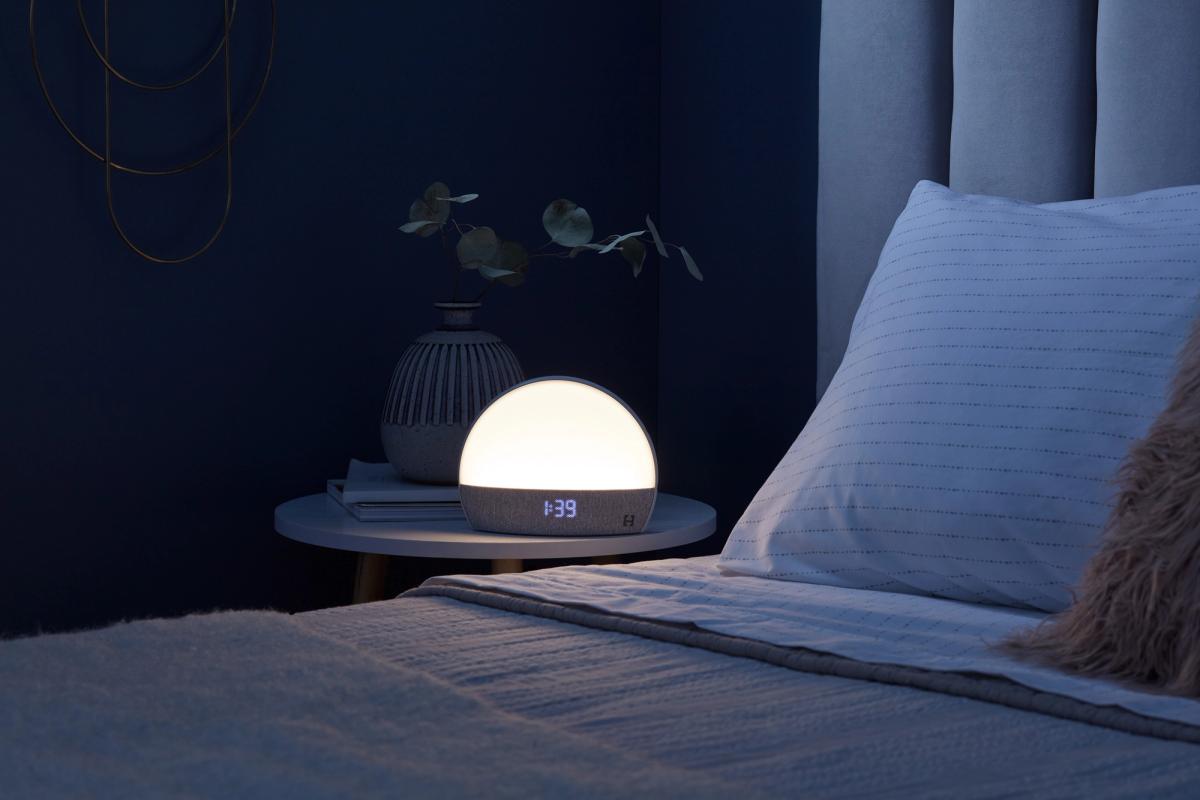
Hatch is the company that turned the alarm clock into a sleep product people actually get excited about, the kind that shows up in USA Today reviews and TikTok unboxings alike. Its flagship, the Restore 3 (about $170), is a screen-free sunrise alarm clock, sound machine, and smart bedside light in one, and the pitch is simple: get your phone out of the bedroom. At night it plays soundscapes, guided meditations, and sleep podcasts (routines you set in the Hatch Sleep app) while the light dims on a schedule. In the morning it wakes you with a gradually brightening artificial sunrise instead of a blaring phone alarm.
The lineup runs past your own nightstand: Hatch also makes kids' sound machines, the Hatch Baby and the travel-sized Hatch Go, with the older Rest models still on retail shelves, and an optional Hatch+ subscription (about $5 a month) layers extra audio content onto routines, sounds, and alarms that all work without it. Where Eight Sleep engineers sleep through mattress temperature, Hatch works the other two levers of your sleep environment: light and sound. Keep that framing in mind, because light, sound, and a consistent wake-up routine are exactly the things clinical sleep guidance tells you to control, and that is why an alarm clock belongs in an HSA/FSA conversation at all.
Why Hatch Qualifies for HSA or FSA Coverage
A Hatch alarm clock is HSA and FSA eligible with a Letter of Medical Necessity (LMN), and the reason sits in how the IRS defines a medical expense. IRS Publication 502 defines medical expenses as "the costs of diagnosis, cure, mitigation, treatment, or prevention of disease and for the purpose of affecting any part or function of the body." A sunrise alarm clock is what administrators call a dual-purpose item under that definition: anyone might buy one just to wake up gently, and that general use is not eligible. The same device bought to help manage a specific health condition, documented by a licensed provider, is. That documentation is the LMN's whole job: it names your condition and connects the device's light and sound routines to managing it.
Every route to Hatch eligibility runs through the letter. A CPAP machine is medical equipment in its own right, directly eligible with no letter needed; a Hatch is not in that class, so it always needs the LMN. The line to keep in mind: better sleep as general wellness, with no named condition behind it, does not qualify, while the same benefit tied to a recognized condition like insomnia does. Without a letter dated before you buy, a Hatch is just a regular purchase to your administrator. The rule is identical for both account types; the HSA vs FSA guide breaks down the differences.
You don't need to buy your Hatch through any particular retailer's checkout to use HSA or FSA funds. Get your Letter of Medical Necessity first, through your doctor or through Crates, then then buy your Hatch wherever you'd like with your personal card. Submit your letter and receipt for reimbursement afterward. That order matters most in December: FSA use-it-or-lose-it deadlines make a Hatch a popular year-end buy, and the letter still has to be dated before the purchase.
Which Sleep Conditions Qualify a Hatch for HSA or FSA
Seven conditions do most of the work in Hatch letters, and they share one shape: the medical community already recommends controlling light, sound, and bedtime routine as part of managing them, which is what a Hatch automates. Your letter has to name the specific condition.
- Insomnia. Cleveland Clinic's sleep-hygiene guidance puts a consistent bedtime routine and a dim, dark sleep environment at the core of good sleep hygiene, the layer a Restore schedules for you. A Hatch supports the sleep-hygiene side of managing insomnia; it is not a replacement for care from your provider.
- Shift-work sleep disorder. For night and rotating shifts, Cleveland Clinic includes timed light exposure and "a quiet, dark and peaceful setting" for daytime sleep in its management guidance. A Hatch supports both on the environment side: light scheduled to your sleep and wake times, and sound that masks daytime noise.
- Circadian rhythm sleep-wake disorders. The American Academy of Sleep Medicine's clinical practice guideline endorses light therapy, with or without behavioral interventions, for select circadian rhythm disorders, including post-awakening light for delayed sleep-wake phase disorder. Timed morning light is the guideline-recommended piece, and a scheduled morning sunrise is what a Restore automates.
- Anxiety-related sleep disruption. Cleveland Clinic's sleep-anxiety guidance recommends a comfortable, quiet, softly lit bedroom and calming wind-down activities such as soft, peaceful music before bed. If anxiety is your primary condition, the anxiety and mental health HSA/FSA eligibility guide covers the fuller picture.
- Tinnitus. The NIH's National Institute on Deafness and Other Communication Disorders notes that "tabletop or smartphone sound generators are typically used as an aid for relaxation or sleep," and that mild tinnitus may need nothing more at bedtime. That is a government description of a bedside sound machine.
- Seasonal affective disorder (dawn simulation). Precision matters here. A meta-analysis in the American Journal of Psychiatry found dawn simulation significantly reduced SAD symptom severity across 5 randomized controlled trials (effect size 0.73, 95% CI 0.37 to 1.08), a finding specific to gradual low-light sunrises. That is the Restore's category: its sunrise peaks at a few hundred lux (independent light-meter testing measured about 285, clearing the roughly 250 recommended for dawn simulation), nowhere near the 10,000 lux Cleveland Clinic says a bright-light-therapy box should emit. A Restore is a dawn simulator, not a substitute for one of those lamps.
- ME/CFS (myalgic encephalomyelitis / chronic fatigue syndrome). The CDC's management guidance for ME/CFS includes a calming wind-down routine, consistent sleep and wake times, and controlling noise, light, and temperature in the bedroom. It shares that sleep-environment logic with mattresses, another dual-use item where ME/CFS anchors eligibility.
How to Get Your Hatch Covered by HSA or FSA
Two paths get you the letter, and both end in the same place: a signed LMN dated before your Hatch purchase.
Option 1: Through Your Doctor
If you already see a provider for your condition, they can write the letter:
- Book a visit and say you want to buy a Hatch with HSA/FSA funds
- Ask them to document how it helps prevent, manage, or reverse your condition
- Make sure the letter is signed and dated
- Timeline: same day to a couple of weeks, and you may owe a copay
Option 2: Through Crates
Crates streamlines the same process online:
- Complete a short health assessment, about 2 to 3 minutes
- A licensed provider reviews it, typically within 24 to 48 hours
- If you qualify, your Letter of Medical Necessity is issued for the Hatch
- Buy the Hatch with your personal card at any retailer
- Submit with one-click reimbursement to process your HSA/FSA claim
- Your LMN stays valid for 12 months and renews each year
You do not need a pharmacy prescription; the letter itself is what establishes eligibility.
What Your Letter of Medical Necessity Must Include
- Your specific health condition, named
- The device it supports (for example, a Hatch Restore 3)
- How the device's light and sound routines help prevent or manage that condition
- The provider's signature and a date before your purchase
Buying works the same everywhere: hatch.co, Amazon, Target, in store or online. Most of the places that sell Hatch devices are not coded as medical sellers, so an HSA or FSA card will usually be declined at their checkout; pay with your personal card and keep the receipt. Submit the letter and receipt to your administrator, or use Crates one-click reimbursement to file the claim for you.
Which Hatch Products Qualify: Restore, Rest, and Hatch+
Every Hatch sleep device qualifies through the same mechanism, because there is no pre-approved product list: the LMN approves the purchase, not the product. No administrator pre-approves "Restore 3" by name; your letter is what makes the purchase reimbursable.
The Restore 3, the model most people mean when they ask (about $170 as of 2026), is HSA and FSA eligible with a letter, and the earlier Restore 2 works the same way; it is no longer hatch.co's current model, but eligibility does not care which generation sits on your nightstand. The kids' machines follow the same letter-first rule with one difference, the LMN documents your child's condition rather than yours: that covers the current Hatch Baby (about $70) and Hatch Go (about $40) as well as the earlier Rest 2nd Gen and Rest+ 2nd Gen still sold at major retailers. Hatch+ is the exception in the lineup: it is a content subscription, not a device, and it does not inherit the Restore's eligibility, covered in the FAQ below.