What Is Dyson
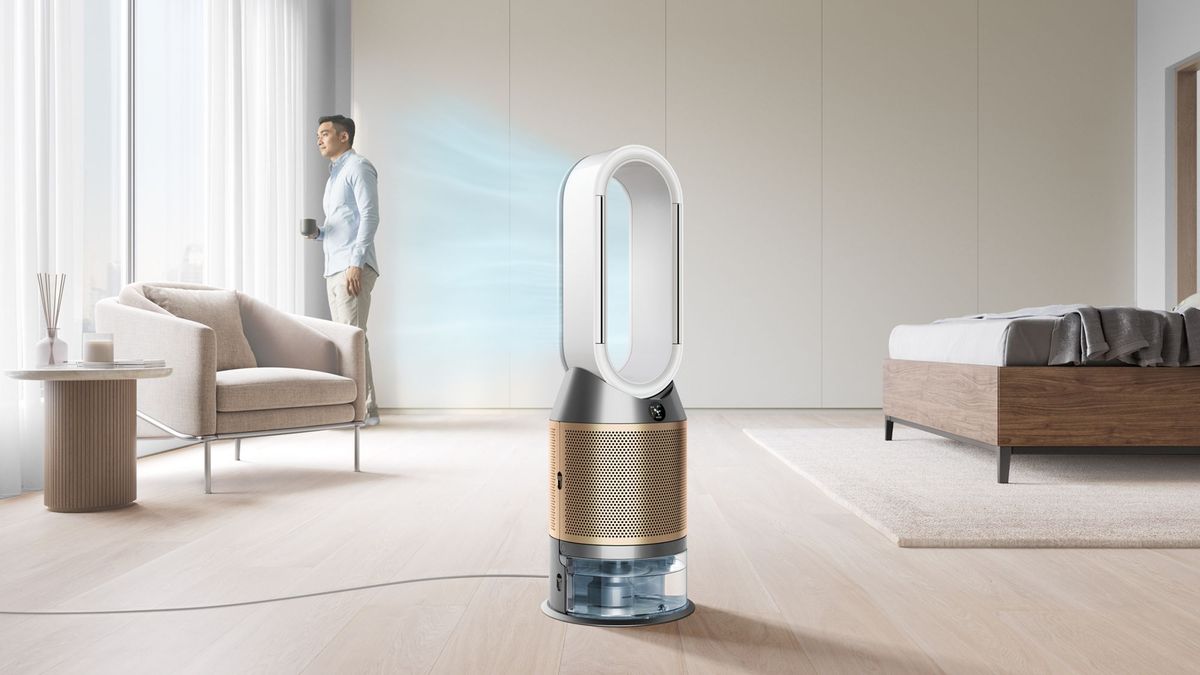
Dyson makes cordless vacuums, hair dryers and the tall, ring-shaped fans you may have spotted in a friend’s bedroom. Many of its air purifiers are built on that fan: the Purifier Cool line filters the air while it cools you, Hot+Cool adds a heater, and Humidify+Cool adds moisture to dry indoor air.
The range also includes the smaller HushJet Purifier Compact and the larger Big+Quiet Formaldehyde. Dyson’s regular US prices run from about $350 for HushJet Compact to $1,200 for Big+Quiet BP04. The current Humidify+Cool PH2 is about $1,100.
That combination of functions matters when you’re buying for your health. A purifier that doubles as a fan still has a filtration function a provider can recommend for airborne allergy triggers. For someone with sinusitis aggravated by dry air, the PH2’s humidifier serves a different medical purpose. Your reason for using the machine is what connects an everyday home purchase to medical care.
Why Dyson Qualifies for HSA/FSA
Dyson purifiers qualify when their medical use is documented in a Letter of Medical Necessity from a licensed healthcare provider. IRS Publication 502 defines medical expenses around the “diagnosis, cure, mitigation, treatment, or prevention of disease” and includes equipment needed for those purposes. Your provider explains how air filtration or humidification helps your condition.
Common conditions a provider can document for the purifier function include:
- Allergic asthma. For people with asthma, the EPA advises an air cleaner with a HEPA filter to cut pet dander. When asthma is tied to an indoor allergen, NHLBI’s asthma guideline conditionally recommends combining several allergen-reduction steps, and it names air purifiers among them.
- Allergic rhinitis. The AAO-HNSF guideline includes air filtration among environmental controls for people whose known allergens trigger nasal symptoms.
- Pet allergy. ACAAI explains that HEPA filters capture airborne pet particles. Reducing that exposure is one part of managing a pet allergy.
- COPD. In the CLEAN AIR trial of 116 former smokers with moderate-to-severe COPD, those given portable HEPA air cleaners had fewer respiratory symptoms and moderate flare-ups than those given sham cleaners.
- Heart or lung disease during wildfire smoke. The EPA recommends indoor air filtration to reduce smoke particles, with particular attention to people with existing heart or lung disease.
The PH2’s humidifier function has separate uses when indoor air is dry:
- Sinusitis. MedlinePlus recommends a humidifier among home-care measures for sinus symptoms.
- Recurrent nosebleeds. Cleveland Clinic recommends adding humidity to address dry air that irritates nasal passages and contributes to nosebleeds.
- Eczema. MedlinePlus includes a humidifier in atopic dermatitis care to keep home air moist.
These are some of the common conditions, and any other condition your provider ties your Dyson to counts too. If you use the PH2’s humidifier, set its target humidity at 50% or lower, as EPA humidifier guidance advises: higher levels may encourage dust mites and mold.
How to Get Dyson Covered With a Letter of Medical Necessity
You have two ways to get your letter for a Dyson purifier or purifier humidifier:
- Through Crates, typically in under 24 hours. Complete a 2 to 3 minute online health assessment. A licensed provider reviews your answers and, if you qualify, issues your letter. It stays valid for 12 months and renews each year.
- Through your own doctor, a few days to a few weeks. Book a visit and explain that you want to use HSA/FSA funds for an air purifier or humidifier. Ask your doctor to document how it helps prevent, manage, or reverse your condition, and sign and date the letter. You may owe a copay.
How to Buy Dyson With HSA/FSA Funds
Choose where you want to buy your Dyson, then get reimbursed from your HSA or FSA:
- Get your Letter of Medical Necessity first. Use either route above before buying.
- Buy your Dyson anywhere. Pay with your personal card, online or in store, and keep the itemized receipt showing the machine and amount paid.
- Get your money back. Crates one-click reimbursement files the claim for you, or upload the letter and receipt yourself. For an HSA, keep both with your tax records.
Which Dyson Models Qualify
Dyson’s purifiers, purifier fans and purifier humidifiers qualify the same way: with an LMN connecting their use to your condition. Here are current examples, with approximate regular US list prices checked on October 22, 2026. Dyson describes their filtration as shown below.
| Dyson model | What it is | Regular price | HSA/FSA eligibility |
|---|---|---|---|
| HushJet Purifier Compact | Electrostatic and activated-carbon purifier | $350 | Yes, with an LMN |
| Purifier Cool Gen1 TP10 | HEPA H13 purifier fan | $480 | Yes, with an LMN |
| Purifier Cool PC1 | HEPA H13 purifier fan | $550 | Yes, with an LMN |
| Purifier Hot+Cool HP1 | HEPA purifier, fan and heater | $660 | Yes, with an LMN |
| Purifier Hot+Cool De-NOx HP2 | HEPA H13 purifier, fan and heater | $950 | Yes, with an LMN |
| Purifier Humidify+Cool De-NOx PH2 | HEPA H13 purifier, fan and humidifier | $1,100 | Yes, with an LMN |
| Purifier Big+Quiet Formaldehyde BP03 / BP04 | HEPA H13 large-room purifiers | $1,100 / $1,200 | Yes, with an LMN |
The same medical-use rule applies to earlier Dyson purifier models, including Pure Cool Link and HP01. Eligibility follows your documented use, whatever the model name. For the wider category, see our air purifier HSA/FSA guide.