The Short Answer: Yes, Humidifiers Are HSA/FSA Eligible
Yes, a humidifier is HSA/FSA eligible, but not on its own: it becomes eligible when you have a Letter of Medical Necessity (LMN) that ties it to a specific health condition.
Here is the logic. IRS Publication 502 defines a medical expense as an amount paid for the "diagnosis, cure, mitigation, treatment, or prevention of disease." A humidifier is a "dual-purpose" item: the same unit can make a dry living room feel more comfortable (general home comfort, not eligible) or help someone with asthma or chronic sinusitis keep their airways from drying out (a specific medical purpose, eligible with documentation). Because a humidifier has an everyday use, buying one for general comfort or dry winter air alone does not qualify. What makes it eligible is the LMN, which connects the purchase to the condition your provider is helping you prevent or manage.
One account note: this applies to standard HSAs and FSAs. Limited-purpose FSAs (LPFSA), which cover only dental and vision, and dependent-care FSAs (DCFSA), which cover childcare, do not reimburse a humidifier.
New to these accounts? Start with our HSA vs FSA guide.
Do Humidifiers Actually Help? What the Science Says
Humidifiers are not only comfort devices. For people with specific respiratory, nasal, and skin conditions, keeping indoor humidity in a healthy range is backed by peer-reviewed research and major medical centers, and that evidence is the foundation for eligibility.
Humidifiers and Respiratory Health
Dry air irritates the airway from the nasal passages down to the lungs. A 2023 review in the International Journal of Molecular Sciences found that relative humidity outside the optimal range changes airway mucus and impairs the airway's ability to clear itself, which can worsen respiratory diseases; the review specifically discusses asthma and allergic rhinitis. The Mayo Clinic adds that added humidity may ease breathing for adults and children with asthma or allergies and can relieve a stuffy nose and cold symptoms.
Dry indoor air also irritates the eyes and nasal passages, which is why the EPA recommends keeping indoor humidity below 50 percent, with 30 to 50 percent as the healthy target.
Humidifiers and Skin and Dry-Air Conditions
The Cleveland Clinic explains that dry air pulls moisture from the skin, which can worsen chronic dry skin, and that a humidifier can also reduce asthma and allergy flare-ups by soothing airway irritation. When the air gets too dry, the sinuses dry out and mucus thickens, contributing to nosebleeds and chapped lips. Restoring a moderate humidity level helps keep the skin barrier and nasal membranes from drying out.
Humidifiers and Sleep
Dry air also worsens a dry throat, snoring, and sleep quality, and it is a frequent complaint for CPAP users, whose forced air dries out the nose and throat. A 2018 review in the International Journal of Hygiene and Environmental Health notes that added humidity appears to reduce nasal symptoms for people using CPAP, making the device more comfortable to keep using.
What Health Conditions Qualify for an HSA-Eligible Humidifier?
A humidifier can qualify for many conditions where dry air makes symptoms worse. Most fall into three groups: respiratory, skin, and nasal or sinus. Here are the ones providers most commonly document.
Respiratory Conditions
- Asthma: dry air can irritate the airways and worsen symptoms (research review)
- COPD (chronic obstructive pulmonary disease): steady humidity helps keep mucous membranes moist
- Chronic bronchitis: moisture helps keep the airways clear
- Chronic or recurring sinusitis: dry air worsens sinus irritation
- Nasal congestion: added humidity can ease a stuffy nose
- Chronic cough from dry air: often driven or worsened by low humidity
Skin Conditions
- Eczema (atopic dermatitis): dry air draws moisture from the skin and can aggravate it (Cleveland Clinic)
- Psoriasis: dry air can aggravate dryness-related symptoms
- Chronic dry skin (xerosis): indoor humidity directly affects skin hydration
- Contact dermatitis: dry air worsens skin sensitivity
- Ichthyosis: a genetic skin condition that calls for careful humidity management
Nasal, Sleep, and ENT Conditions
- Chronic nosebleeds (epistaxis): low humidity dries the nasal membranes (Cleveland Clinic)
- Dry throat and nasal passages: ongoing dryness that affects daily comfort
- Chronic snoring: dry air contributes to airway irritation
- Sleep apnea: especially for CPAP users dealing with dry-air side effects
Other Qualifying Conditions
- Nasal and respiratory allergies: keeping humidity in the 30 to 50 percent range helps limit dust mites
- Post-surgery recovery: following nasal or sinus procedures
- Pregnancy-related congestion: hormonal changes plus dry air can worsen symptoms
What Is a Letter of Medical Necessity (LMN) and What Should It Include?
An LMN is the paperwork that turns a humidifier from a general household purchase into a qualified medical expense. Getting it right keeps a claim from being denied.
What Is an LMN?
A Letter of Medical Necessity is a short, signed document from a licensed healthcare provider stating that a specific item is medically necessary for your condition. It is the documentation your HSA or FSA administrator needs for a dual-purpose item like a humidifier, and it links your purchase to a condition you are working to prevent or manage.
What Your LMN Should Include
For your administrator to accept it, your LMN should contain:
- Your identifying information: full name and date of birth
- Provider credentials: name, license number, and practice information
- Your specific health condition: the condition the humidifier is meant to help
- Medical justification: how the humidifier will help prevent, manage, or reverse your condition
- A clear recommendation: a statement that a humidifier is medically necessary for you
- Provider signature and date: dated before your purchase
- Equipment covered: the humidifier and its replacement filters and wicks
Important: Your LMN should be dated before you buy. You cannot reimburse a past purchase with an LMN obtained afterward, so get the letter first.
Common LMN Mistakes to Avoid
- Buying the humidifier first and requesting the LMN later (the date must come before the purchase)
- A letter that mentions dry air but never names a specific condition
- Leaving filters and wicks off the letter, which can slow a refill claim while your administrator asks what the parts are for
- Submitting an undated or unsigned letter
- Trying to pay from a limited-purpose (LPFSA) or dependent-care (DCFSA) account, which do not cover humidifiers
How to Get Your LMN for a Humidifier
There are two practical ways to get your letter.
Option 1: Through Your Doctor
You can request an LMN from your primary care physician, allergist, dermatologist, pulmonologist, or another provider who knows your condition.
- Schedule an appointment (this may involve a copay)
- Discuss your condition and how dry air affects it
- Request an LMN specifically for a humidifier
- Make sure the letter also covers replacement filters and wicks
- Timeline: days to weeks, depending on provider availability
This works well when you already have a provider who knows your history.
Option 2: Through Crates Health
Crates streamlines the same process online.
- Complete a quick health assessment: answer questions about your conditions
- A licensed provider reviews your information: typically within 24 to 48 hours
- If eligible, your LMN is issued: covering the humidifier and its replacement filters and wicks
- Purchase your humidifier: use your personal card at any retailer
- Submit with one-click reimbursement: upload your receipt to process your HSA/FSA claim
- Funds transfer to your bank account: money moves from your HSA/FSA to you
An LMN from Crates is valid for 12 months, renews each year so you keep coverage for filter and wick replacements, and can be written for any manufacturer, including Vicks, Canopy, Honeywell, and Levoit.
Which Type of Humidifier Should You Choose?
Any type of humidifier can be HSA/FSA eligible with an LMN, so the right one depends on your condition, your room size, and how much upkeep you want. Here is how the main types compare, with typical 2026 prices.
| Type | HSA/FSA Status | Typical 2026 Price | Best For |
|---|---|---|---|
| Cool-mist (ultrasonic) | Eligible with an LMN | $39.99 – $149.99 | Bedrooms, kids, asthma, allergies |
| Cool-mist (evaporative) | Eligible with an LMN | Varies | Larger rooms, self-regulating |
| Warm-mist / vaporizer | Eligible with an LMN | $19.79 – $79.99 | Sinus congestion, colds |
| Whole-house / console | Eligible with an LMN | $187.99 | Whole-home, multiple rooms |
| Premium / smart | Eligible with an LMN | $134 – $999.99 | Auto control, app monitoring, low upkeep |
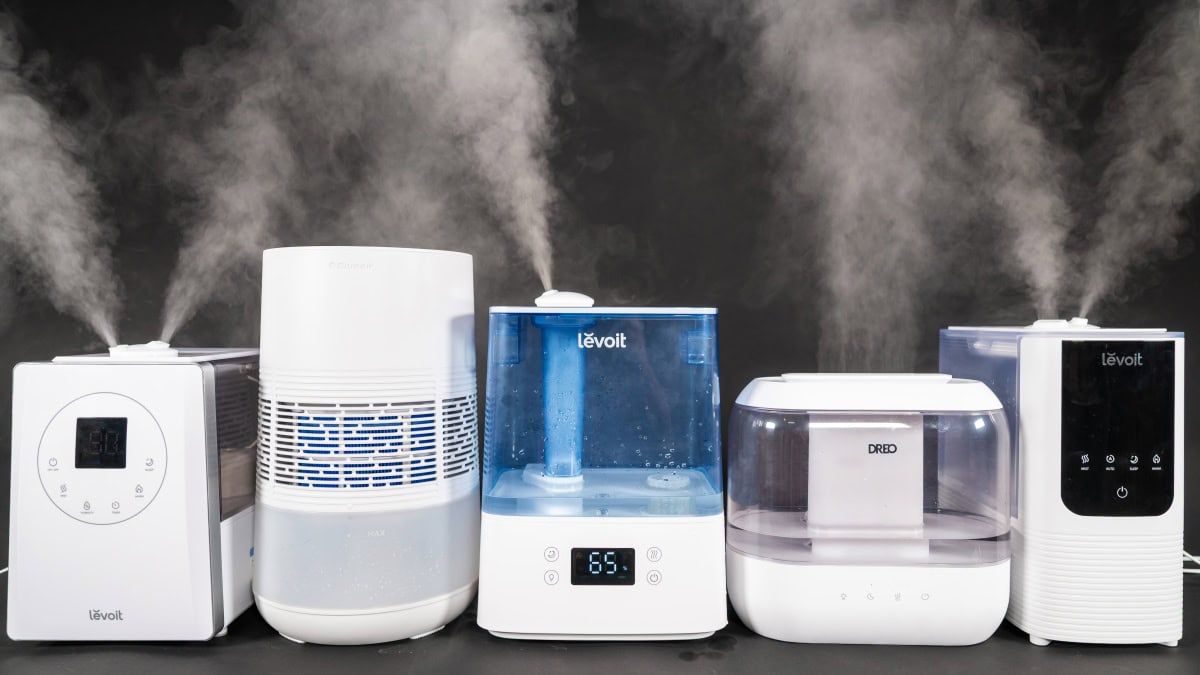
How they differ: cool-mist ultrasonic units are quiet and safe around children, a favorite for bedrooms and for asthma or allergies (use distilled water to limit white dust). Cool-mist evaporative units use a wet wick, self-regulate, and suit larger rooms. Warm-mist and steam vaporizers make steam many people find soothing for sinus congestion and colds. Whole-house console units cover several rooms at once, and premium smart models add built-in humidity control and app monitoring with less upkeep.
Bottom line: for most respiratory and skin conditions, a cool-mist or ultrasonic unit is a safe default; for sinus congestion, a warm-mist model adds comfort.
Are Humidifier Filters and Wicks HSA Eligible Too?
Yes. Replacement filters and wicks are HSA/FSA eligible when your LMN covers your humidifier and its maintenance parts.
Here is how it works:
- Your LMN should specify coverage for both the humidifier and its maintenance components
- LMNs from Crates include replacement filters and wicks
- Buy the filters or wicks with your personal card
- Submit for reimbursement
Pro tip: stock up on filters when you buy the humidifier. You save on shipping and always have a replacement on hand, which keeps the unit clean and running well.
Humidifier vs Dehumidifier: What’s the Difference?
Both a humidifier and a dehumidifier can be HSA/FSA eligible with a Letter of Medical Necessity, but they do opposite jobs and suit different conditions.
Humidifiers add moisture to the air. Reach for one when:
- Your indoor air is too dry (below 30 percent humidity)
- You have dry skin or respiratory irritation
- It is winter, an arid climate, or your heating dries the air
Dehumidifiers remove moisture from the air. Reach for one when:
- Your indoor air is too humid (above 50 percent humidity)
- You are dealing with mold, mildew, or musty odors
- It is summer, a humid climate, or a basement or bathroom stays damp
Because they do opposite jobs, the right choice comes down to your condition and your indoor humidity, and your LMN should name whichever device you need. Some people benefit from both across the year: a humidifier in dry winter months and a dehumidifier in humid summer months. If you are not sure which you need, a simple hygrometer will tell you your current indoor humidity.
What Does NOT Qualify for a Humidifier LMN
A humidifier qualifies on the strength of the documented medical reason behind it, not on owning one or feeling better with it running. These situations do not meet that standard:
- No documented condition. Buying a humidifier for general home comfort, for houseplants, or for a more pleasant living space is not a medical expense.
- General dry winter air with no specific condition. Dryness on its own, without a condition your provider is helping you prevent or manage, is not enough.
- A purchase made before the LMN. An LMN obtained after you buy cannot reimburse a past purchase.
- Limited-purpose (LPFSA) and dependent-care (DCFSA) accounts. These do not cover humidifiers, even with an LMN.
- A whole-home system installed with no medical basis. A built-in unit bought purely for household comfort is not a medical expense. Installed for the condition your LMN documents, it is one: the IRS capital-expense rule covers equipment installed in a home when its main purpose is medical care, and the entire cost counts if the work does not raise your property's value.
One honest caveat: more humidity is not better. Keep indoor humidity in the 30 to 50 percent range. The EPA advises staying below 50 percent, cleaning the unit regularly, and using distilled or low-mineral water. Research in Environmental Health Perspectives found that dust mites and mold thrive when humidity climbs too high, so over-humidifying can worsen the very allergy and asthma symptoms you are trying to prevent.