The Short Answer: Yes, Air Purifiers Are HSA/FSA Eligible
The eligibility hinges on one distinction: an air purifier is a dual-purpose item. IRS Publication 502 defines medical expenses as the costs of "diagnosis, cure, mitigation, treatment, or prevention of disease," and the same device can run for general comfort (not eligible) or to prevent, manage, or reverse the symptoms of a specific condition like asthma, allergies, mold sensitivity, or COPD. A Letter of Medical Necessity (LMN) tells your administrator which purpose applies, the same way a sauna becomes a medical expense once a provider ties it to a health condition.
Do Air Purifiers Actually Work? What the Research Says
Air purifiers with a true HEPA filter measurably reduce airborne particles, and the health benefit is real but modest. The EPA reports that "several studies using portable HEPA air cleaners have demonstrated small improvements in cardiovascular and respiratory health."
This matters because the EPA reports Americans spend about 90% of their time indoors, where some pollutants run 2 to 5 times higher than outside.
A true HEPA filter can theoretically remove at least 99.97% of airborne particles at 0.3 microns, according to the EPA's HEPA standard. In practice that captures the common triggers: dust mite debris, pollen, mold spores, pet dander, and fine particulate matter (PM2.5).
What Health Conditions Qualify for an HSA-Eligible Air Purifier?
The IRS publishes no fixed list of qualifying conditions; your provider decides whether an air purifier is medically appropriate for your situation. The four below come up most often.
Asthma
Asthma is the strongest and most common basis. The EPA states that dust mite droppings, mold spores, and pet dander can each "trigger asthma," and recommends you "use an air cleaner with a HEPA filter" to reduce those triggers indoors.
Allergies and Allergic Rhinitis
Environmental and seasonal allergies qualify when a provider documents them. The American College of Allergy, Asthma & Immunology notes that "pollens and molds can cause allergy and asthma symptoms," and cutting exposure to them is the rationale for HEPA filtration. Pet, dust, and allergic rhinitis cases fit the same pattern.
Mold Sensitivity
Mold exposure is its own documented basis. The EPA explains that "inhaling or touching mold or mold spores may cause allergic reactions in sensitive individuals" and can "trigger asthma episodes." A HEPA purifier will not fix the moisture source, but cutting airborne spores helps manage sensitivity.
COPD and Other Respiratory Conditions
Chronic lung conditions carry weight. The American Lung Association explains that "exposure to irritants that damage your lungs and airways can cause COPD," and lowering indoor irritants is part of protecting compromised lungs. Chronic bronchitis, emphysema, and pulmonary fibrosis are documented on the same basis.
Other conditions can support eligibility when a provider documents the link, including cardiovascular disease, a weakened immune system, chemical sensitivities, and air-quality concerns during pregnancy. The common thread is a documented condition tied to the need for cleaner air.
What Is a Letter of Medical Necessity (LMN) and What Should It Include?
A Letter of Medical Necessity is a short document from a licensed provider certifying that a specific item is needed to prevent, manage, or reverse a health condition, showing the air purifier serves a medical purpose rather than general comfort. Administrators ask for it on dual-purpose items, because nothing on the receipt tells them which use the purchase serves.
What Your LMN Should Include
- Your full legal name and date of birth.
- The specific health condition, ideally with an ICD-10 code (for example, J45.20 for mild intermittent asthma or J30.1 for allergic rhinitis).
- A specific medical necessity statement, for example that you require HEPA filtration to reduce dust mite allergens that set off asthma symptoms, not a vague "may benefit from cleaner air."
- Both the purifier and replacement filters, named as covered items.
- The provider's recommendation, credentials, license number, signature, and date.
- The duration of necessity. Most LMNs are valid for 12 months, then need renewal.
LMN vs. Prescription: Understanding the Difference
You need an LMN, not a prescription. Prescriptions are for medications and pharmacy-dispensed devices; an air purifier is neither, so your provider documents why it is medically necessary for your condition instead.
Common LMN Mistakes to Avoid
- Too vague. "Patient would benefit from cleaner air" does not satisfy most administrators; connect a named condition to the device.
- Wrong equipment. If the letter says "air filtration device" but you buy a humidifier, expect friction.
- Filters left out. Name replacement filters so you do not need separate paperwork later.
- Dating it after the purchase, the most common reason a claim is denied.
How to Get a Letter of Medical Necessity for Your Air Purifier
You have two paths: your own provider or a telehealth service built for HSA/FSA eligibility.
Option 1: Through Your Doctor
If you already see a physician, allergist, or pulmonologist for your condition, they can write the letter. Book a visit, say you want to buy an air purifier with HSA/FSA funds, and ask for documentation of medical necessity. Some do it same-day; others take a week or more, and you may owe a copay.
Option 2: Through Crates (Instant LMN + Easy Reimbursement)
If you have no provider relationship or want it handled quickly, Crates issues an LMN online: you complete a health assessment in about 2 to 3 minutes, a licensed provider reviews it, and if you qualify your LMN is issued within 24 to 48 hours, covering both the purifier and replacement filters.
How reimbursement works: many retailers do not accept HSA/FSA cards for air purifiers, so buy with your personal card and use Crates one-click reimbursement. Upload the receipt, click reimburse, and the claim goes to your administrator, landing the money back in your account.
How Much Can You Save Using HSA/FSA for an Air Purifier?
Paying with HSA or FSA funds means paying with pre-tax dollars, so your effective discount equals your marginal tax rate. Here is how that looks on real 2026 prices:
| Product (2026 price) | Cost | 22% bracket | 32% bracket | 37% bracket |
|---|---|---|---|---|
| Levoit Core 300S-P ($149.99) | $149.99 | $33 | $48 | $55 |
| Coway Airmega 350 ($339.00) | $339.00 | $75 | $108 | $125 |
| Austin Air HealthMate Plus ($895.00) | $895.00 | $197 | $286 | $331 |
Note: actual savings also include state income tax where it applies and FICA (7.65%), so real savings can top 40% in higher brackets and income-tax states. Replacement filters save at the same rate.
For FSA holders, the "use it or lose it" rule makes this even more practical: unspent funds usually expire at year-end, and an air purifier is a durable way to spend a balance you would otherwise forfeit.
What About Air Purifier Filters: Are They HSA Eligible Too?
Yes. Replacement filters are HSA/FSA eligible, and the LMN that covers your purifier covers its filters too. Both one-time purchases and filter subscriptions qualify, as long as valid documentation is in place before each purchase.
Filter costs vary by unit: mainstream replacements run roughly $14 to $140 each, and typical annual costs land around $25 to $200 depending on the model and how often you change them. Because Crates auto-renews your 12-month LMN, ongoing filter purchases stay covered without you tracking dates.
What to Look for in an Air Purifier
Not every purifier is a strong medical buy. When you are spending HSA/FSA dollars, focus on the specifications that actually affect filtration.
CADR Rating (Clean Air Delivery Rate)
CADR measures how quickly a unit cleans a given room size, certified by the Association of Home Appliance Manufacturers (AHAM). For medical use, look for at least 200 to 300, matched to your room so it runs quieter while still filtering well.
Filter Type
True HEPA is the standard to want, capturing 99.97% of particles at 0.3 microns, so look for "True HEPA" rather than "HEPA-like" or "HEPA-style." If chemical sensitivities are part of your condition, add a substantial activated carbon stage, which absorbs gases, odors, and VOCs.
Certifications Worth Looking For
AHAM Verified means the CADR was independently tested, and the Asthma and Allergy Foundation of America runs an asthma and allergy friendly certification program for air cleaners. Ozone matters too: the EPA warns that ionizers and electrostatic precipitators "may have the potential to emit ozone," which a plain mechanical HEPA unit sidesteps, while CARB certification confirms a unit meets California's ozone limits. Energy Star signals efficiency for continuous use.
HEPA, Premium, and Medical-Grade Air Purifiers Compared
Eligibility does not depend on price: a $42.99 desktop unit and a $1,399.99 clinical-grade system are equally eligible with an LMN. The right tier comes down to your room size and how severe your condition is. Every price below was verified in 2026.
| Tier | Example units | HSA/FSA status | Verified price (2026) | Best for |
|---|---|---|---|---|
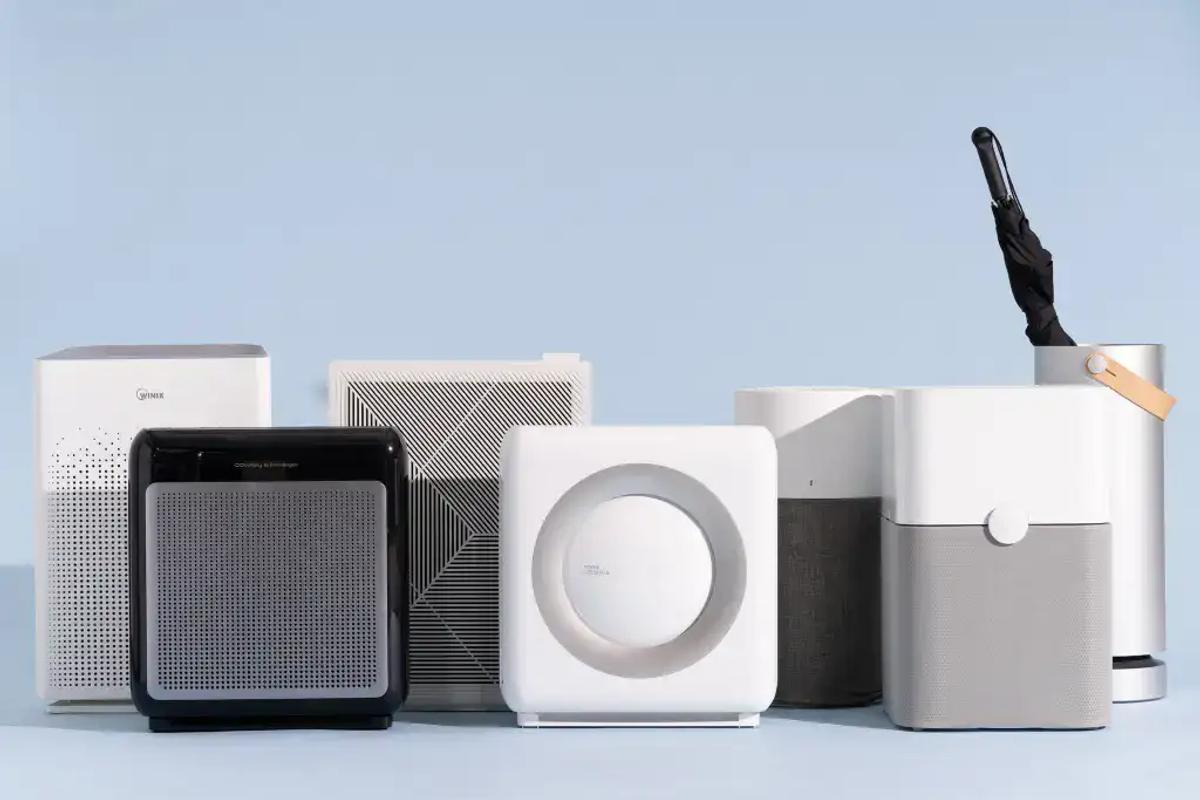
| Small-room / desktop | Levoit Core Mini-P, Levoit LV-H132 | Eligible with an LMN | $42.99 to $89.99 | Bedrooms, offices, single-person spaces |
| Mainstream HEPA | Levoit Core 300S-P and 400S-P, Coway Airmega 350, Winix | Eligible with an LMN | $74.99 to $550 | Living rooms, most asthma and allergy needs |
| Premium HEPA | Molekule Air Mini+, Dyson purifiers, Molekule Air Pro | Eligible with an LMN | $349.99 to $1,014.99 | Large rooms, added gas and VOC filtration |
| Medical-grade / high-CADR | Austin Air HealthMate Plus, IQAir HealthPro Plus 250, IQAir Atem X | Eligible with an LMN | $895 to $1,399.99 | Severe respiratory conditions, chemical sensitivities |
Can You Buy a Dyson Air Purifier With HSA/FSA?
Yes, on the same terms as any unit: an LMN tied to your condition. The sticking point people hit is that Dyson does not badge its checkout as HSA/FSA eligible, and they read that absence as a no. It is not. What matters is the filtration: confirm the model uses true HEPA (Dyson's purifiers do), and it qualifies like any medical-grade unit. The same logic covers every brand, from Blueair to Levoit to Molekule: the badge does not decide eligibility, your documentation and the filtration do.
What Air Purifier Spending Does NOT Qualify
Even with an LMN, several situations still fall outside eligibility:
- No documented condition. A purifier bought for fresher air, cooking odors, or peace of mind is not eligible.
- Purchases dated before your LMN existed.
- Limited Purpose FSAs and Dependent Care FSAs. An LPFSA covers only dental and vision, and a DCFSA covers childcare, so neither pays for an air purifier even with an LMN.
- Whole-home upgrades with no medical basis. A unit bought for general household air quality, not for a person with a condition, does not meet the standard.
The EPA calls the benefit of portable HEPA cleaners "typically small," which is exactly why administrators want the condition documented rather than assumed.