Why massage guns qualify for HSA/FSA
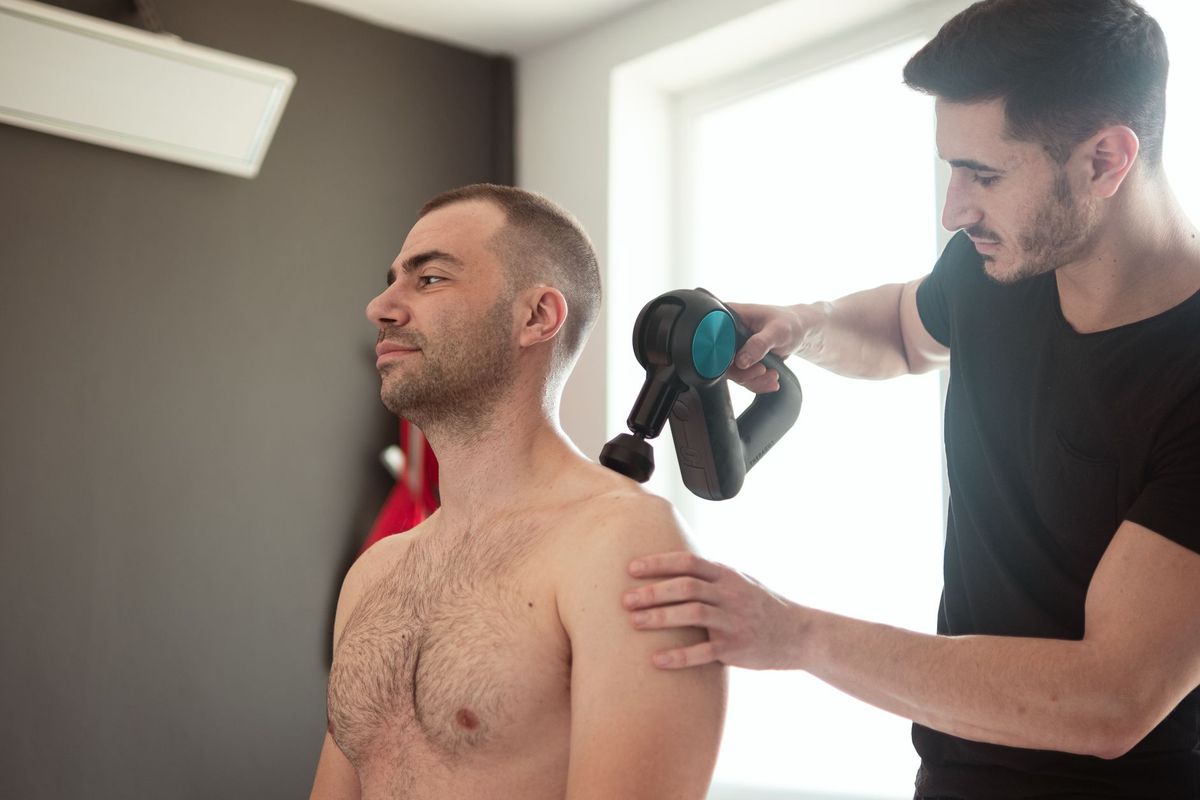
A massage gun works your muscles with fast, repeated pulses. When a provider recommends that percussion for a health condition, such as chronic back pain, your Letter of Medical Necessity (LMN) connects the device to your medical care.
IRS Publication 502 defines medical expenses to include the costs of “diagnosis, cure, mitigation, treatment, or prevention of disease”. Once a licensed provider links the gun to your condition in your Letter of Medical Necessity, it's HSA/FSA eligible. The medical purpose is the difference between managing persistent muscle pain and buying a gadget for everyday relaxation.
“Percussion massager” and “massage gun” describe the same kind of handheld device: a motor moves the massage head rapidly back and forth. That's what this guide is about. For neck wraps, back cushions, foot massagers and other home-massage tools, see our broader massagers guide.
Do massage guns work?
Yes, massage guns can help reduce muscle pain and improve flexibility. A systematic review in the International Journal of Sports Physical Therapy examined 13 studies of percussive therapy. It found that a single session improved flexibility and that repeated sessions reduced musculoskeletal pain.
Cleveland Clinic explains that the rapid pulses increase blood flow and can reduce tightness in muscle tissue. In practice, that means relief you can aim at one spot, like your shoulders or lower back.
Health conditions that can support a massage-gun LMN
These are some of the common conditions a provider can document for a massage gun. Medical guidance includes massage in the care of each one. A massage gun can also fit into a rehab plan that uses exercise or other therapy.
- Low back pain. The American College of Physicians guideline recommends nondrug treatment with superficial heat, massage, acupuncture or spinal manipulation for acute or subacute low back pain. A Cochrane review of 25 trials included massage by hand or with a mechanical device. It found that massage improved pain in the short term across acute, subacute and chronic low back pain. In a six-week trial of 38 firefighters with chronic nonspecific low-back pain, the group receiving percussive massage plus core stability exercises had lower pain scores than the group doing core exercises alone.
- Neck pain. Mayo Clinic says massage of the neck and shoulder muscles may help lessen tightness and pain, especially for people with long-term neck tension. A trial of 50 people with chronic neck pain and trigger points in the upper trapezius muscles looked at percussive massage and neck-and-shoulder stretching. Both improved resting pain and neck disability over three weeks.
- Myofascial pain syndrome. In this long-term pain condition, pressure on sensitive spots in a muscle, called trigger points, causes pain. Mayo Clinic lists massage among the condition's treatment options, along with exercise and physical therapy. A trial of 60 people with calf trigger points found improvements in pain and ankle movement after massage-gun therapy or therapist-applied myofascial release, each followed by ice. The therapist-applied approach produced greater improvements.
- Fibromyalgia. Its main sign is widespread pain throughout the body. Mayo Clinic lists massage therapy among treatments for fibromyalgia and says massage can relax muscles, improve the range of motion in joints and boost the body's natural pain-relieving chemicals.
How to get your Letter of Medical Necessity for a massage gun
Two routes lead to a Letter of Medical Necessity for a massage gun:
- Through Crates, typically in under 24 hours. You'll spend about 2 to 3 minutes filling out a short online health assessment. A licensed provider reviews it, and if you qualify, your letter is issued for the massage gun. You can use your LMN for 12 months, and it renews each year.
- Through your own doctor, a few days to a few weeks. Book a visit and ask for an HSA/FSA letter explaining how a massage gun helps prevent, manage, or reverse your condition. Your doctor signs and dates the letter, and you may pay a copay for the visit.
For a condition that isn't listed above, the gun qualifies the same way when your provider explains in your LMN how it fits your care.
How to buy a massage gun with HSA/FSA funds
Buy your massage gun from Amazon, a sporting-goods store or the brand's own website, then get your HSA/FSA money back:
- Get your Letter of Medical Necessity first. Start with either route above.
- Buy the massage gun anywhere. Whether you shop online or in store, use your personal card. Keep the itemized receipt listing the massage gun and the amount you paid.
- Get your funds back. Choose Crates one-click reimbursement to have us file the claim for your purchase, or upload the letter and receipt yourself; when using an HSA, keep both documents with your tax records.
Our HSA vs. FSA guide explains the differences between paying yourself back from an HSA and filing an FSA claim.
Which massage guns are HSA/FSA eligible?
Brand and size don't decide eligibility; the medical reason in your letter does. Portable, deep-tissue and mini massage guns are all eligible with an LMN when your provider recommends them for your condition.
| Massage gun type | What it is | HSA/FSA eligibility |
|---|---|---|
| Portable massage gun | A handheld device you can carry between home, work and the gym | Yes, with an LMN |
| Deep-tissue massage gun | A percussion gun marketed for a deeper muscle massage | Yes, with an LMN |
| Mini massage gun | A smaller-format percussion device designed for easy carrying | Yes, with an LMN |
These descriptions overlap: a mini gun is portable, and a full-size portable model may also be described as deep-tissue. Size and shape affect how the device feels in your hand. When you're comparing, look for a grip that's easy to hold and intensity you can adjust.
Theragun and Hypervolt massage guns
Therabody makes Theragun massage guns, and Hyperice makes Hypervolt massage guns. Both sell handheld percussion guns in a range of shapes and controls.
| Brand | Known for | HSA/FSA eligibility |
|---|---|---|
| Therabody | Theragun percussion massage guns | Yes, with an LMN |
| Hyperice | Hypervolt percussion massage guns | Yes, with an LMN |
Our Therabody HSA/FSA guide covers the Theragun family, while our Hyperice HSA/FSA guide covers Hypervolt and the brand's other recovery devices. Every other massage-gun brand follows the same rule, so you can pick one that fits your budget.
A gun lets you direct the massage head to a particular muscle. Weighing it against a seated massage chair? Our massage-chair guide covers that separate purchase.
How much can you save on a massage gun?
The bonus of using HSA or FSA money: an eligible massage gun ends up costing you as much as 30% less. On a $250 massage gun, if roughly 30% of it would have gone to taxes, you keep $75 in your pocket and your real cost is $175. The price at checkout stays $250.
That combined rate can include federal income tax, state income tax and payroll taxes where applicable. Each column multiplies the purchase price by the illustrated tax rate:
| Example massage-gun purchase | Savings at 20% combined rate | Savings at 30% combined rate |
|---|---|---|
| $100 | $20 | $30 |
| $250 | $50 | $75 |
| $400 | $80 | $120 |
These are example prices, not current offers or guaranteed discounts. IRS Publication 969 describes the accounts' tax advantages; your real savings come down to your own taxes and how money goes into the account. Reimbursement returns money from your own account, while the savings come from the tax advantage. Provider or LMN fees are separate.