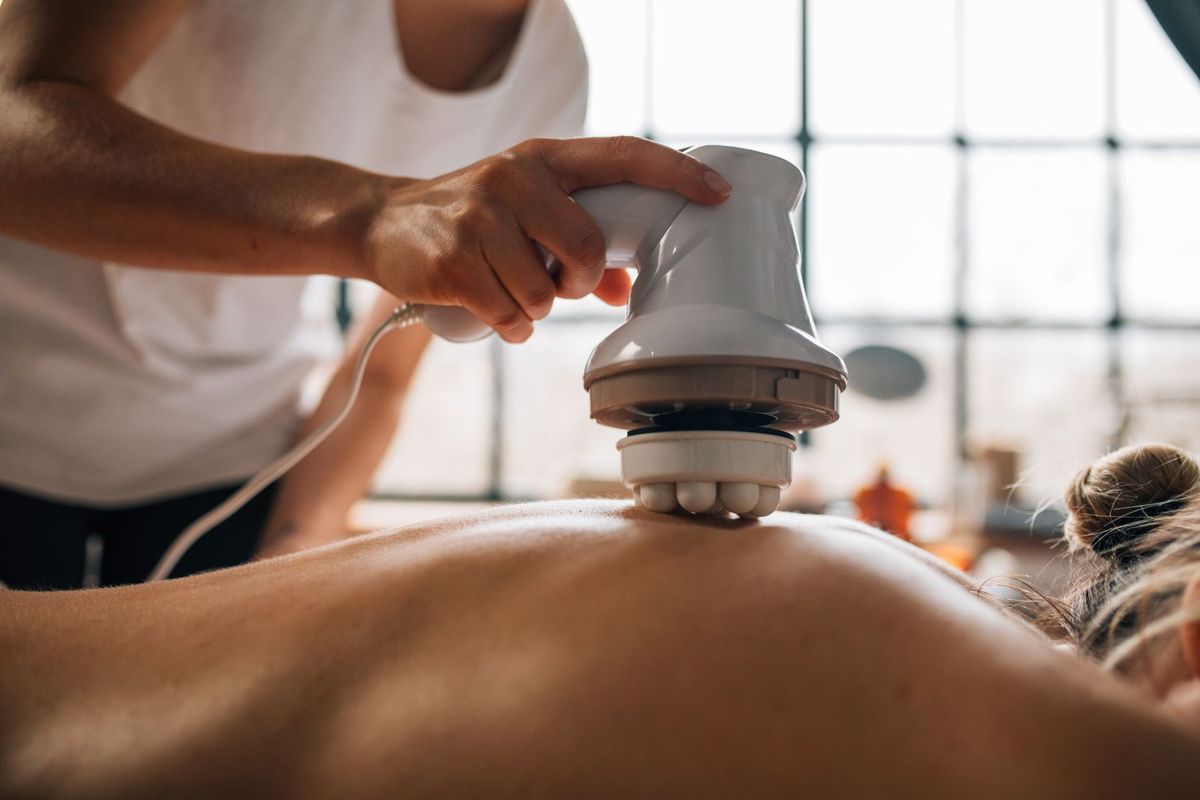
Why massagers qualify for HSA/FSA
A massager used to manage chronic back pain or another specific condition is eligible through the Letter of Medical Necessity route. The letter connects the device to your medical care, explaining why you need it beyond everyday comfort.
IRS Publication 502 defines medical expenses to include the “diagnosis, cure, mitigation, treatment, or prevention of disease.” A handheld massager, neck wrap, back cushion or foot massager can have both a medical purpose and a general relaxation purpose. Your documented use establishes the distinction.
For example, FSAFEDS requires a doctor-signed LMN and detailed receipt for massage devices. A retailer's HSA/FSA badge does not replace the letter. This guide covers devices; appointments with a practitioner have their own massage therapy eligibility rules.
Do home massagers actually help with pain?
Self-massage can help with some pain symptoms, but evidence for massage does not establish that every home device works. A systematic review in the Journal of Integrative and Complementary Medicine examined 17 studies involving 770 people with musculoskeletal pain or chronic conditions. Its authors described self-massage as “a viable approach” for symptom management, including alongside professional care.
The studies varied in technique, duration and condition. Manual self-massage, foam rolling and a motorized shiatsu cushion are different interventions. The review is a reason to discuss a suitable approach with your provider, not proof that a particular electric massager will relieve your symptoms. An eligibility letter documents medical purpose; it is not a clinical endorsement of every feature on the box.
NCCIH reports that serious adverse effects from massage are rare, but vigorous pressure can cause injury, especially in vulnerable people. Ask your provider about suitable pressure and placement if you have a condition that could make massage unsafe.
Conditions that can support an LMN for a massager
Back pain, neck pain, plantar fasciitis and knee osteoarthritis are reasons to discuss a specific home-massage approach with your provider. The letter should name your condition and explain the device's role in managing it.
- Chronic back pain. The self-massage review includes studies of neck and back pain. If self-massage fits your care plan, a provider can document the affected area and why a handheld tool or back device suits that purpose.
- Chronic neck and shoulder pain. NCCIH describes evidence of short-term benefit from massage for neck or shoulder pain. Discuss the reach and pressure of a neck wrap or handheld device when choosing a home option.
- Plantar fasciitis. A 50-person randomized trial of foam rolling and stretching found immediate improvements in both groups, without a significant difference between them in reported pain. A foot roller is a concrete self-massage option to discuss for heel pain.
- Knee osteoarthritis. NCCIH summarizes small studies of massage for knee osteoarthritis, including pain and stiffness outcomes. Your provider can help choose an appropriate home approach and document its place alongside the rest of your care.
How to get an LMN for a massager
Your usual provider or a licensed provider through Crates can write an LMN when a massager is appropriate for your condition. Start with the exact device or device type you plan to buy.
The letter should include:
- Your name and the specific medical condition
- The recommended massager and how it supports your care
- The expected period of use
- The provider's credentials, signature and date
Option 1: Through Your Doctor
If you already see a provider for your condition, they can write the letter:
- Book a visit and say you want to buy a massager with HSA/FSA funds
- Ask them to document how it helps prevent, manage, or reverse your condition
- Make sure the letter is signed and dated
- Timeline: a few days to a few weeks, and you may owe a copay
Option 2: Through Crates
Crates streamlines the same process online:
- Complete a short health assessment, about 2 to 3 minutes
- A licensed provider reviews it, typically within 24 to 48 hours
- If you qualify, your Letter of Medical Necessity is issued for the massager
- Buy the massager with your personal card at any retailer
- Use Crates one-click reimbursement to get your HSA/FSA funds back
- Your LMN stays valid for 12 months and renews each year
You do not need a pharmacy prescription; the letter itself is what establishes eligibility.
How to buy a massager with HSA/FSA funds
Crates keeps this to three steps: get your letter, buy the massager you want, and get your HSA/FSA funds back.
- Get your LMN. Through your doctor or through Crates, as described above.
- Buy the massager anywhere. Pay with your personal card at any retailer, online or in store, and keep the itemized receipt showing the item and the amount paid.
- Get your funds back. Use Crates one-click reimbursement to file the claim for you, or submit the letter and receipt to your administrator yourself. For an HSA, keep both with your tax records.
IRS Publication 969 explains the different recordkeeping and reimbursement rules. HSA expenses must arise after the account is established; FSAs have plan-year and filing deadlines. Our HSA vs. FSA guide explains how those account differences affect a purchase.
Choosing a handheld, neck, back or foot massager
Choose a device you can position and control comfortably for the purpose your provider recommends. A higher price, extra heat setting or larger motor does not establish eligibility.
| Device type | What to compare | What to clarify before buying |
|---|---|---|
| Handheld massager | Grip, weight, reach and adjustable intensity | Whether you can reach the intended area without straining |
| Neck and shoulder massager | Strap fit, pressure controls and an accessible off switch | Whether its pressure and placement suit your neck or shoulder symptoms |
| Back cushion or pad | Fit against your chair, node position and intensity settings | Whether the massage area lines up with the intended part of your back |
| Foot massager or manual roller | Foot size, ease of removing your feet and pressure control | Whether the recommended approach is manual rolling or a particular powered device |
Read the model's instructions and match the product name on the receipt to your documentation. If you are comparing branded devices, our Therabody HSA/FSA guide and Hyperice HSA/FSA guide cover those product families.
For a wider comparison that includes compression and other technologies, use the recovery tools eligibility guide. Percussion guns and full massage chairs are separate buying decisions from the handheld tools, wraps, cushions and foot devices covered here.
How much can HSA/FSA funds save on a massager?
Your tax rate determines the savings. At a combined rate near 30%, a hypothetical $150 eligible massager represents about $45 in avoided taxes, for an effective after-tax cost of $105. The retailer still charges $150; the benefit comes from using tax-advantaged money.
| Illustrative device price | Savings at 22% | Savings at 32% | Savings at 37% |
|---|---|---|---|
| $50 | $11 | $16 | $18.50 |
| $150 | $33 | $48 | $55.50 |
| $300 | $66 | $96 | $111 |
These are examples, not current product prices or promised discounts. Each column multiplies the eligible purchase price by the illustrated marginal tax rate. Publication 969 describes the tax advantages of HSA and FSA contributions; your actual benefit depends on your taxes and how you contribute. Any provider or LMN fee is separate from the device prices shown.
What does not qualify?
A massager bought solely for relaxation or general wellness, with no specific medical purpose, does not qualify. The same kind of device can qualify when used for a documented condition. Publication 502 distinguishes medical care from expenses merely beneficial to general health.
| Purchase or use | Eligibility boundary |
|---|---|
| A massager bought only to unwind | General wellness without a specific medical purpose does not qualify |
| An amount already paid back by insurance or another account | The same expense cannot be reimbursed twice |
IRS Publication 969 excludes expenses already reimbursed from another source. A sale, an unused FSA balance or an eligible label does not replace the medical-purpose and documentation requirements for the purchase.