Why compression socks qualify for HSA/FSA
Compression socks qualify when they're doing a medical job, and the pressure rating on the label decides which path you take. That rating is written in mmHg, short for millimeters of mercury, and it tells you how much pressure the sock puts on your leg. A 15-20 mmHg pair needs a letter, while 30-40 mmHg medical hosiery doesn't.
IRS Publication 502 includes expenses for the “diagnosis, cure, mitigation, treatment, or prevention of disease.” For 15-30 mmHg socks, a licensed provider's Letter of Medical Necessity connects them to your health condition.
Medical compression hosiery rated 30-40 mmHg and above qualifies without an LMN. Keep the itemized receipt showing the compression rating. Cleveland Clinic's July 2026 guide describes 30-40 mmHg as medical-grade compression that is usually only available by prescription, so get your clinician's recommendation before you buy a 30-40 mmHg pair.
Which health conditions can support an LMN for compression socks?
Chronic venous insufficiency, pregnancy swelling, POTS, lymphedema and varicose veins are some of the common conditions a provider can document. For each one, medical sources list compression as part of care. If one of them is why you wear everyday 15-30 mmHg socks, your LMN is where your provider says so.
- Chronic venous insufficiency: When damaged leg veins have trouble returning blood to the heart, blood pools in the legs. Cleveland Clinic says providers commonly recommend compression therapy for CVI and that it helps ease swelling and discomfort in your legs.
- Pregnancy swelling: Swelling in the feet and ankles is common during pregnancy. Mayo Clinic says a healthcare professional might recommend support tights or stockings to help with that swelling. Pregnancy compression socks worn for it qualify with an LMN.
- Postural orthostatic tachycardia syndrome (POTS): Cleveland Clinic says compression therapy can help push blood up from your legs to help reduce POTS symptoms.
- Lymphedema: Compression can help when lymph fluid builds up in an arm or leg. Mayo Clinic describes snug elastic sleeves and stockings that apply pressure to help fluid drain from the affected limb.
- Varicose veins: MedlinePlus identifies varicose veins as a reason to wear compression stockings. They gently squeeze your legs to move blood up, which helps with aching, a heavy feeling and swelling in the legs.
These aren't the only conditions that count. If you wear compression socks for another health condition, your provider can document in your LMN how they help, and they qualify too.
How to get a Letter of Medical Necessity for compression socks
Planning on everyday 15-30 mmHg socks? You have two ways to get your Letter of Medical Necessity:
- Through Crates, typically in under 24 hours. Allow about 2 to 3 minutes for the short online health assessment. A licensed provider reviews it, and if you qualify, your letter is issued for the compression socks. You'll have a valid LMN for 12 months, and it renews each year.
- Through your own doctor, a few days to a few weeks. Book a visit, say you want to buy compression socks with HSA/FSA funds, and ask your doctor to document how they help prevent, manage, or reverse your condition. Your doctor should give you a signed and dated letter for the socks, and you could owe a copay for the visit.
Buying 30-40 mmHg medical hosiery instead? That doesn't need an LMN.
How to buy compression socks with HSA/FSA funds
Buy your everyday 15-30 mmHg compression socks anywhere you like, then get your money back from your HSA or FSA.
- Get your Letter of Medical Necessity first. Get it through Crates or your own doctor, as covered above.
- Buy the socks wherever you prefer. Pay with your personal card and keep the itemized receipt showing the socks and amount paid. You can shop online or in store, including at a pharmacy or a medical-supply retailer.
- Get reimbursed. Choose Crates one-click reimbursement to have us file the claim for your socks, or upload the letter and receipt yourself. If you reimburse yourself from an HSA, keep the receipt and any required letter with your tax records.
For medical hosiery rated 30-40 mmHg and above, skip the letter step and keep the receipt showing the rating.
The timing rule is simple: an HSA covers eligible purchases made after you opened the account, and an FSA covers ones made during its coverage period. IRS Publication 969 explains these account rules, and our HSA vs. FSA guide compares the two ways to pay.
Which compression socks and stockings are HSA/FSA eligible?
Socks, stockings and hosiery qualify when you wear them for a medical reason, and the strength decides which route you take. Men's or women's, knee-high or thigh-high, travel or pregnancy: those labels describe the product. The mmHg number tells you its pressure level.
| Compression strength | What the product is | HSA/FSA eligibility |
|---|---|---|
| 15-20 mmHg | Moderate compression socks or stockings, including everyday and travel styles | Yes, with an LMN |
| 20-30 mmHg | Firm compression socks or stockings | Yes, with an LMN |
| 30-40 mmHg and above | Medical compression hosiery | Yes, without an LMN |
The Cleveland Clinic pressure guide explains the differences between these strengths. Travel and pregnancy socks in the 15-30 mmHg range work like any everyday pair: they qualify with an LMN tied to a health condition.
Compression sleeves cover part of an arm or leg rather than the foot. Sleeves rated 15-30 mmHg also qualify with an LMN for a health condition, such as lymphedema. Mayo Clinic's lymphedema guidance above includes both elastic sleeves and stockings.
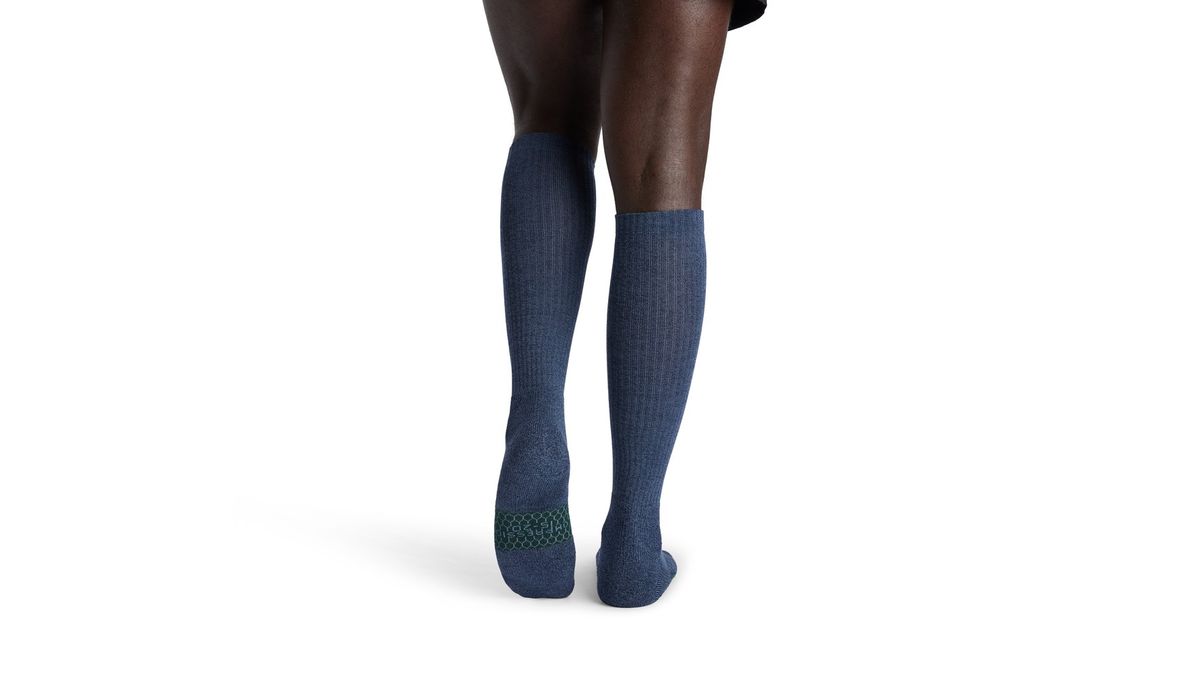
For a familiar everyday option, Bombas' Everyday Compression Knee High Socks are rated 15-20 mmHg, so they qualify with an LMN.
| Brand | What it offers | HSA/FSA eligibility |
|---|---|---|
| Bombas | Everyday knee-high compression socks rated 15-20 mmHg | Yes, with an LMN |
If you're also buying footwear, see our guide to HSA/FSA-eligible shoes. Air-powered compression boots are a different product; our Normatec eligibility guide covers that purchase.
How much can you save on compression socks?
Pay for eligible compression socks with pre-tax HSA or FSA funds and they cost you up to 30% less. How much you save depends on the taxes that money skips: federal income tax, state income tax where it applies and, for eligible payroll contributions, payroll tax.
Say you spend $60 at a combined tax rate around 30%: you save $18 in taxes, so the purchase works out to $42. That's an example, not a real sock price or a checkout discount.
Each column multiplies the purchase price by the illustrated tax rate:
| Illustrative purchase price | Savings at 20% | Savings at 30% |
|---|---|---|
| $30 | $6 | $9 |
| $60 | $12 | $18 |
| $120 | $24 | $36 |
Reimbursement just pays you back from money already in your HSA or FSA; the tax break on that money is where the savings come from. These examples leave out any cost of getting the letter.