Are Standing Desks FSA and HSA Eligible?
A standing desk is HSA and FSA eligible with a Letter of Medical Necessity (LMN) for a qualifying medical condition. It needs the letter because a standing desk is a dual-purpose item: the same desk is an ordinary productivity choice for one person and, for someone with chronic low back pain, the tool a provider recommends so they can change posture and keep moving through the workday. The LMN is what ties the purchase to a specific condition, and that is what turns a general office item into a reimbursable medical expense.
The rule underneath this comes straight from the IRS. Publication 502 defines a medical expense as a cost of "diagnosis, cure, mitigation, treatment, or prevention of disease." A standing desk can meet that bar when it is bought for a documented condition rather than for comfort or focus at work. Benefits administrators describe a product like this as a dual-purpose item: useful to the general population, but reimbursable when it serves a documented medical purpose. The LMN is the piece of paper that records that purpose.
The desk qualifies under a standard HSA or a general-purpose health FSA. It is not eligible under a Limited-Purpose FSA (LPFSA), which covers only dental and vision costs, or a Dependent Care FSA (DCFSA), which covers childcare rather than medical items. If you are still choosing between the two accounts, our HSA vs FSA guide breaks down the differences before you buy.
Why Standing Desks Matter for Modern Workers: The Science
The health case for a sit-stand setup rests on one idea: long, uninterrupted sitting is hard on the body, and breaking it up helps. That is the mechanism a provider documents when recommending a standing desk.
"Sitting is the new smoking" is a widely repeated public-awareness slogan, not a clinical finding, and the science behind it is more measured. Prolonged sitting is linked to higher heart-disease risk, and the Mayo Clinic notes it tracks with the metabolic-syndrome cluster: higher blood pressure, high blood sugar, excess fat around the waist, and unhealthy cholesterol, all of which raise cardiovascular risk. A 2012 meta-analysis in Diabetologia found that people with the most sedentary time had roughly a 147% higher risk of cardiovascular events than those with the least.
The more useful takeaway for a desk shopper is what helps. Research in Diabetes Care found that simply taking more breaks in sitting time was associated with a smaller waist, lower BMI, and better blood sugar, independent of how long people sat overall. The benefit comes from movement and changing position, not from standing rigidly for eight hours. That distinction matters for eligibility, because a standing desk earns its place as a way to interrupt sitting, not as a fix for anything on its own.
What Health Conditions Qualify for Standing Desk Coverage?
Eligibility is condition-driven, not brand-driven. A standing desk qualifies when your Letter of Medical Necessity names a specific, recognized condition that alternating sitting and standing helps prevent or manage. Wanting to feel better at work, on its own, is not enough. But when changing position through the day is how you manage a recognized condition like chronic low back pain or sciatica, it qualifies, and the letter simply has to name that condition.
The conditions below are the ones providers most often connect to a sit-stand recommendation, each paired with an authoritative source and the honest mechanism:
- Chronic low back pain. The most common reason people seek a letter for a desk. The highest-quality evidence, a Cochrane systematic review, found only limited, low-quality evidence and no statistically significant symptom reduction from sit-stand workstations. That is why the standard is a dual-use item a provider may recommend for a person with chronic back pain, not a proven fix. The value is the ability to shift posture and avoid a single static position all day.
- Sciatica. MedlinePlus describes sciatica as pain, weakness, numbness, or tingling along the sciatic nerve. A sit-stand setup lets someone with sciatica change position frequently rather than staying locked in one seated posture.
- Herniated or ruptured disc. MedlinePlus explains that a herniated disc can irritate nearby nerves and cause back pain or sciatica. The rationale here is symptom relief and activity modification, not a claim that standing lowers spinal disc pressure, which the research does not consistently support.
- Poor circulation and vascular function. A meta-analysis in Medicine & Science in Sports & Exercise found that prolonged uninterrupted sitting progressively impairs lower-limb blood-vessel function, and that regularly interrupting sitting helps counter it. A standing desk supports that interruption. Because prolonged standing carries its own circulatory downsides, the goal is alternating, not standing all day.
- Postural and musculoskeletal strain. A four-week workplace sit-stand study published in the CDC journal Preventing Chronic Disease reported a 54% reduction in upper-back and neck pain, with benefits fading within two weeks once the desks were removed. It was a small study, and the Cochrane review above was more cautious, so consider it promising rather than definitive.
Obesity and metabolic risk come up as secondary context: reducing prolonged sitting is part of the broader picture for metabolic health (the Mayo and Diabetes Care sources above), and a provider may factor it in alongside a primary musculoskeletal or circulatory reason. Post-surgical recovery and pregnancy-related musculoskeletal strain also come up, and while there is no single clean study for a desk specifically, a provider can reasonably recommend one based on your situation. In every case the mechanism is the same: alternating between sitting and standing roughly every 20 to 30 minutes is the active ingredient, not the desk itself, which is exactly what your provider's rationale should reflect.
How to Get Your Letter of Medical Necessity for a Standing Desk
The Letter of Medical Necessity is the single document that moves a standing desk from ordinary purchase to reimbursable medical expense. A complete letter names your specific condition, states that alternating sitting and standing is part of your care plan, explains why changing position through the day helps, and carries your provider's signature and date. Most letters are valid for about 12 months, which comfortably covers a single purchase and the accessories that go with it.
You can get one in two ways.
Option 1: Through Your Doctor
If you already see a provider for your condition, they can write the letter:
- Book a visit and say you want to buy a standing desk with HSA/FSA funds
- Ask them to document how it helps prevent, manage, or reverse your condition
- Make sure the letter is signed and dated
- Timeline: same day to a couple of weeks, and you may owe a copay
Option 2: Through Crates
Crates streamlines the same process online:
- Complete a short health assessment, about 2 to 3 minutes
- A licensed provider reviews it, typically within 24 to 48 hours
- If you qualify, your Letter of Medical Necessity is issued for the standing desk
- Buy the desk with your personal card at any retailer
- Submit with one-click reimbursement to process your HSA/FSA claim
- Your LMN stays valid for 12 months and renews each year
You do not need a pharmacy prescription; the letter itself is what establishes eligibility. Either way, start with the condition, not the desk, and keep the signed letter with your receipt.
Step-by-Step: Using Your FSA/HSA for a Standing Desk
Most HSA and FSA debit cards decline at a desk retailer because the merchant is not coded as a medical seller, so the standard path is to pay out of pocket and file for reimbursement. Plan for the reimbursement route rather than the card:
- Confirm your specific condition and obtain your Letter of Medical Necessity, dated for your records.
- Check your administrator's rules, since many plans want the letter on file before you buy.
- Buy the desk and keep the itemized receipt showing the product, price, and date.
- Pay with a personal card or cash, since the HSA or FSA card usually will not go through at checkout.
- Submit the letter and receipt to your administrator, or use Crates one-click reimbursement to file the claim for you.
- Expect reimbursement in roughly 2 to 4 weeks, depending on the administrator, and keep the letter and receipt in case your plan asks for substantiation later.
You reimburse yourself rather than paying the account directly at the register. Because employer FSAs vary, check your plan rules first, and keep the receipt itemized so the desk line stays clearly separate from taxes, delivery, or a bundled accessory.
Standing Desk Types and FSA/HSA Eligibility
Neither the brand nor the type on a standing desk decides eligibility; the Letter of Medical Necessity does. Every sit-stand desk people ask about is HSA and FSA eligible with a letter for a qualifying condition, so the real questions are which brand and which type fit how you work, not whether they qualify.
| Brand | Known for | Eligible with an LMN |
|---|---|---|
| UPLIFT | V2 and V3 electric sit-stand desks | Yes |
| FlexiSpot | Value electric sit-stand desks and converters | Yes |
No brand's own checkout changes the rule: get your Letter of Medical Necessity through Crates, then buy the desk wherever you like and file for reimbursement.
Match the Desk Type to How You Work
The type you choose is about ergonomics and budget, not about whether it qualifies. A full electric desk suits someone who will switch positions often; a converter adds standing to a desk you already own; a treadmill or pedal base adds movement rather than just standing.
- Electric sit-stand desks raise and lower at the push of a button, which makes frequent switching easy and is the most common match for a daily sit-stand routine.
- Manual or crank sit-stand desks trade motorized convenience for a lower price while still letting you alternate positions.
- Sit-stand converters (desktop risers) sit on top of your existing desk and are the budget way to add standing without replacing furniture.
- Under-desk treadmills and walking-pad desks add walking to the workday and lean more on physical activity than posture.
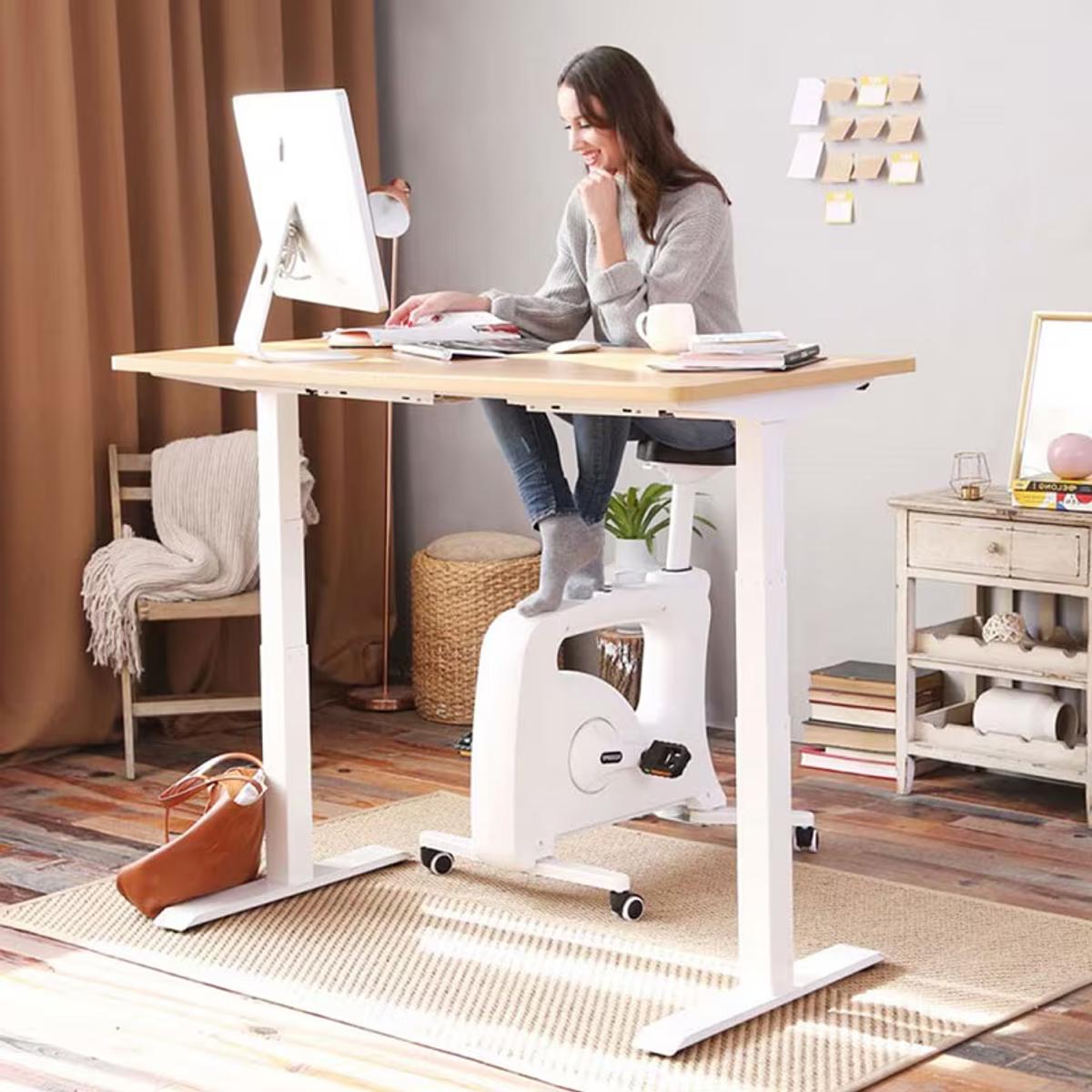
- Under-desk bikes and pedal desks add low-impact movement while you stay seated.
| Type | Example models | Typical price | Best for |
|---|---|---|---|
| Electric sit-stand desk | FlexiSpot EW2 48x24, UPLIFT V3, Autonomous SmartDesk Core, Vari 60x30, FlexiSpot E7-PRO | $287.99 to $1,004.99 | Frequent, hands-free position changes |
| Manual / crank sit-stand desk | Costway hand-crank frame, Mount-It! crank desk with tabletop | $125.99 to $399.99 | A budget full-desk replacement |
| Sit-stand converter (desktop riser) | Karl Home converter, Mount-It! 25-inch converter, FlexiSpot EM7 riser, VariDesk Pro Plus 36 | $32.99 to $499.00 | Adding standing to an existing desk |
| Under-desk treadmill / walking-pad desk | LifePro PacerMini, LifeSpan TR1000-Classic | $299.99 to $1,799.00 | Adding walking, not just standing |
| Under-desk bike / pedal desk | Sunny Health pedal exerciser, Stamina Wirk Ride | $69.99 to $234.99 | Low-impact movement while seated |
Under-desk treadmills, walking-pad desks, and pedal desks sit at the edge of the desk category and behave more like exercise equipment, so the medical rationale usually centers on physical activity rather than posture. They still qualify with a letter; if that is what you are after, our workout equipment HSA/FSA guide covers that family in depth.
Are Standing Desk Accessories FSA/HSA Eligible?
Accessories follow the same rule as the desk itself. One Letter of Medical Necessity that describes your sit-stand recommendation can cover the desk and the pieces that make it work, so you usually do not need a separate letter for each item, as long as each piece serves the condition your provider documented.
Accessories people commonly include on an ergonomic-setup letter:
- Anti-fatigue standing mats, which reduce the strain of standing and make alternating positions sustainable
- Monitor arms, which set screen height to keep the neck and upper back in a neutral position
- Ergonomic chairs, for the seated half of a sit-stand routine
- Keyboard trays and footrests, which position the wrists and legs to reduce postural load
- Sit-stand converters, if you are adding standing capability to an existing desk
The rule stays consistent: the accessory has to serve the condition your provider recommended the desk for. A cable-management kit or a decorative item bought for convenience does not qualify, even if it lives on the same desk.
How Much Can You Save with HSA/FSA?
Your savings equal your tax rate applied to the reimbursed amount. HSA and FSA dollars are set aside before income tax, so a desk paid with them effectively costs less by whatever combined rate you would otherwise pay. The higher your bracket, the larger the discount. Here is what that looks like across three common price points, using verified 2026 prices.
| Standing desk purchase | Price | 22% bracket saves | 32% bracket saves | 37% bracket saves |
|---|---|---|---|---|
| Sit-stand converter | $169.99 | about $37 | about $54 | about $63 |
| Electric desk (UPLIFT V3) | $599.00 | about $132 | about $192 | about $222 |
| Premium electric desk | $999.00 | about $220 | about $320 | about $370 |
Each figure is that rate applied to the purchase price. If you contribute through payroll, your contributions also skip the 7.65% FICA tax, which is how total savings reach 30% or more for many buyers. So a $599 electric desk bought with pre-tax dollars in the 32% bracket works out to roughly $192 back, like a standing discount on the purchase.
Standing Desk vs. Traditional Desk: Health Impact
The meaningful difference between a traditional desk and a sit-stand desk is not standing versus sitting; it is the ability to change. A fixed desk holds you in one posture for hours. A sit-stand desk lets you alternate, and that variability is what the research points to as helpful.
| Factor | Traditional desk | Sit-stand desk |
|---|---|---|
| Posture options | One fixed height | Adjustable sitting and standing |
| Movement through the day | Minimal | Encourages regular position changes |
| Fit for a back-pain or circulation care plan | Limited | Supports alternating positions |
| HSA/FSA eligibility | Not eligible (no medical feature to document) | Eligible with an LMN |
The honest caveat: a sit-stand desk is not better because standing is inherently good. Standing for hours without a break can worsen sciatica symptoms and strain lower-limb circulation, the same way sitting all day can. The health value is in switching between the two roughly every 20 to 30 minutes, which a traditional desk cannot do and which is exactly the behavior your provider's recommendation should describe.
What Does Not Qualify for Standing Desk Coverage?
Just as important as what qualifies is what does not. Without a specific condition and a Letter of Medical Necessity, a standing desk is an ordinary office expense, and a couple of account types never cover one at all. These are the cases that fall outside eligibility:
- Comfort, posture preference, or productivity alone. Wanting to feel better at work or focus more is not a medical purpose, and none of it qualifies a desk on its own.
- A general-wellness purchase with no provider recommendation. IRS guidance is explicit that medical expenses cannot be for things "merely beneficial to general health". A desk bought for general wellness does not clear that line, though the same desk tied to a named condition like chronic low back pain or sciatica does.
- Self-identified conditions with no provider involvement. The letter has to come from a licensed provider, not from your own assessment.
- Purchases made before the letter is dated. Many administrators want the recommendation on file before you buy, so buying first and documenting later can leave a past purchase ineligible.
- LPFSA and DCFSA accounts. A Limited-Purpose FSA covers dental and vision only, and a Dependent Care FSA covers childcare, not office equipment. Neither reimburses a standing desk.
- General office furniture bought for comfort rather than a documented condition, including a fixed-height desk, a bookshelf, or a decorative upgrade.
An LMN makes a desk eligible to be reimbursed, but the final decision belongs to your plan administrator, and reimbursement is never a certainty even with strong documentation. Keeping your paperwork tidy is what makes an eligible claim go through cleanly.
Common Mistakes to Avoid
- Buying the desk first, then trying to get the letter, when your administrator wanted the recommendation on file up front.
- Losing the itemized receipt, since a credit-card statement alone usually is not enough.
- Assuming an employer FSA follows the same rules as an HSA, when the two are separate.
- Expecting the HSA or FSA debit card to work at checkout.
- Assuming an LPFSA or DCFSA can be used, when only a regular HSA or FSA applies.