Why vibration plates qualify with an LMN
A vibration plate can be ordinary exercise equipment or part of a provider's plan for a specific health condition. A Letter of Medical Necessity (LMN) documents that medical purpose: what you are managing, why vibration belongs in your care, and which equipment supports it.
IRS Publication 502 defines medical expenses to include the “diagnosis, cure, mitigation, treatment, or prevention of disease.” A licensed provider connects the vibration plate to your condition in your Letter of Medical Necessity, and that is what makes it HSA/FSA eligible. A plate bought for general fitness is a personal purchase; one your provider recommends for a condition is a medical one.
A vibration plate qualifies with an LMN whatever the listing calls it, including plates sold as circulation devices. Our HSA vs FSA guide explains the account differences.
Do vibration plates actually work?
Yes, for specific health uses. Mayo Clinic notes that some research shows whole-body vibration, done correctly and under medical supervision when needed, can reduce back pain, improve strength and balance in older adults, and reduce bone loss. As the platform vibrates, your muscles contract and relax dozens of times each second.
Your provider can match the plate and routine to your condition. Mayo advises checking with your doctor before you start, especially if you're pregnant or have other health problems.
Which conditions can support a vibration plate LMN?
Conditions that can support a vibration plate letter include:
- Chronic low back pain. A systematic review in the Journal of Orthopaedic Surgery and Research found less pain and better back function with vibration therapy, including whole-body vibration. Your letter can tie the plate to your back-pain plan.
- Knee osteoarthritis. A 2025 PLOS ONE review of 16 randomized trials found that adding vibration to rehabilitation reduced knee pain and increased knee strength. Your letter can tie the plate to your rehab program.
- Obesity. A review of vibration training in adults with obesity found that 10 weeks of vibration training reduced weight and fat mass and built leg strength. Your letter can tie the plate to your weight-management plan.
- Osteoporosis or postmenopausal bone loss. A review in Osteoporosis International found that whole-body vibration improved bone density in the lower spine in postmenopausal women, with the strongest evidence for high-frequency, low-magnitude settings. Your provider can name the settings in your letter.
- Sarcopenia. This condition involves declining muscle mass and function with age. A review of older adults with sarcopenia found that vibration improved strength and physical performance. Your letter can tie the plate to keeping your strength and function.
How to get your LMN for a vibration plate
You can get an LMN from your own doctor or through Crates. Give the provider the product description and intended use so the letter connects the equipment to your health needs. Here is what to prepare for either route.
The letter should include:
- Your health condition and the reason for recommending vibration
- The equipment or device characteristics needed for that purpose
- The expected duration of the recommendation
- The provider's signature and date
Option 1: Through Your Doctor
If you already see a provider for your condition, they can write the letter:
- Book a visit and say you want to buy a vibration plate with HSA/FSA funds
- Ask them to document how it helps prevent, manage, or reverse your condition
- Make sure the letter is signed and dated
- Timeline: a few days to a few weeks, and you may owe a copay
Option 2: Through Crates
Crates streamlines the same process online:
- Complete a short health assessment, about 2 to 3 minutes
- A licensed provider reviews it, typically within 24 to 48 hours
- If you qualify, your Letter of Medical Necessity is issued for the vibration plate
- Buy the vibration plate with your personal card at any retailer
- Use Crates one-click reimbursement to get your HSA/FSA funds back
- Your LMN stays valid for 12 months and renews each year
You do not need a pharmacy prescription; the letter itself is what establishes eligibility.
How to buy a vibration plate with HSA/FSA funds
Crates keeps this to three steps: get your letter, buy the vibration plate you want, and get your HSA/FSA funds back.
- Get your LMN. Through your doctor or through Crates, as described above.
- Buy the plate anywhere. Pay with your personal card at any retailer, online or in store, and keep the itemized receipt showing the model and the amount paid.
- Get your funds back. Use Crates one-click reimbursement to file the claim for you, or submit the letter and receipt to your administrator yourself. For an HSA, keep both with your tax records.
IRS Publication 969 explains the recordkeeping rules: HSA expenses must arise after the account is established, and FSAs have plan-year and filing deadlines.
Which vibration plate should you buy?
The brand on the plate never decides eligibility; the Letter of Medical Necessity does. Every vibration plate brand people ask about is HSA and FSA eligible with a letter for a qualifying condition.
| Brand | Product family to compare | Eligible with an LMN for a qualifying medical use |
|---|---|---|
| Lifepro | Home vibration platforms | Yes |
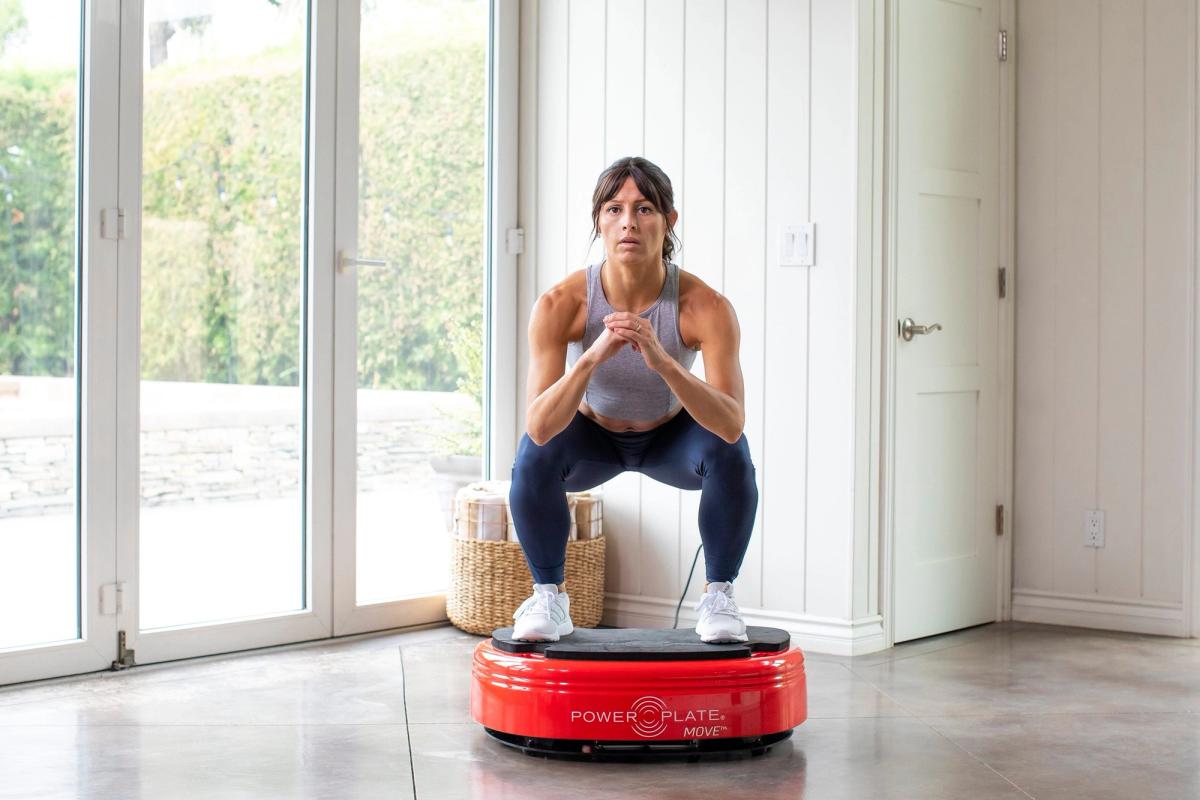
| Power Plate | Portable and larger whole-body platforms | Yes |
| Merach | CV-series curved vibration plates | Yes |
Compare movement and support
| Plate feature | What to compare |
|---|---|
| Side-alternating or oscillating platform | How far each side moves and whether the motion fits your recommended exercises |
| Vertical vibration | The actual frequency and acceleration, particularly for a bone-health recommendation |
| Multi-directional or 3D/4D modes | Which motion each setting produces |
| Handrails or support column | Stability, step height and whether you can get on and off securely |
Ask for frequency in hertz, movement size and acceleration where available. A numbered speed setting alone is difficult to compare across machines. Follow the manufacturer's instructions and your provider's plan.
For treadmills, bikes and strength equipment, use our workout equipment eligibility guide. For massage, compression and other devices, see the recovery tools guide.
How much can you save with HSA/FSA?
Your tax rate determines the savings. At a combined rate near 30%, a hypothetical $300 vibration plate represents about $90 in avoided taxes, for an effective after-tax cost of $210. The retailer still charges $300; the benefit comes from using tax-advantaged money.
Each column multiplies the purchase price by the illustrated tax rate:
| Vibration plate purchase | Price | 22% bracket | 32% bracket | 37% bracket |
|---|---|---|---|---|
| Lower-cost purchase example | $150 | $33 | $48 | $55.50 |
| Midrange purchase example | $300 | $66 | $96 | $111 |
| Larger purchase example | $1,000 | $220 | $320 | $370 |
These are examples, not current product prices or promised discounts. Publication 969 describes the tax advantages of HSA and FSA contributions; your actual benefit depends on your taxes and how you contribute.