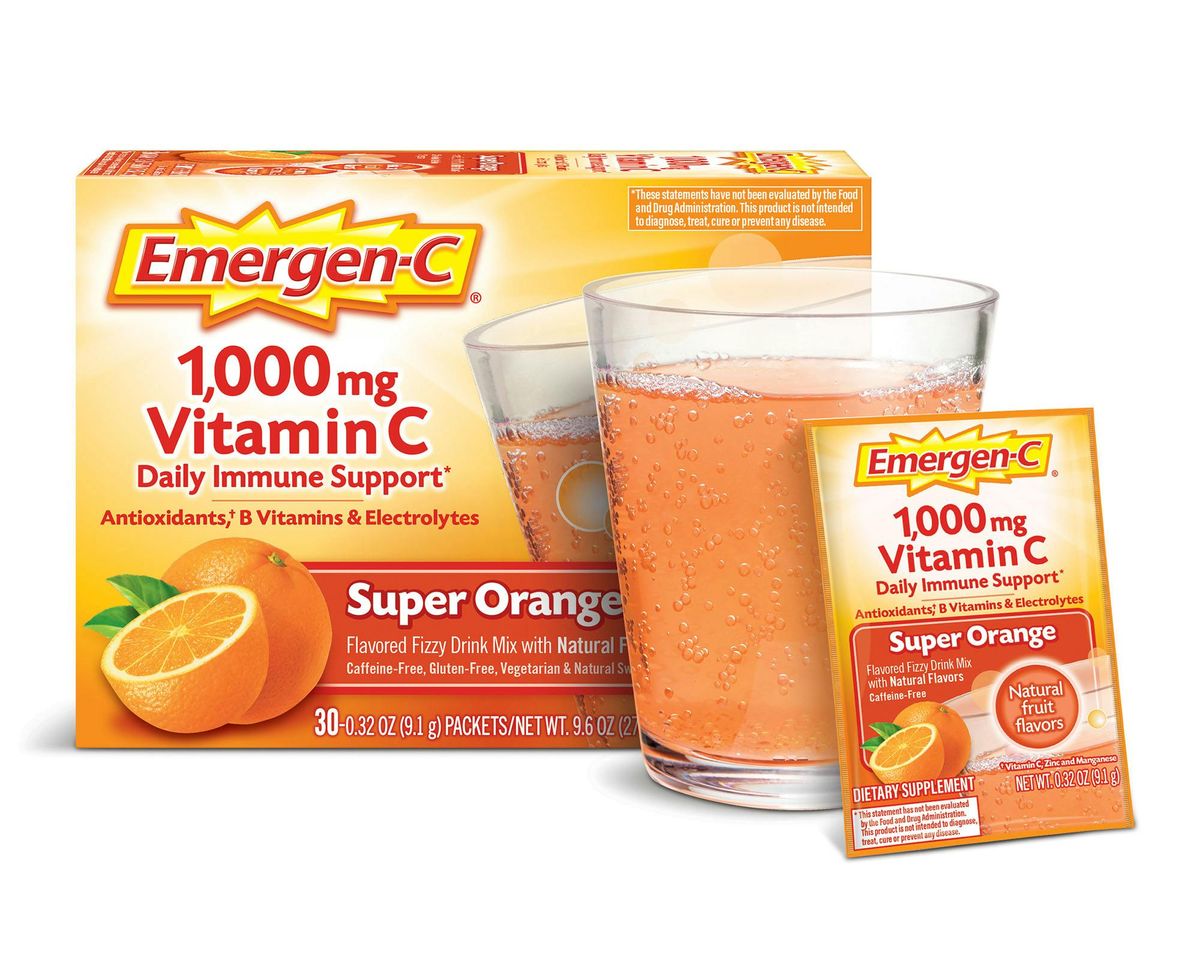
What Is Emergen-C
Tear open a packet, stir it into a glass of water, and the orange fizz is recognizable before the box comes out of the cupboard. Emergen-C is a dietary supplement brand best known for those vitamin C drink mixes, with gummies, chewables, and no-water-needed Crystals alongside its powders.
The brand's Original Formula Super Orange contains 1,000 mg of vitamin C per packet. A 30-count box at Target was about $13 when checked in October 2026. Immune+ and Zero Sugar expand the lineup, but formulas and nutrient amounts vary.
Emergen-C markets these products for immune support. For spending-account purposes, the useful distinction is that they are supplements: the same packet can be an everyday wellness purchase or a specific part of medical care. Our vitamins and supplements guide explains that broader category; here, the question is how your particular Emergen-C formula fits.
Why Emergen-C Qualifies for HSA/FSA
Yes, Emergen-C qualifies with a Letter of Medical Necessity connecting its nutrients to your medical care. IRS Publication 502 includes the “diagnosis, cure, mitigation, treatment, or prevention of disease” in medical expenses. Its supplement rule requires a medical practitioner's recommendation to manage a specific medical condition established by a physician; supplementation for general health is a personal expense.
That makes Emergen-C a dual-purpose purchase: the medical reason establishes the qualifying use. The same medical-purpose distinction applies to a general-purpose health FSA and an HSA; our HSA vs. FSA guide explains how the accounts work differently.
These are nutrient-based uses for a provider to evaluate, rather than evidence that Emergen-C itself has been clinically proven for each condition:
- Vitamin C deficiency, including scurvy. Replacing missing vitamin C directly addresses the deficiency. A clinical review of scurvy supports vitamin C supplementation; your provider decides whether the product and dose fit your needs.
- Vitamin D deficiency. A formula containing vitamin D, such as Immune+, can contribute to the supplementation your provider recommends. MedlinePlus explains that the amount, frequency, and duration depend on the individual deficiency.
- Osteoporosis. Vitamin D helps the body use calcium. MedlinePlus describes its role alongside calcium in bone disease care. A D-containing Emergen-C formula could supply that part of a provider's plan; it is not a complete osteoporosis regimen.
- Iron deficiency anemia. The American Gastroenterological Association advises adding vitamin C to oral iron, although a 440-person randomized trial found iron alone performed equivalently. This is an individualized adjunct your provider can assess. Emergen-C does not replace the iron supplement.
Which Emergen-C Products Qualify
An Emergen-C product qualifies when its actual formulation serves the medical purpose documented in your letter. Powder, gummy, and Crystals formats follow the same rule, but their ingredients are not interchangeable.
| Product family | What the letter needs to connect | HSA/FSA eligibility |
|---|---|---|
| Original Formula | Its vitamin C or other relevant nutrients to your condition | Eligible with an LMN for that medical use |
| Immune+, Gummies, Crystals, and Zero Sugar | The specific product's nutrients and amounts to your care plan | Eligible with an LMN for that medical use |
For example, Immune+ Super Orange includes vitamin D and 10 mg of zinc per packet. Show your provider the current package's Supplement Facts rather than relying on the brand name alone.
How to Get Emergen-C Covered
Get the letter first, then buy the specified product and keep the receipt for reimbursement.
- Get your LMN. Have a provider evaluate the medical purpose and document the suitable Emergen-C formula. The two routes below start here.
- Buy the product. Emergen-C's store locator points you to retailers. You can pay with a personal card wherever you shop; save the itemized receipt.
- Reimburse the expense. For an FSA, submit your receipt and letter through your administrator's process. For an HSA, retain those records when reimbursing yourself. Publication 969 explains the account rules and documentation responsibilities.
Your Letter of Medical Necessity
Whichever route you choose, the letter should include:
- Your condition and the medical reason for the supplement
- The Emergen-C formula, recommended use, and duration
- The provider's signature and date
Option 1: Through Your Doctor
If you already see a provider for your condition, they can write the letter:
- Book a visit and say you want to buy Emergen-C with HSA/FSA funds
- Ask them to document how this product category helps prevent, manage, or reverse your condition
- Make sure the letter is signed and dated
- Timeline: a few days to a few weeks, and you may owe a copay
Option 2: Through Crates
Crates streamlines the same process online:
- Complete a short health assessment, about 2 to 3 minutes
- A licensed provider reviews it, typically within 24 to 48 hours
- If you qualify, your Letter of Medical Necessity is issued for Emergen-C
- Buy Emergen-C with your personal card at any retailer
- Use Crates one-click reimbursement to get your HSA/FSA funds back
- Your LMN stays valid for 12 months and renews each year
You do not need a pharmacy prescription; the letter itself is what establishes eligibility.