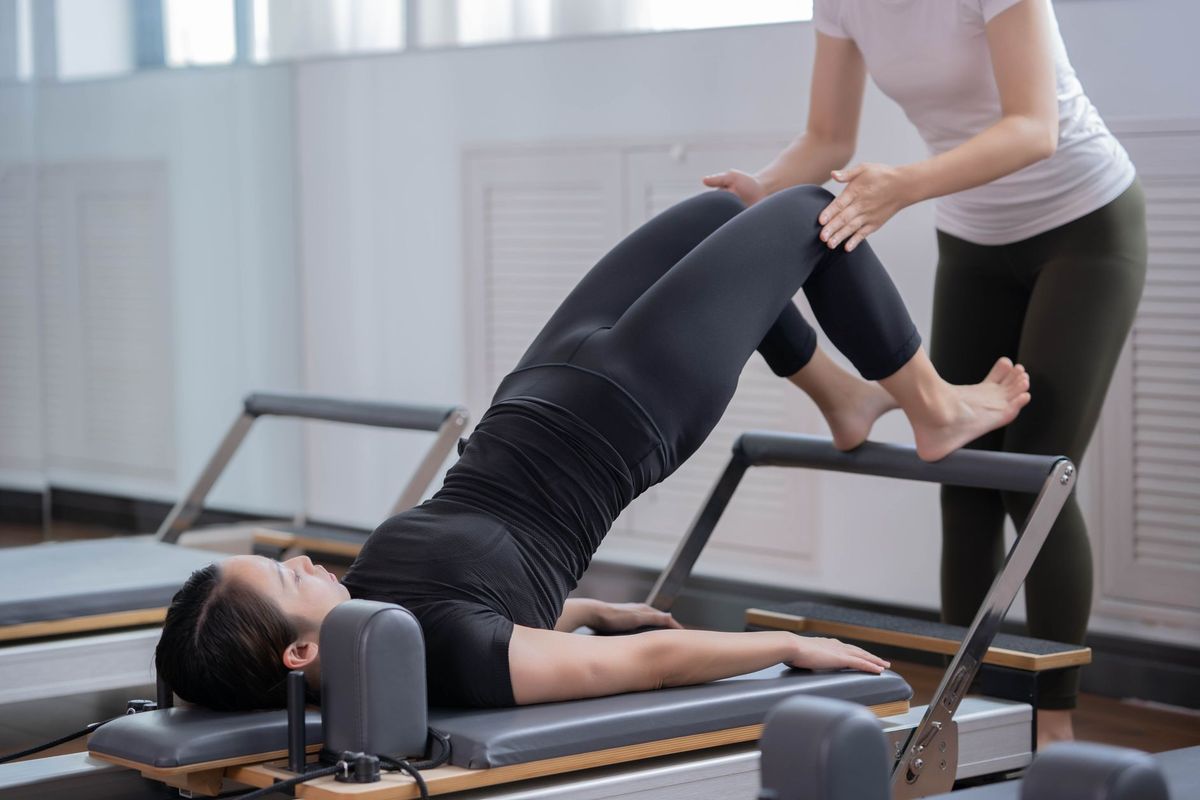
Why Pilates Classes Qualify for HSA/FSA
Pilates gives you a structured way to work on strength, body control and mobility. When those exercises help manage a health condition, a licensed provider can document the medical purpose in a Letter of Medical Necessity (LMN). Your class pack or studio membership then becomes an expense you can pay with HSA/FSA funds.
IRS Publication 502 defines medical expenses to include costs for “diagnosis, cure, mitigation, treatment, or prevention of disease.” For memberships, the IRS wellness FAQ adds a specific test: a membership is a medical expense “only if the membership was purchased for the sole purpose of affecting a structure or function of the body (such as a prescribed plan for physical therapy to treat an injury) or the sole purpose of treating a specific disease diagnosed by a physician (such as obesity, hypertension, or heart disease).”
That makes the reason you attend more important than the studio's name. A provider recommending Pilates to help you manage chronic back pain gives the classes a medical purpose. Joining simply because you enjoy the workout is general fitness. The letter explains the connection between your condition and the sessions you buy.
This page covers Pilates instruction, including group classes, private sessions and memberships. Buying a machine for home is a separate purchase, covered in our Pilates reformer eligibility guide.
Which Health Conditions Qualify for Pilates?
Chronic low back pain, knee osteoarthritis, chronic neck pain and multiple sclerosis are some of the common conditions a provider can document for Pilates. Pilates combines controlled exercise with strength and coordination work. The appropriate movements depend on your condition, so a gentle rehabilitation session and an advanced group workout serve different needs.
- Chronic low back pain. Pilates works on the muscles and movement control that support your trunk. A 2023 systematic review and meta-analysis of 19 trials involving 1,108 people found improvements in pain and disability compared with control groups. That gives the sessions a specific purpose beyond getting a workout.
- Knee osteoarthritis. Low-impact strengthening offers a way to work on joint function. A 2025 network meta-analysis in the Journal of Orthopaedic Surgery and Research found moderate-certainty evidence that Pilates improved pain and physical function compared with usual care. Your provider can connect the classes to managing knee symptoms and movement.
- Recovery after knee replacement. Pilates-based exercise can be part of the rehabilitation plan your surgeon or physical therapist sets, with a focus on balance and everyday function. In a randomized trial in Physiotherapy Theory and Practice, people who added Pilates-based exercises to their standard program after total knee replacement improved balance and quality of life more than those on the standard program alone.
- Chronic neck pain. Controlled movement and postural work can be part of a neck-pain exercise program. A 2025 review in BMC Musculoskeletal Disorders found Pilates improved pain and disability compared with control interventions.
- Scoliosis. Pilates gives you controlled work on posture, trunk rotation and spinal mobility. A 2021 meta-analysis of 10 randomized trials in the journal Medicine found Pilates eased pain and improved trunk mobility and quality of life in people with idiopathic scoliosis.
- Multiple sclerosis. Pilates-based rehabilitation can focus on balance, walking and core stability. A systematic review in the Journal of Clinical Medicine found benefits in those physical functions. An adapted session gives that movement work a place in your routine, with the exercises chosen for your abilities.
- Obesity. Classes on a regular schedule add strength work to a weight-loss plan. In a 2021 Frontiers in Physiology meta-analysis, adults with overweight or obesity who did Pilates lost more weight and body fat than comparison groups, with the clearest weight and BMI results in longer programs.
- High blood pressure. Pilates is a steady, low-impact routine your provider can build into a plan to lower blood pressure. A 2024 meta-analysis in the Journal of Human Hypertension found people with hypertension who did Pilates lowered systolic blood pressure by about 4.8 mmHg and diastolic by about 3.4 mmHg more than comparison groups.
Your provider can also name a condition that isn't listed here when your Pilates sessions help prevent or manage it.
How to Get a Letter of Medical Necessity for Pilates
You have two ways to get a letter for Pilates memberships or class packages:
- Through Crates, typically in under 24 hours. Complete the online health assessment in 2 to 3 minutes. A licensed provider reviews your answers and, if you qualify, issues your Pilates letter. Your letter covers 12 months; renew it when it ends.
- Through your own doctor, a few days to a few weeks. Book a visit and explain that you want to pay for Pilates with HSA/FSA funds. Ask your doctor to document how the sessions help prevent, manage, or reverse your condition. Make sure the letter is signed and dated. You may owe a copay.
How to Buy Pilates Classes With HSA/FSA Funds
Choose the studio you want to attend, pay normally, then get your money back from your HSA or FSA. You can keep your usual booking routine, whether you buy a package online or pay at the studio.
- Get your Letter of Medical Necessity first. Use Crates or your own doctor, as described above, before you buy your next class package or make your next membership payment.
- Buy your classes anywhere. Pay with your personal card and keep the itemized receipt showing the Pilates classes or membership and the amount paid.
- Get your money back. Crates one-click reimbursement files the claim for you, or upload the letter and receipt yourself. For an HSA, keep both documents with your tax records.
Class packs have one timing detail worth knowing: an FSA cannot reimburse future classes in advance. IRS Publication 969 says FSA reimbursement is for expenses incurred during your coverage period, and excludes advance reimbursement for future services. Paying for a pack in December does not make next year's classes this year's expense.
For an HSA, the expense must arise after you establish the account. The accounts also differ in who owns the money and what happens to unspent funds, and our HSA vs. FSA comparison sets them side by side.
Which Pilates Classes and Studios Are HSA/FSA Eligible?
Pilates studios follow the same medical-purpose rule: classes and memberships qualify with an LMN for your condition. You can attend a national chain or an independent studio. The choice of mat or reformer changes how you exercise, while the letter connects that exercise to your health need.
Cleveland Clinic describes Pilates as precise, flowing movement done on a mat or on equipment such as a reformer. These are different ways to take a class:
| Class format | What you are paying for |
|---|---|
| Reformer class | Instruction using the studio's reformer machine |
| Mat class | Guided floor exercises using body weight |
| Private session | An instructor working with you individually |
| Group session | An instructor leading several people through the class |
A reformer class pays for instruction and access to the studio's machine. You do not need to own a reformer to attend. Private versus group describes the amount of individual instruction; mat versus reformer describes the equipment. A studio can offer more than one combination.
Studio brands and membership choices
| Brand | Known for | Eligible with an LMN |
|---|---|---|
| Club Pilates | Reformer-based group classes | Yes |
Our Club Pilates guide covers that chain's own classes and memberships. Other studio brands and independent instructors qualify the same way when the sessions serve the medical purpose in your letter.
A class package buys a set number of sessions; a recurring membership buys the access described by that studio's plan. For example, an eight-class package and a membership offering eight classes a month are different ways to pay for instruction. Choose around how often you intend to attend and the flexibility you want, rather than treating one payment format as more eligible.
If your Pilates classes come through a broader fitness-club membership, our gym membership guide covers that arrangement.
How Much Can You Save on Pilates With HSA/FSA?
Paying for eligible Pilates with tax-advantaged money can save you up to 30%, depending on your taxes and how you contribute. With a recurring membership, the useful number is what you spend over a year.
For example, $150 a month is $1,800 in annual Pilates spending. At a combined rate near 30%, you keep $540 through tax savings, making the effective annual cost $1,260. That combined rate can include federal income tax, state income tax and payroll taxes where applicable.
Each figure below multiplies the example annual spend by the combined rate shown. These are illustrations, not current studio offers or promised discounts.
| Example annual Pilates spend | Save at 20% combined | Save at 25% combined | Save at 30% combined |
|---|---|---|---|
| $600 | $120 | $150 | $180 |
| $1,200 | $240 | $300 | $360 |
| $1,800 | $360 | $450 | $540 |
| $2,400 | $480 | $600 | $720 |
The studio's price doesn't change. Your HSA or FSA pays you back from your own account, and because that money is tax-advantaged, the saving is money you keep. Publication 969 explains how each account gets its tax break. Your real figure depends on your tax rates and how you contribute, and any provider or letter fee is separate.