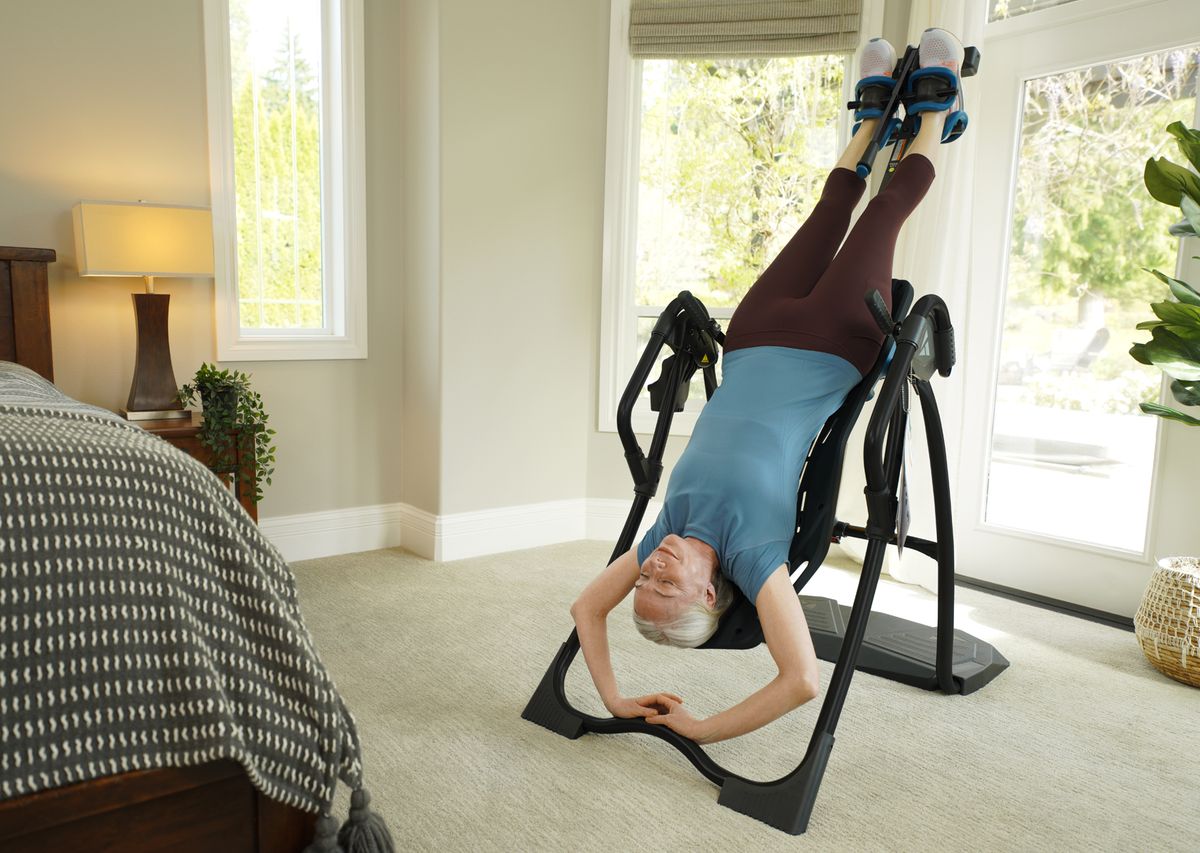
Why Inversion Tables Qualify for HSA/FSA
An inversion table holds you at the ankles and tilts you backward, so gravity pulls your spine into traction and stretches the muscles alongside it. The FDA's record for Teeter's inversion table describes exactly that: traction to the spine while stretching the muscles and soft tissues around it.
IRS Publication 502 defines medical expenses around the “diagnosis, cure, mitigation, treatment, or prevention of disease.” A Letter of Medical Necessity connects your inversion table to that purpose. The medical connection separates this purchase from general stretching or wellness.
When your provider ties the table to a condition such as chronic lower back pain in that letter, the table is HSA/FSA eligible, wherever you buy it.
Do Inversion Tables Work?
Yes, for short-term relief: inversion tables ease back pain for some people, and Cleveland Clinic suggests using one alongside your other care. A 2021 systematic review of vertical traction looked at three trials in people with sciatica-type nerve pain, one of them using inversion. Adding traction to medication or bed rest gave a large drop in pain; adding it to physical therapy gave a very small one. The results covered up to three months and rest on low or very low quality evidence.
Conditions That Qualify for an Inversion Table
Back pain, sciatica, herniated discs and muscle spasms are medical uses named in the Teeter device's FDA indications. A provider can document the connection between your condition and an inversion table:
- Chronic lower back pain: Gravity-assisted traction takes some loading off the lower spine during inversion, offering a way to manage pain associated with compression.
- Sciatica: Traction aims to reduce pressure around irritated spinal nerves that cause pain into the leg. The purpose is to manage nerve-related symptoms.
- Lumbar herniated disc: A herniated disc can irritate nearby nerves, causing back pain or sciatica, as MedlinePlus explains. Inversion provides traction for symptom management, without a promise to repair the disc.
- Back muscle spasms: The supported stretch reaches the muscles and soft tissues alongside the spine, helping address tension associated with spasms.
If your provider ties the table to another back condition, such as degenerative disc disease or spinal stenosis from the same FDA list, that qualifies too.
How to Get a Letter of Medical Necessity for Inversion Tables
You can get your letter through Crates or your own doctor:
- Through Crates, typically in under 24 hours. Complete a 2 to 3 minute online health assessment. A licensed provider reviews it, and if you qualify, your letter is issued for your inversion table. It stays valid for 12 months and renews each year.
- Through your own doctor, a few days to a few weeks. Book a visit and say you want to buy an inversion table with HSA/FSA funds. Ask them to document how it helps prevent, manage, or reverse your condition, and make sure the letter is signed and dated. You may owe a copay.
How to Buy Inversion Tables With HSA/FSA Funds
Buy your inversion table wherever you like, then get your money back in three steps:
- Get your Letter of Medical Necessity first, through Crates or your own doctor, as above.
- Buy the inversion table anywhere. Pay with your personal card, online or in store, and keep the itemized receipt showing the table and the amount paid.
- Get your money back. Crates one-click reimbursement files the claim for you, or upload the letter and receipt yourself. For an HSA, keep both with your tax records.
Already bought your table? Crates letters cover purchases from their issue date, so a new letter won't reach back to that one. Going forward, get the letter first, then buy.
Our HSA vs. FSA guide explains the accounts' different reimbursement and recordkeeping rules.
Inversion Table Brands and Features to Compare
Every inversion table qualifies the same way: with an LMN for your condition. Teeter is the one brand people search for by name, and any other brand's table qualifies just like it.
| Brand | Known for | Eligible with an LMN |
|---|---|---|
| Teeter | Manual inversion tables with adjustable tilt | Yes |
For any brand, compare how the table fits and supports you. The Teeter user guide illustrates why these controls matter:
| Feature | What to compare |
|---|---|
| Ankle restraints | A secure fit and a locking system you can operate |
| Angle control | A way to limit tilt and start at a shallow angle |
| Height and weight fit | The model's stated limits and its adjustment instructions |
| Return to upright | Controls you can use comfortably, with a spotter while learning |
Ask your clinician whether inversion is safe before using a table. Cleveland Clinic flags blood-pressure problems, heart conditions, glaucoma, acid reflux and pregnancy as reasons for caution. The head-down position makes this safety decision different from choosing ordinary exercise equipment.
If your care plan calls for a different approach, our guides cover Chirp back-care products, massagers and workout equipment. For pain-relief devices such as TENS units, see our recovery tools guide.
How Much Can You Save on an Inversion Table?
At a combined rate near 30%, a hypothetical $400 inversion table means $120 you keep, bringing its effective cost to $280. That combined rate includes federal, state and payroll taxes where applicable, depending on how you contribute to your account.
The table multiplies each example purchase price by the combined rate shown to calculate the tax saving.
| Example table price | At 20% | At 30% | At 40% |
|---|---|---|---|
| $200 | $40 | $60 | $80 |
| $400 | $80 | $120 | $160 |
| $600 | $120 | $180 | $240 |
These are illustrative prices, not current offers. The retailer still charges the purchase price, and reimbursement uses your own account money. Your actual tax benefit depends on your taxes and contribution arrangement, as described in IRS Publication 969. Provider or letter fees are separate from these examples.