What Is HOKA?
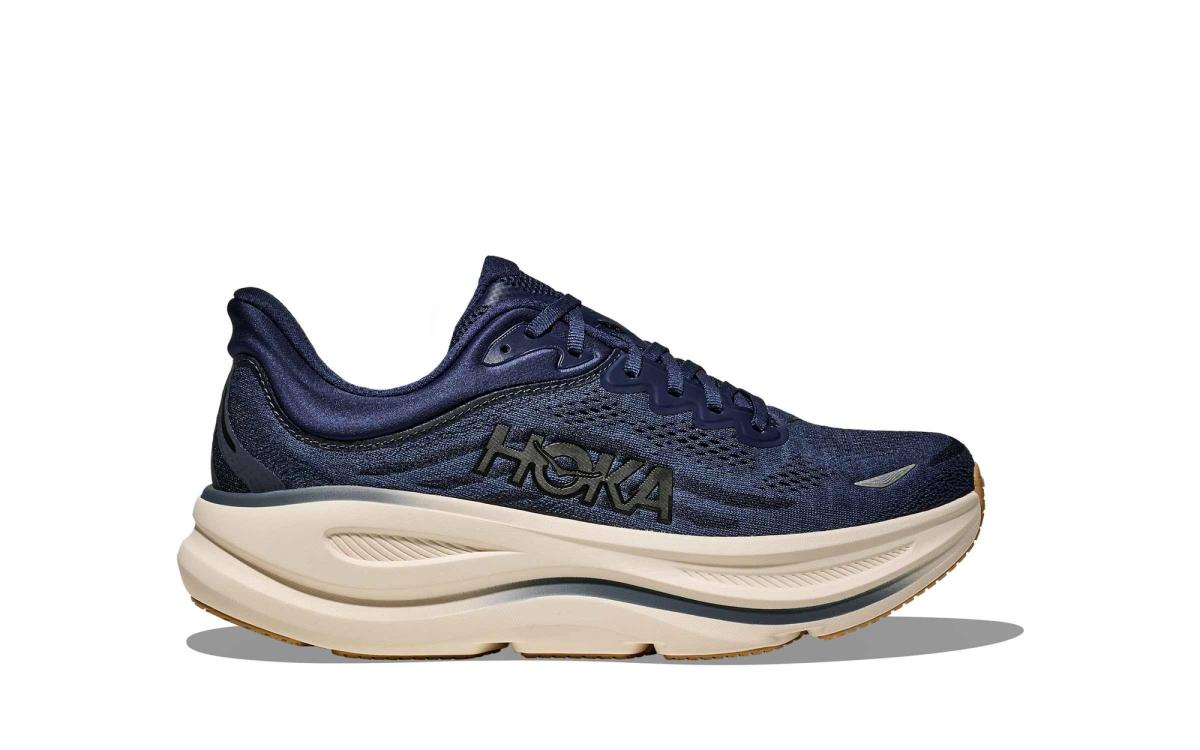
HOKA is the brand behind the oversized, rockered soles that have migrated from ultrarunning trails to marathon start lines, hospital corridors, and seemingly every neighborhood walking loop. The design bet has never changed: maximum cushioning at minimum weight, and that cushioning-first construction is exactly why HOKAs keep coming up in conversations about foot and joint health.
The lineup splits by job. The Bondi 9 (about $175) is the max-cushion everyday flagship and the Clifton 11 (about $155) its lighter sibling; the Arahi 8 and Gaviota 6 add stability for feet that roll inward; the Rincon 5 and Mach 7 cover lightweight and faster training; and the Speedgoat, Challenger, and Mafate lines take the same cushioning off-road. Most models run about $125 to $225. HOKA leans into the health-adjacent lane, too: it sells a dedicated "orthopedic shoes" collection and displays the APMA Seal of Acceptance on several models.
None of that marketing decides anything with the IRS, though. To your HSA or FSA, a HOKA is athletic footwear, and its eligibility turns on the health condition it serves, not the label on the box.
Why HOKA Qualifies for HSA or FSA Coverage
Yes: HOKA shoes are HSA and FSA eligible with a Letter of Medical Necessity (LMN), and the logic comes straight from the tax code. IRS Publication 502 defines medical expenses as "the costs of diagnosis, cure, mitigation, treatment, or prevention of disease and for the purpose of affecting any part or function of the body." Running shoes sit on both sides of that line, which is why administrators class them as dual-purpose: a pair bought for ordinary training or all-day comfort is a personal expense, while the same pair bought to help prevent or manage chronic foot, heel, or joint pain from a specific, named condition falls within the definition. The letter, written and signed by a licensed provider, establishes which side of the line your purchase is on. The rule is the same for HSAs and FSAs (our HSA vs FSA guide breaks down the difference); Limited-Purpose and Dependent-Care FSA funds do not apply to shoes.
One catalog, three tiers, and they never blur. Standard athletic HOKAs, the pairs this page is about, are dual-use and need the letter; a provider casually suggesting supportive shoes during a visit is not documentation. HOKA's own "orthopedic" collection sits in the same tier, not a stronger one: the APMA Seal of Acceptance on those models is awarded to shoes, socks, and insoles found to promote good foot health (APMA's separate Seal of Approval covers regulated medical devices), so the seal is a foot-health product mark, not an eligibility credential, and HOKA's collection page claims nothing more. Diabetic and therapeutic shoes have a first payer of their own: Medicare Part B covers therapeutic shoes and inserts for people with diabetes and severe diabetes-related foot disease, one pair per calendar year, certified by the doctor managing their diabetes. That is insurance coverage through a health plan rather than out-of-pocket spending, and it does not cover the whole bill. IRS Publication 969 defines qualified medical expenses as amounts "not compensated for by insurance or otherwise," so the Part B deductible and the 20 percent coinsurance you still owe on that pair are qualified expenses your HSA or FSA can pay. Buy therapeutic footwear without Medicare behind it and you are back on the letter path above, the same one a pair of Bondis takes.
The letter needs a named condition, and most of the ones that fit HOKA are the everyday faces of chronic foot, heel, and joint pain. These six clear the bar, each with a mechanism a provider can point to:
- Plantar fasciitis (chronic heel pain). Cleveland Clinic's self-care guidance for what it calls the most common cause of heel pain is blunt: "Wear sturdy, well-cushioned shoes," and skip flat pairs without built-in arch support. Cushioning plus arch support offloads the plantar fascia on every step, precisely the job a maximalist sole is built to do.
- Severe overpronation and flat feet. Cleveland Clinic notes that "some runners benefit from stability features that help control excessive inward rolling (overpronation)." HOKA builds whole models around stability construction (the Arahi and Gaviota lines), a natural pairing for a documented gait problem.
- Achilles tendinitis. Cleveland Clinic's guidance for an irritated Achilles tendon includes wearing "supportive shoes, heel lifts or custom orthotics," and its prevention advice is the same: "Wear supportive shoes that fit well." Supportive, well-fitted footwear reduces the repetitive strain the tendon absorbs during activity.
- Knee osteoarthritis (chronic knee pain). A double-blinded, three-month intervention study in Sensors found that "using a cushioned sport shoe alleviates pain and improves functionality compared to a regular shoe in individuals with knee OA." A cushioned sole absorbs impact that would otherwise load the knee joint, the tightest product-to-condition fit on this list.
- Bunions (hallux valgus). Mayo Clinic lists different shoes first among its nonsurgical options: "Wear roomy, comfortable shoes that give your toes plenty of space." Shoes with real room in the toe area take pressure off the joint instead of squeezing it.
- Metatarsalgia. For ball-of-foot pain, Mayo Clinic says self-care measures "might be all you need," starting with rest, "wearing different shoes," and arch supports. Shock-absorbing cushioning under the forefoot means less repeated impact exactly where it hurts.
How to Get Your HOKA Covered by HSA or FSA
The order of operations is the whole game, and it starts with the letter, not the shoes:
- Get your Letter of Medical Necessity. A licensed provider documents your condition and how supportive, cushioned footwear helps you manage it. Your LMN must be dated before your purchase.
- Buy your HOKAs anywhere you normally would. The retailer does not matter; your personal card and the receipt do.
- Reimburse yourself. Submit the letter and receipt to your HSA or FSA administrator, and the eligible amount comes back to you.
Two paths get you the letter.
Option 1: Through Your Doctor
If you already see a provider for your condition, they can write the letter:
- Book a visit and say you want to buy a pair of HOKAs with HSA/FSA funds
- Ask them to document how it helps prevent, manage, or reverse your condition
- Make sure the letter is signed and dated
- Timeline: same day to a couple of weeks, and you may owe a copay
Option 2: Through Crates
Crates streamlines the same process online:
- Complete a short health assessment, about 2 to 3 minutes
- A licensed provider reviews it, typically within 24 to 48 hours
- If you qualify, your Letter of Medical Necessity is issued for the shoes
- Buy the shoes with your personal card at any retailer
- Submit with one-click reimbursement to process your HSA/FSA claim
- Your LMN stays valid for 12 months and renews each year
You do not need a pharmacy prescription; the letter itself is what establishes eligibility.
HOKA itself takes no HSA/FSA position at all. Its site does not accept HSA or FSA cards at checkout, and neither its help center nor its orthopedic-shoes collection mentions eligibility anywhere (checked July 2026). That changes nothing, because the path never depended on the brand. You don't need to buy your HOKAs through any particular retailer's checkout to use HSA or FSA funds. Get your Letter of Medical Necessity first, through your doctor or through Crates, then buy your HOKAs wherever you'd like, hoka.com, Amazon, a local running store, or in store elsewhere, with your personal card. Submit your letter and receipt for reimbursement afterward, or let Crates' one-click reimbursement handle it for you.
Whatever a given store's checkout looks like, keep the boundary straight: whether a retailer prints an HSA/FSA-eligible badge, runs a health questionnaire at checkout, or simply declines your benefits card changes how you pay, never whether the shoes qualify. Most shoe sellers are not coded as medical merchants, which is why an FSA card so often gets declined at a shoe store. Eligibility comes from your condition and the letter that documents it; a store accepting your card cannot create it, and a store declining your card cannot take it away.
What Your Letter of Medical Necessity Must Include
- Your specific health condition, named
- The footwear it supports (for example, a pair of HOKA Bondis)
- How cushioned, supportive shoes help prevent or manage that condition
- The provider's signature and a date before your purchase
Which HOKA Models Qualify for HSA or FSA
All of them, and all the same way. Eligibility never attaches to a model name: the letter that qualifies a $175 Bondi 9 qualifies a $125 Rincon 5 identically. Here is the current lineup, rechecked against hoka.com in July 2026. Prices are approximate, and women's and men's versions of every model carry the same answer, because gender never changes the verdict.
| HOKA model | Built for | Approx. price | Eligible with an LMN? |
|---|---|---|---|
| Bondi 9 | Max-cushion everyday trainer | $175 | Yes |
| Clifton 11 | Lighter everyday trainer | $155 | Yes |
| Arahi 8 | Stability for overpronation | $150 | Yes |
| Gaviota 6 | Max-stability support shoe | $180 | Yes |
| Rincon 5 | Lightweight daily trainer | $125 | Yes |
| Mach 7 | Tempo and faster-paced training | $145 | Yes |
| Skyward X 2 | Max-stack cushioned trainer | $225 | Yes |
| Transport 2 | Everyday and commute wear | $155 | Yes |
| Bondi SR and Arahi SR | Slip-resistant work shoes | $165 to $180 | Yes |
| Speedgoat 7, Challenger 8, Mafate 5 | Cushioned trail running | $155 to $185 | Yes |
The model, collection, or "orthopedic" label never changes the eligibility answer; the letter and the condition it documents do. There is no pre-approved product list to check your cart against: the LMN approves the purchase for your condition, not a specific shoe.