Why Compression Boots Are HSA/FSA Eligible
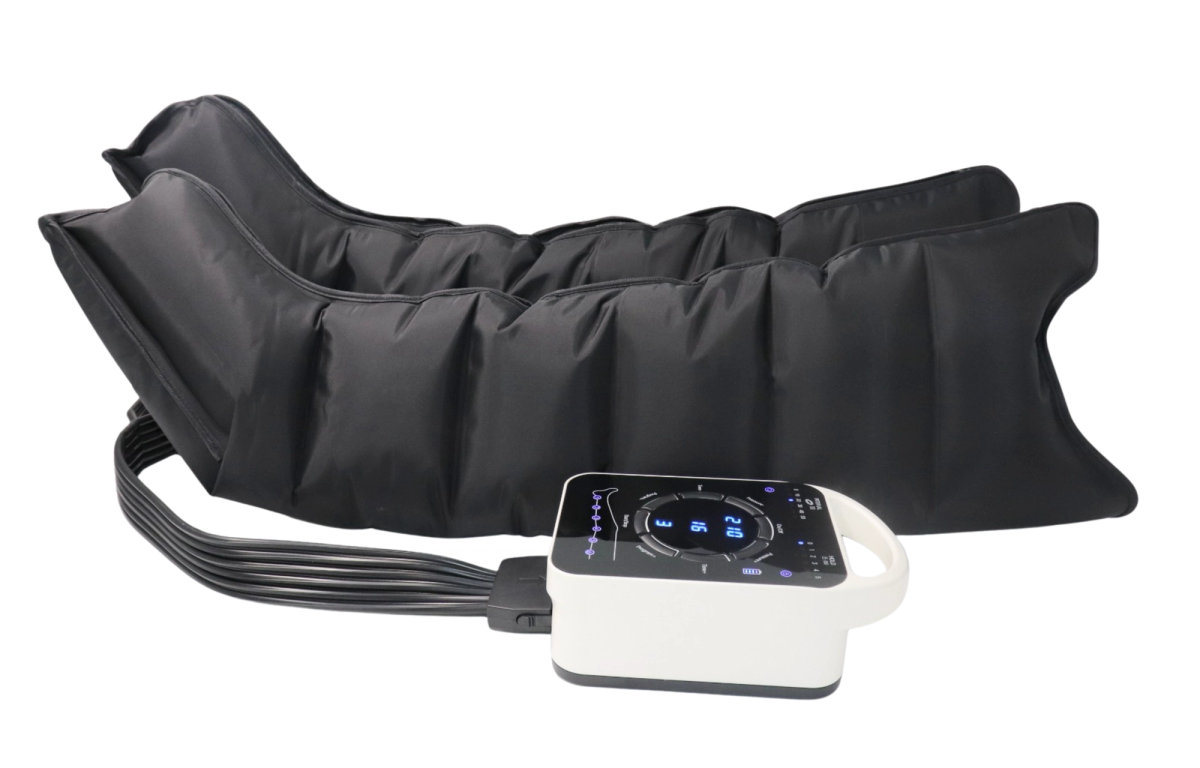
Compression boots use air-filled chambers that squeeze and release around your legs. This is intermittent pneumatic compression, or IPC. The changing pressure helps move fluid and supports blood returning through your veins, which makes the boots useful for specific swelling and circulation conditions.
IRS Publication 502 includes equipment used for the “diagnosis, cure, mitigation, treatment, or prevention of disease.” A licensed provider connects the boots to your health condition in your Letter of Medical Necessity (LMN), and that is what makes them HSA/FSA eligible. Buying a pair solely to relax after workouts is general wellness; using a pair to manage lymphedema has a medical purpose.
The name on the box does not decide the answer. “Recovery boots,” “air compression boots,” and “leg compression massager” describe overlapping products. What matters is what the device does for your condition. Boots sit within the broader family of HSA/FSA-eligible recovery tools.
Do Compression Recovery Boots Actually Work?
Yes, pneumatic compression has evidence for reducing swelling in people with lower-limb lymphedema. A 2026 systematic review of seven randomized trials found moderate-certainty evidence that IPC reduces leg swelling compared with standard care or no IPC. That is a concrete medical use, distinct from an athlete wanting fresher legs tomorrow.
For sports recovery, a 2024 systematic review of 17 studies found benefits for pain and soreness that ranged from trivial to moderate. Results vary with the condition and the treatment, so your healthcare provider can help you choose a device for what you're managing. Tell them about any blood clot or artery problem first: Cleveland Clinic says people with peripheral artery disease need to be careful with compression therapy.
Which Conditions Qualify for Compression Boots?
Lymphedema and chronic venous insufficiency are the closest fits for compression boots, and these are some of the other common conditions a provider can document. You do not need to be an athlete or buy a particular brand.
- Lymphedema: When lymph fluid builds up, pneumatic compression helps move that fluid and reduce swelling. The clinical review of lower-limb lymphedema supports IPC as part of ongoing treatment. This is the strongest starting point for someone considering boots for persistently swollen legs.
- Chronic venous insufficiency: Damaged leg-vein valves allow blood to pool, causing swelling and discomfort. Cleveland Clinic lists pneumatic compression as an option when compression stockings do not help. Inflatable sleeves support blood flow through the veins.
- Varicose veins: Enlarged leg veins can ache and swell. German varicose vein guidelines say pneumatic compression can be used to reduce painful venous symptoms in people with venous swelling.
- Lipedema: This painful buildup of fat under the skin mostly affects the legs. In a 2025 randomized trial of 46 women, 30 days with a pneumatic compression device reduced leg swelling and tenderness, while the group without it improved only in swelling.
- Restless legs syndrome: Compression can calm the urge to move your legs. In a sham-controlled trial of 35 people, wearing a compression device for at least an hour a day improved symptoms more than a sham device after a month.
- Chronic leg swelling (edema): Fluid that builds up in less active legs is what the boots are built to move. A randomized trial of 50 people with low mobility found a month of in-home compression reduced leg swelling, while it increased in the group without it.
Another condition your provider ties the boots to counts too, including a circulation problem behind your leg symptoms.
How to Get a Letter of Medical Necessity for Compression Boots
There are two ways to get the Letter of Medical Necessity for compression boots:
- Through Crates, typically in under 24 hours. Take a 2-minute online health assessment. A licensed provider reviews it, and if you qualify, your letter is issued for the boots. It stays valid for 12 months and renews each year.
- Through your own doctor, a few days to a few weeks. Book a visit, say you want to buy compression boots with HSA/FSA funds, and ask them to document how the boots help prevent, manage, or reverse your condition. Make sure it's signed and dated. You may owe a copay.
How to Buy Compression Boots With HSA/FSA Funds
Buy the boots you want from a brand's website, Amazon, or a medical-supply store, then get your money back from your HSA or health FSA.
- Get your Letter of Medical Necessity first, through Crates or your own doctor, as described above.
- Buy the boots anywhere. Pay with your personal card, online or in store, and keep the itemized receipt showing the boots and the amount paid.
- Get your money back. Crates one-click reimbursement files the claim for you, or upload the letter and receipt yourself. For an HSA, keep both with your tax records.
IRS Publication 969 sets the account dates: HSA expenses must come after the account is established, and FSA expenses must fall within your coverage period. Our HSA vs. FSA guide explains those account differences.
Which Compression Boots Can You Buy With HSA/FSA Funds?
Recovery-boot brands qualify the same way: with a letter connecting the boots to your condition. Start with the area the device covers and how it delivers compression. A calf-only sleeve, a full-leg boot, and a medical pneumatic pump are different choices even when all use air pressure.
| Kind | What it is | Useful distinction |
|---|---|---|
| Full-leg recovery boots | Inflatable sleeves covering the feet, calves, and thighs | Some use hoses and a separate controller; others have built-in pumps |
| Calf compression sleeves | Shorter powered sleeves around the lower legs | They cover the calves rather than the entire leg |
| Medical pneumatic compression systems | A pump and clinical garments selected for a specific treatment | Device choice and treatment instructions come from the treating clinician |
For a full-leg example, Normatec, part of Hyperice, offers the Normatec 3 with leg attachments connected to a separate controller. Therabody's JetBoots Prime uses built-in pumps for a wireless design.
Want a less expensive pair? FIT KING, for example, sells air compression leg massagers and recovery boots for well under the price of a Normatec 3 Legs. Compare coverage and fit first: a lower price doesn't change how the boots qualify.
Compression socks apply steady pressure through fabric rather than an air pump, so they are a separate purchase with their own strength ratings.
How Much Can You Save on Compression Boots?
At a combined tax rate near 30%, an illustrative $800 pair saves you $240, money you keep by using eligible pre-tax funds. The combined rate can include federal income tax, state income tax where applicable, and payroll tax for eligible payroll contributions.
Each savings column below is the example purchase price multiplied by that combined tax rate. These are sample prices, not current offers.
| Example price | Savings at 20% | Savings at 25% | Savings at 30% |
|---|---|---|---|
| $300 | $60 | $75 | $90 |
| $800 | $160 | $200 | $240 |
| $1,200 | $240 | $300 | $360 |
The retailer still charges the purchase price. Reimbursement pays you back from your own HSA or FSA funds; the tax advantage creates the saving. Your actual benefit depends on your taxes and contribution arrangement. Any provider or letter fee is separate from these examples.