Why exercise bikes qualify for HSA/FSA
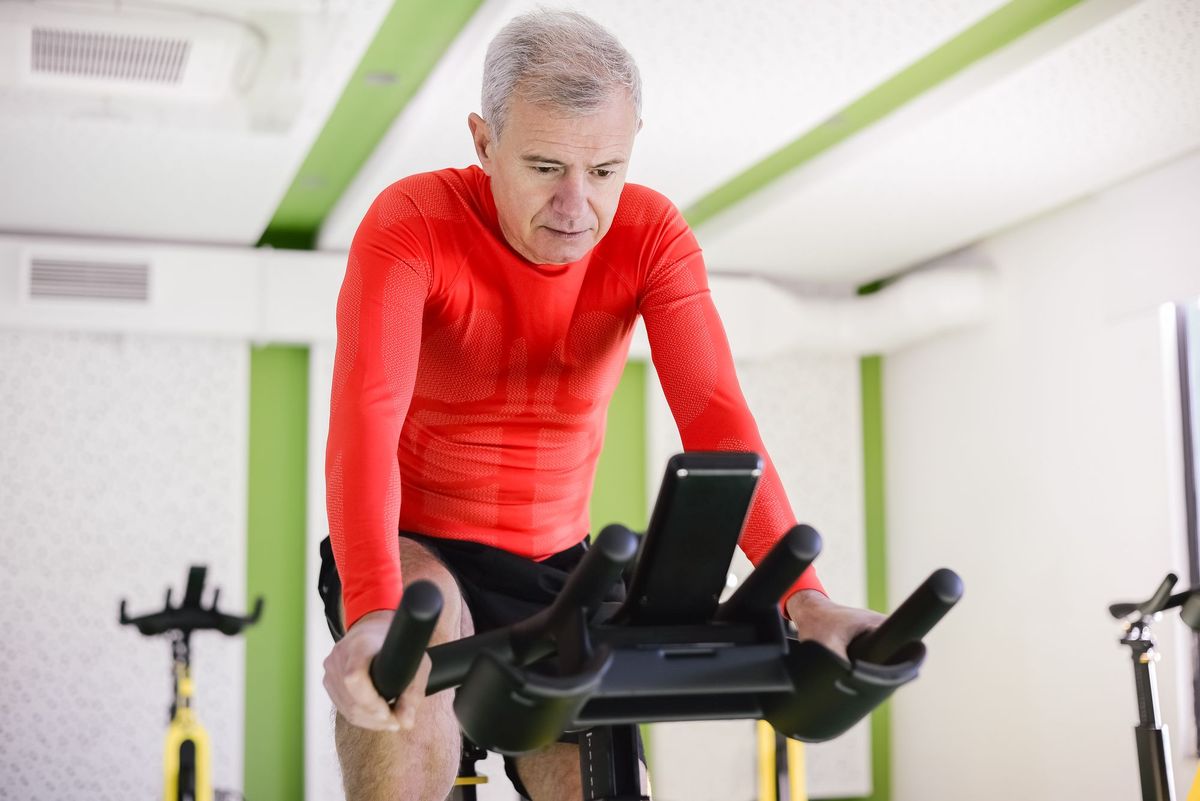
An exercise bike gives you a seated, low-impact workout at home, with no weather or hills to plan around. It qualifies when a licensed provider connects that cycling to a specific health condition in a Letter of Medical Necessity (LMN). That might mean seated cycling to manage knee osteoarthritis or regular aerobic activity to help manage type 2 diabetes.
IRS Publication 502 defines medical expenses around the “diagnosis, cure, mitigation, treatment, or prevention of disease” and includes equipment used for medical care. A bike you buy for general fitness stays a personal expense. When your letter ties it to a health condition, it has a medical purpose, and that's what makes it HSA/FSA eligible.
This guide covers exercise bikes you ride indoors: stationary, recumbent and spin bikes. Our broader workout-equipment guide covers other equipment. For the bike you choose, get your letter first, then buy from the retailer you prefer.
Which conditions support an exercise-bike LMN?
Seated pedaling offers a way to work on joint movement and aerobic fitness. Your provider connects that activity to your condition, then recommends the position and effort that suit you. These are some of the common conditions a provider can document:
- Knee osteoarthritis. Stationary cycling can help with knee pain. A systematic review of 11 studies involving 724 participants found less pain and better sport function with stationary cycling than with no exercise.
- Type 2 diabetes. Aerobic activity supports blood-glucose management. NIDDK's diabetes guidance describes lower blood glucose among the benefits of physical activity. An exercise bike gives you an indoor way to do that activity; your provider can account for your medicines and glucose response when recommending a routine.
- High blood pressure. Regular aerobic exercise helps manage blood pressure, and Mayo Clinic includes bicycling among its examples. Mayo also notes the benefit lasts only as long as you keep exercising, and a bike at home makes that routine easier to keep up at the effort your provider recommends.
- Obesity. Cycling adds physical activity to a weight-management plan. NIDDK explains that regular activity combined with healthy eating helps control weight. Its guidance also describes recumbent bikes, whose wider seats and reclined position offer another way to get comfortable while riding.
- Recovery after knee replacement. An exercise bike can support the return of knee movement and muscle strength. The American Academy of Orthopaedic Surgeons includes exercise-bike riding in its recovery guide. Your surgeon or physical therapist sets when to start and how to adjust the bike as you recover.
- Postural orthostatic tachycardia syndrome (POTS). Exercise is key to managing POTS, and reclined aerobic exercise is often the most beneficial. Cleveland Clinic names recumbent bicycling among its examples, so a recumbent bike lets you do that work at home on the plan your provider sets.
If your provider ties an exercise bike to a different condition, that counts too.
How to get a Letter of Medical Necessity for an exercise bike
You can get your exercise-bike letter online through Crates or from your own doctor:
- Through Crates, typically in under 24 hours. Complete the 2-minute eligibility check, and a licensed provider reviews your answers. If you qualify, you receive a letter for your exercise bike. It stays valid for 12 months and renews each year.
- Through your own doctor, a few days to a few weeks. Book a visit and explain that you want to use HSA/FSA funds for an exercise bike. Ask for a signed, dated letter connecting the bike to the condition you want to prevent, manage, or reverse. A copay may apply to the visit.
How to buy an exercise bike with HSA/FSA funds
Buy the bike wherever you like, then get your money back:
- Get your LMN first. Use either provider route above. Crates' guidance is to buy on or after the letter's issue date; a new letter does not cover an earlier bike purchase.
- Buy the exercise bike anywhere. Pay with your personal card, online or in a store, and keep the itemized receipt showing the bike, purchase date and amount paid.
- Get your funds back. Crates can file the claim for you with one-click reimbursement, or you can upload the letter and receipt yourself. With an HSA, you can reimburse yourself from the account and keep both documents with your tax records.
Publication 969 explains the account dates: an HSA expense must come after the account was established, and an FSA expense must fall within your coverage period. Follow your FSA's filing deadline. Our HSA vs. FSA guide explains the differences between the accounts.
Which exercise bikes are HSA/FSA eligible?
Upright stationary bikes, recumbent bikes and spin bikes are eligible with an LMN for a specific medical purpose. Every brand qualifies the same way, with a letter for your condition, including Schwinn and Sole. The Arthritis Foundation's stationary-bike guide sorts them by riding position, the difference you'll feel on every ride.
| Bike type | Riding setup | What to compare |
|---|---|---|
| Upright stationary bike | A smaller seat with the pedals beneath you, leaning forward to the handles | Seat adjustment, handlebar reach and how easily you can get on and off |
| Recumbent bike | A wider seat with a back rest and the pedals in front of you | Back support, seat-to-pedal distance and access around the frame |
| Spin or indoor-cycling bike | An upright style with lower handlebars and a flywheel that lets you stand and pedal | Saddle and handlebar adjustment, pedal fit and resistance controls |
A recumbent bike is more stable and comfortable, the Arthritis Foundation says, which makes it a better option if you have balance or mobility issues. An upright bike can be uncomfortable with back, shoulder or wrist issues. NIDDK recommends checking how much weight a bike can support, so look that up on the exact model.
If you are considering Peloton, our Peloton HSA/FSA guide covers its equipment and memberships separately. An outdoor bicycle qualifies the same way, and the Canyon HSA/FSA guide covers that brand's road, mountain and other bikes.
How much can you save on an exercise bike?
Pay for an $800 bike with pre-tax HSA or FSA funds and you keep about $240 at a combined rate near 30%, so it really costs you about $560. The store still charges $800, and reimbursement comes from your own HSA or FSA money; the $240 is the tax you skip on that money.
Each column is the bike price times that combined rate:
| Illustrative bike price | Savings at 20% | Savings at 30% | Savings at 40% |
|---|---|---|---|
| $300 | $60 | $90 | $120 |
| $800 | $160 | $240 | $320 |
| $1,500 | $300 | $450 | $600 |
| $2,500 | $500 | $750 | $1,000 |
The prices illustrate the calculation; they are not advertised bike offers. Depending on your taxes and contribution arrangement, the applicable rate can include federal income, state income and payroll taxes. Publication 969 explains the tax benefits of HSA and FSA spending. Any provider or LMN fee is separate.