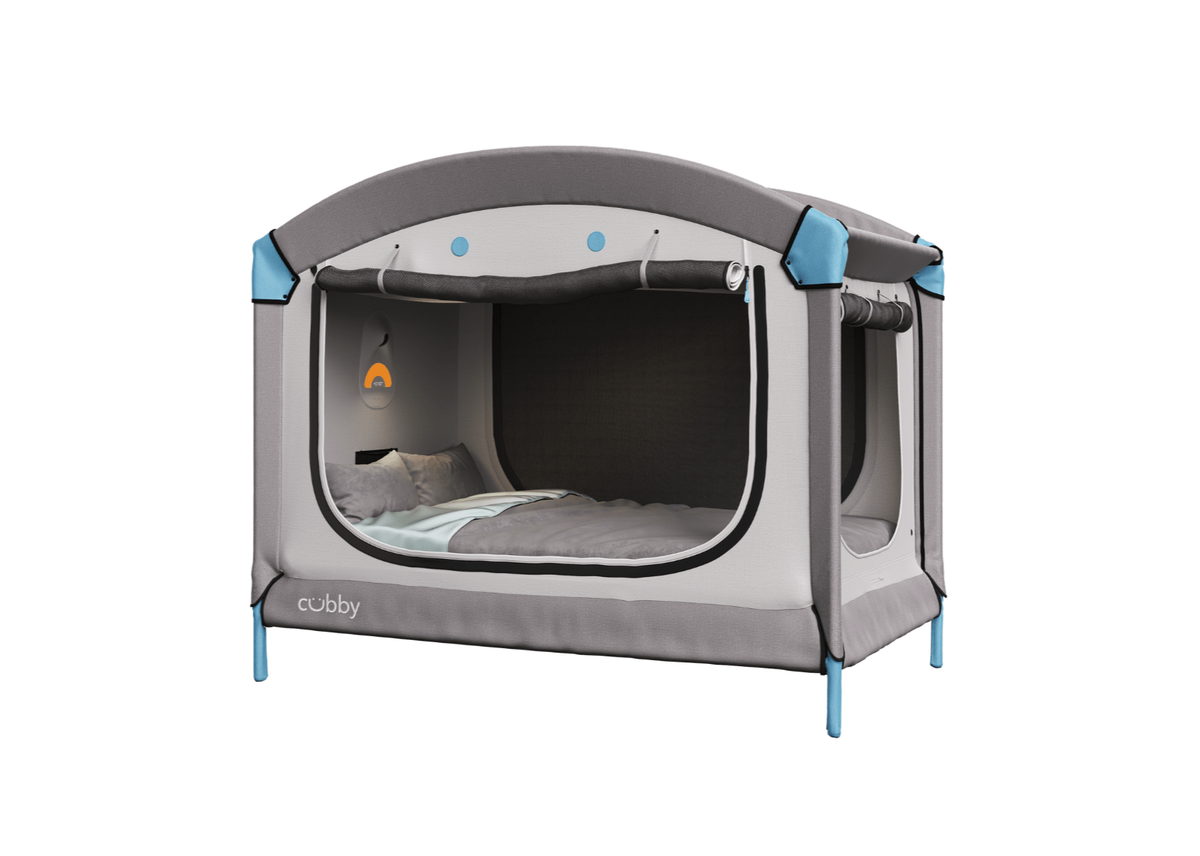
What Is Cubby Bed
Cubby is the tall canopy bed you may have seen in autism parenting groups: a full-size mattress inside fabric and mesh walls, with zippered doors. Its user manual says it's designed for people with cognitive conditions and special needs, to prevent bed exit and provide a reasonably safe environment, and recommends it for ages 2 to 18.
The current Cubby 2 comes with or without the Dream Hub. The optional Hub adds a camera, two-way audio, adjustable light and sound, plus a handheld monitor. Cubby's technical specifications describe those features.
Regular prices start around $10,600 without the Hub and $14,500 with it. When the bed is part of managing a health condition, it counts as medical care, which means you can buy it with pre-tax dollars. Our sleep tech eligibility guide covers the broader range of sleep products.
Why Cubby Bed Qualifies for HSA/FSA
Cubby Bed is HSA/FSA eligible with a Letter of Medical Necessity that documents its role in managing a named condition. The letter connects the enclosed safety bed to the person's nighttime safety needs.
IRS Publication 502 defines medical expenses to include the “diagnosis, cure, mitigation, treatment, or prevention of disease.” It also includes equipment needed for those purposes. A licensed provider documents that medical purpose in the letter; buying a bed for general comfort alone is a personal expense.
Some of the common conditions a provider can document:
- Autism with wandering. The CDC identifies wandering as a safety concern for some autistic children and young people. A 2021 review in Current Opinion in Pediatrics says about one in four children with autism wander from supervision each year. When that happens at night, a provider can document why an enclosed safety bed belongs in their safety plan.
- Intellectual disability with nighttime safety needs. The CDC also describes challenges understanding danger and communicating among some children with intellectual disability. A letter can connect those difficulties and unsafe nighttime exits to the need for an enclosed sleeping space.
- Epilepsy with nighttime seizures. Cleveland Clinic lists injuries from falls during a seizure among epilepsy's complications. Cubby's manual describes padded, tensioned walls, and those walls are what a provider can tie to your child's care, since the manual says the Dream Hub is not a seizure detector.
- Angelman syndrome. MedlinePlus lists seizures, balance problems and difficulty sleeping among its features, a mix that can make a regular bed risky at night.
These aren't the only ones. Medicaid and commercial policies in a 2024 Center for Evidence-based Policy review often list cerebral palsy and traumatic brain injury for enclosed beds too, and any other condition your provider ties the bed to counts as well.
The most direct evidence is a 2025 survey of 225 caregivers, recruited through Cubby's mailing list, with a Cubby owner among its authors. They reported median sleep rising from 4 to 6 hours a night to 8 to 10, and wandering incidents falling from 1 or 2 a month to under 1.
Insurance is a separate question. Cubby's help page on who qualifies says insurance asks for a prescription and a letter of medical necessity, handled through a medical supplier. If insurance says no, or leaves part of the bill with you, your HSA/FSA can pay the eligible amount that's left. A letter your doctor already wrote for that claim can do the same job here, as long as it's dated before you buy.
How to Get Cubby Bed Covered With a Letter of Medical Necessity
There are two ways to get a letter: an online provider review through Crates or a visit with your own clinician.
- Through Crates, typically in under 24 hours. Take a 2-minute online health assessment. A licensed provider reviews it and, if you qualify, issues your letter for the Cubby Bed. It stays valid for 12 months and renews each year.
- Through your own doctor, a few days to a few weeks. Book a visit, say you want to buy a Cubby Bed with HSA/FSA funds, and ask them to document how an enclosed safety bed helps prevent, manage, or reverse the condition. Make sure it's signed and dated. You may owe a copay.
Buying the bed for your child? The letter names your child's condition, and their pediatrician or the clinician who treats them can write it.
Get the letter before buying. Under Crates guidance, a new letter covers purchases from its issue date forward; it does not reach back to an earlier purchase that needed one.
How to Buy Cubby Bed With HSA/FSA Funds
Buy the bed wherever you like, then get your HSA/FSA money back:
- Get your Letter of Medical Necessity first. Use either option above, through Crates or your own doctor.
- Buy the bed anywhere. Pay with your personal card and keep the itemized receipt showing the bed, purchase date and amount paid.
- Get your money back. Crates one-click reimbursement files the claim for you, or upload the letter and receipt yourself. For an HSA, keep both with your tax records.
An HSA covers qualifying expenses incurred after the account was established. A health FSA covers expenses within its coverage period. Our HSA vs. FSA guide explains these account differences.
Which Cubby Bed Models Qualify
Cubby's current product catalog lists these regular U.S. prices, checked November 4, 2026:
| Cubby configuration | Regular list price | HSA/FSA eligibility |
|---|---|---|
| Cubby 2 Bed (No Hub), no wheels | $10,583 | Yes, with an LMN |
| Cubby 2 Bed (No Hub), wheels | $11,483 | Yes, with an LMN |
| Cubby 2 Bed with Dream Hub, no wheels | $14,490 | Yes, with an LMN |
| Cubby 2 Bed with Dream Hub, wheels | $15,390 | Yes, with an LMN |
All include the frame, canopy, three Safety Sheets and an 8-inch foam mattress. Each one qualifies the same way, with an LMN, whatever its model name or price.
Here's the money hack: paying with pre-tax HSA or FSA money can save you up to 30%. If the whole $10,583 bed comes out of pre-tax money at a combined 30% tax rate, that's $3,174.90 in taxes you skip. Your actual savings depend on your tax rates and how you fund the account.
This bed costs more than a year of contributions: the 2026 limits are $3,400 for a health FSA and $8,750 for a family HSA. Your full FSA election is available from the start of the coverage period, and an HSA has no deadline for paying yourself back, so you can claim the rest as the account grows, as long as you bought after opening it.