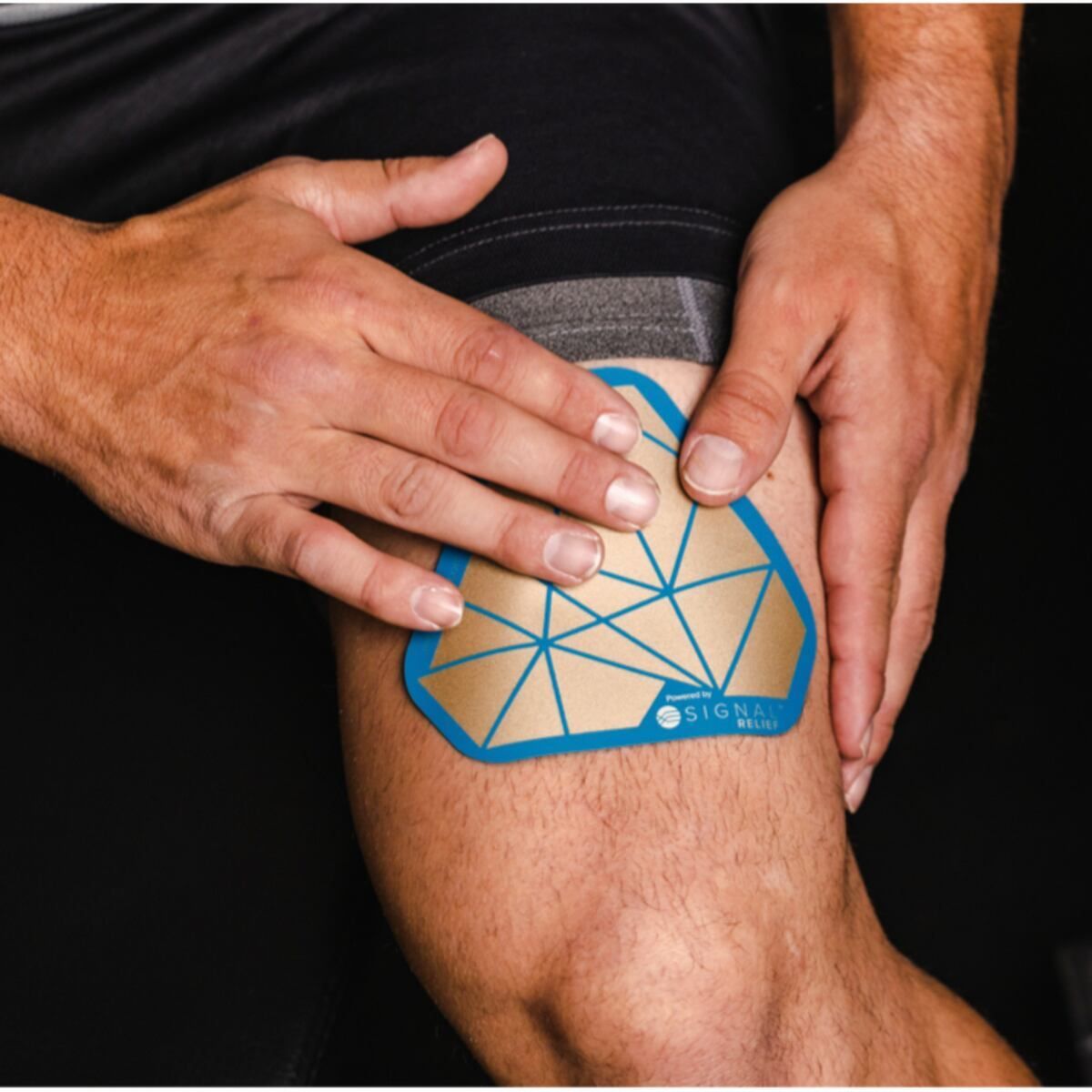
If you've been researching Signal Relief Patch for pain management, you've probably seen the company claim their product is "HSA/FSA Eligible." That's technically true, but there's an important detail Signal Relief's marketing doesn't fully explain.
Here's what you actually need to know before pulling out your HSA card.
What Is Signal Relief Patch?
How Signal Relief Claims to Work
Signal Relief uses what the company calls "neuro-capacitive coupling" technology. According to their marketing, the patch contains a passive antenna that interacts with your body's natural electrical signals to intercept pain communication between nerves and the brain.
To be clear about what this means: Signal Relief claims the patch doesn't send electricity into your body like a TENS unit. Instead, it supposedly works by passively interfering with nerve signal transmission in the area where you apply it.
Whether this technology works as claimed is a separate question from HSA eligibility. We'll address that distinction later, because it matters for understanding how your HSA administrator evaluates coverage.
Signal Relief Products and Pricing
The company offers a 45-day money-back guarantee and a 1-year warranty on the patches themselves. Replacement adhesives are an ongoing cost if you use the product regularly.
At these price points, HSA eligibility represents meaningful savings. Using pre-tax dollars effectively gives you a discount equal to your marginal tax rate. For someone in the 24% tax bracket, that $144 single patch costs roughly $109 in after-tax dollars.
Important: Signal Relief Is Not an FDA-Cleared Medical Device
This is the crucial detail that affects your HSA eligibility.
Signal Relief is marketed as a "general wellness product." It is NOT cleared by the FDA as a medical device for treating any specific medical condition. The company is transparent about this classification on their website.
What does this mean for you?
General wellness products occupy a unique regulatory space. The FDA allows companies to market products for general wellness purposes (like "pain relief" in a broad sense) without going through the medical device clearance process. This classification has trade-offs for consumers:
Products can reach market fasterOften lower cost than FDA-cleared alternativesLess restrictive on marketing claims
No FDA evaluation of safety or effectivenessNo FDA review of manufacturing quality standardsHSA eligibility requires additional documentation
The general wellness classification is why Signal Relief requires a Letter of Medical Necessity for HSA coverage. Your HSA administrator cannot automatically verify it as a qualifying medical expense based on FDA clearance alone.
Why Signal Relief Requires a Letter of Medical Necessity for HSA
Here's where Signal Relief's marketing creates confusion. The company prominently displays "FSA/HSA Eligible" messaging, which is accurate. However, they don't clearly explain that you need documentation to actually use those benefits.
Let's break down why.
Understanding IRS Publication 502 Requirements
According to Publication 502, medical expenses are "the costs of diagnosis, cure, mitigation, treatment, or prevention of disease, and for treatments affecting any part or function of the body."
The key concept here is "dual-purpose items." Some products can serve either a general wellness purpose OR a medical purpose. Pain relief devices fall into this category because someone might use them for:
Occasional muscle soreness after exercise (general wellness)Chronic back pain from a documented health condition (medical purpose)
When an item can serve either purpose, the IRS requires documentation proving you're using it for the medical purpose.
General Wellness Products and HSA Eligibility
Because Signal Relief is classified as a general wellness product (not an FDA-cleared medical device), your HSA administrator has no automatic way to categorize your purchase as a medical expense.
Here's the logic:
This is where the Letter of Medical Necessity becomes essential.
An LMN is a document from a licensed healthcare provider stating that a specific product (Signal Relief, in this case) is medically necessary for treating or preventing your health condition. It bridges the gap between Signal Relief's marketing claims and your HSA administrator's documentation requirements.
Without an LMN, you may find your HSA card declined at checkout, or your reimbursement request rejected after the fact.
Health Conditions That Qualify Signal Relief for HSA Coverage
A healthcare provider can issue a Letter of Medical Necessity for Signal Relief when treating various pain-related health conditions. Common qualifying conditions include:
This is not an exhaustive list. Any health condition where a healthcare provider determines that Signal Relief may help with pain management could potentially qualify for HSA coverage.
The key factor is not whether Signal Relief will definitely work for your condition. The key factor is whether a licensed healthcare provider believes it's a reasonable treatment option worth trying. Your HSA administrator cares about medical necessity documentation, not product reviews or clinical trial results.
Signal Relief vs. Other HSA-Eligible Pain Relief Options
Understanding how Signal Relief compares to alternatives helps you make an informed decision about which option is right for your situation.
Signal Relief vs. TENS Units
TENS (Transcutaneous Electrical Nerve Stimulation) units are the most common comparison point for Signal Relief.
You want to avoid electrical sensationYou have skin sensitivity to electrode padsYou prefer a simpler, no-setup approachYou want something you can wear inconspicuously
You want an FDA-cleared deviceYou want adjustable intensity settingsYou've had success with electrical stimulation beforeCost is a primary concern (basic TENS units are less expensive)
Signal Relief vs. Theragun and Massage Guns
Percussive therapy devices like Theragun from Therabody and Hyperice Hypervolt massage guns take a completely different approach to pain management.
You want passive, wearable pain reliefYou can't use vibration near your pain siteYou need something discreet for all-day wearYour pain is nerve-related rather than muscle-related
Your pain is primarily muscularYou want active recovery after exerciseYou benefit from deep tissue pressureYou want a device the whole household can use
For a complete overview of these options, check out our complete guide to HSA-eligible recovery tools.
Other Alternatives Worth Considering
Depending on your specific health condition, other HSA-eligible options may be worth exploring:
Which Pain Relief Option Is Right for You?
The best choice depends on several factors:
Many people use multiple approaches together. Signal Relief could complement physical therapy, medication, or other devices as part of a comprehensive pain management plan.
How to Get Signal Relief Approved for HSA Reimbursement
You have two main paths to get your Signal Relief purchase covered by your HSA or FSA.
Option 1: Traditional Healthcare Provider Visit
This is the conventional approach:
Your name and date of birthYour health conditionStatement that Signal Relief is medically necessary for treating your conditionProvider's signature, credentials, and contact informationDate issued
Option 2: Get Approved Through Crates Health (Faster)
Addressing the "Is Signal Relief Legitimate?" Question
Let's be direct about something. The 90,000+ monthly searches for "Signal Relief HSA eligible" suggest many people are asking a deeper question: Is this product legitimate enough to deserve my HSA dollars?
Here's a helpful framework for thinking about this.
What Your HSA Administrator Actually Cares About
Your HSA administrator does not evaluate whether Signal Relief works. They evaluate whether you have proper documentation.
An HSA administrator's checklist:
Is this product potentially a medical expense? ✓ (Pain relief qualifies)Is there documentation of medical necessity? (Requires your LMN)Is the expense supported by receipts? (Requires your purchase receipt)
That's it. They don't read Amazon reviews. They don't analyze clinical studies. They process documentation.
What "General Wellness Product" Actually Means
Signal Relief's classification as a general wellness product (rather than an FDA-cleared medical device) means:
The FDA has not evaluated Signal Relief's safety or effectivenessSignal Relief cannot legally claim to treat, cure, or prevent any specific diseaseThe company can market it for general wellness purposes like "pain relief"
This classification is neither an endorsement nor a condemnation of the product. Many products you already use fall into similar categories.
The Practical Question
Here's the practical calculation for HSA eligibility:
Signal Relief offers a 45-day money-back guaranteeUsing HSA funds gives you a tax advantage (potentially 20-35% savings depending on your bracket)If the product doesn't work for you, you can return it within the guarantee periodYour LMN remains valid for future pain relief purchases even if you return Signal Relief
From a financial perspective, trying Signal Relief with HSA funds and the money-back guarantee carries relatively low risk. The LMN documentation process through Crates Health is straightforward, and the potential tax savings are real regardless of whether the product meets your expectations.
