💡 Quick Answer: Club Pilates is HSA/FSA eligible because it helps prevent and manage conditions like chronic lower back pain, arthritis, postural dysfunction, and osteoporosis. Per IRS Publication 502, you need a Letter of Medical Necessity. Crates Health gets you approved in minutes and handles reimbursements automatically.
Your Club Pilates membership isn't a luxury expense. It's preventive medicine.
Here's what your HR department didn't tell you: if you're managing back pain, arthritis, or core weakness, your reformer sessions qualify as medical treatment under IRS guidelines. That means you can pay with pre-tax HSA or FSA dollars and save 30% or more on every class.
The catch? You need a Letter of Medical Necessity. The good news? Getting one is easier than you think.
What Is Club Pilates?
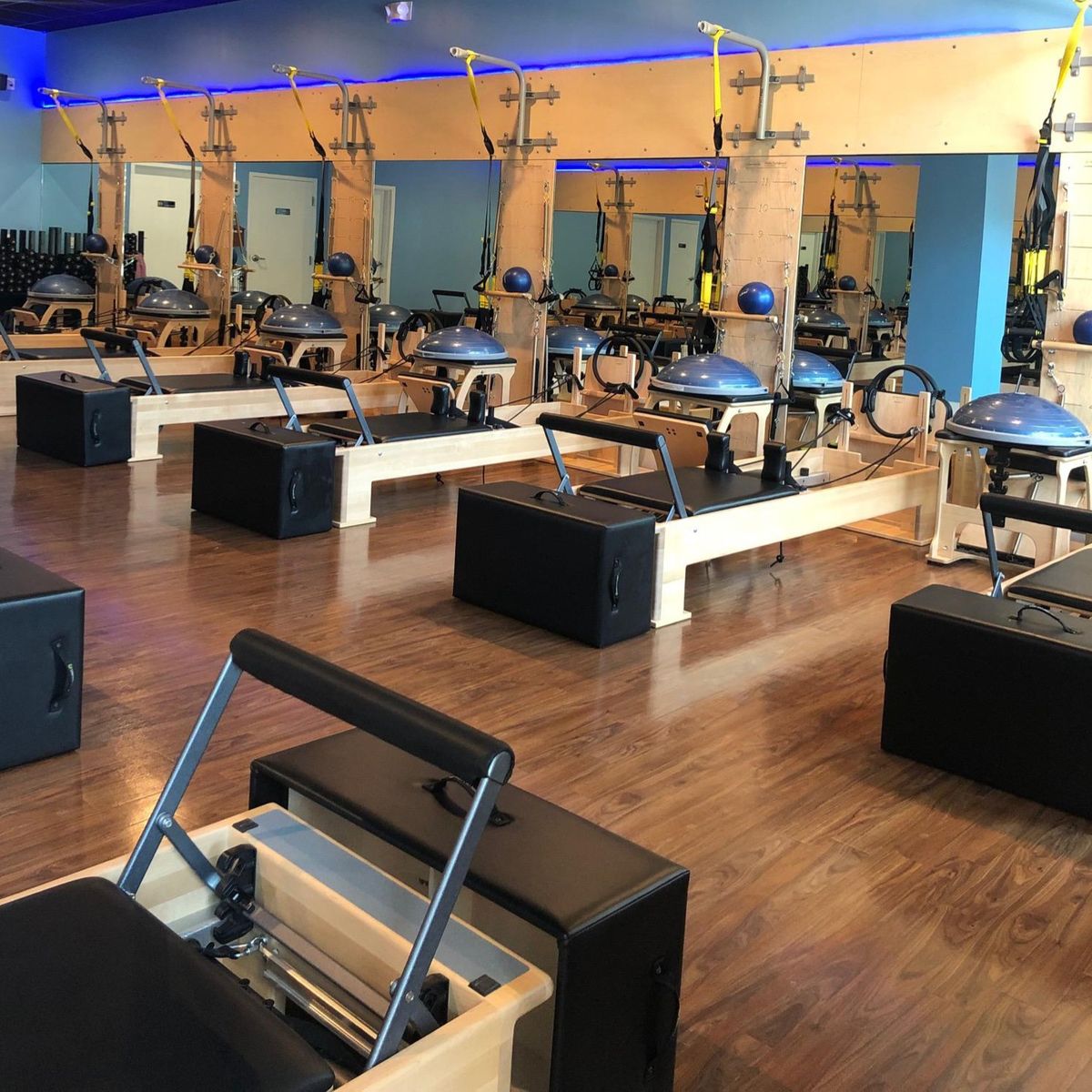
Club Pilates is the nation's largest reformer-based Pilates franchise, offering low-impact, full-body workouts using spring-loaded reformer equipment. Unlike mat Pilates you might try at home, Club Pilates classes utilize specialized equipment that provides variable resistance through spring mechanisms, allowing precise control of intensity and joint stress.
What sets Club Pilates apart is the instructor training standard. Every Club Pilates instructor completes 500+ hours of comprehensive training covering anatomy, biomechanics, injury assessment, and exercise modification. That's not a weekend certification. That's professional-level education comparable to physical therapy assistants.
Club Pilates offers nine signature class types, from foundational classes for beginners to advanced Cardio Sculpt sessions that blend strength training with cardiovascular conditioning. The progressive structure means you can start at your current fitness level and advance as your condition improves, which is exactly what makes it qualify as medical treatment rather than general wellness.
Why Club Pilates Qualifies for HSA/FSA Reimbursement
The IRS doesn't care about your fitness goals. But it does care about medical treatment.
According to IRS Publication 502, medical expenses include costs for "the diagnosis, cure, mitigation, treatment, or prevention of disease." The critical language: expenses must "primarily alleviate or prevent a physical or mental disability or illness."
This creates a clear line. You can't use HSA/FSA funds for Club Pilates if you're training for a marathon or want to look good at the beach. But if your doctor recommends reformer Pilates to manage your herniated disc? That's medical treatment, and it qualifies.
The IRS Guidelines That Make Fitness Eligible
IRS Publication 502 explicitly states that expenses "merely beneficial to general health" don't qualify. That's why your standard gym membership gets rejected. But when a licensed healthcare provider documents that Club Pilates specifically addresses your diagnosed medical condition, the expense transitions from "general wellness" to "medical necessity."
The distinction matters because it determines whether you're paying with post-tax dollars (losing 30%+ to taxes) or pre-tax dollars (keeping that money in your pocket).
Low-Impact Advantages for Medical Conditions
Club Pilates' reformer equipment provides unique medical value that strengthens HSA/FSA eligibility claims. The spring-based resistance allows you to adjust load at every point in the movement range, which means patients with severe arthritis can start with minimal resistance and progress gradually without re-injury risk.
Compare that to traditional weightlifting or high-impact cardio. Those modalities might exacerbate joint pain or spinal conditions. Club Pilates provides resistance training benefits without the joint stress, which is precisely why healthcare providers feel comfortable recommending it for medical conditions.
The 500+ Hour Instructor Training Standard
Here's where Club Pilates separates from boutique fitness competitors: instructor qualifications. A 500-hour training program covering anatomical principles, injury assessment, and exercise modification creates a therapeutic environment that differs materially from a fitness class led by someone with a weekend certification.
This training depth matters for your Letter of Medical Necessity. Your healthcare provider can argue that Club Pilates instruction represents semi-therapeutic exercise intervention, not just general fitness. That professional-level oversight strengthens the medical necessity claim and reduces denial risk.
Medical Conditions That Qualify for Club Pilates HSA/FSA Coverage
Club Pilates qualifies as medically necessary treatment for specific diagnosed conditions where reformer-based training addresses the underlying pathophysiology or symptoms. Here are the most common qualifying conditions:
Chronic Lower Back Pain and Spinal Disorders
This is the number one qualifying diagnosis. Club Pilates directly addresses lower back pain through core strengthening, which distributes spinal loading more evenly and reduces stress on intervertebral discs. The controlled movements and alignment focus correct poor postural habits that contribute to chronic pain.
Arthritis and Joint Stiffness
Osteoarthritis and rheumatoid arthritis patients benefit from low-impact, controlled-movement exercise. The reformer's spring resistance adjusts precisely, allowing you to strengthen muscles around affected joints without the impact stress that makes traditional exercise painful.
Postural Dysfunction and Core Weakness
If you spend eight hours a day hunched over a keyboard, you probably have postural dysfunction. Club Pilates specifically targets the deep stabilizing muscles (transverse abdominis, internal obliques) that maintain proper spinal alignment. These muscles are often underactive in sedentary individuals, and traditional exercises don't activate them effectively.
Osteoporosis and Bone Density Concerns
Low-impact resistance training stimulates bone density improvement without joint stress. The spring resistance and body-weight exercises provide the loading stimulus that bones need to increase density, making Club Pilates an evidence-based osteoporosis management strategy.
Depression and Anxiety Disorders
Club Pilates provides dual therapeutic benefit for mental health conditions. The physical exercise triggers endorphin release comparable to some antidepressant medications. The mindfulness and breathing components directly address anxiety management through parasympathetic nervous system activation.
Balance and Mobility Issues
For aging populations or individuals recovering from injury, Club Pilates' progressive training approach directly addresses functional limitations. The reformer's instability challenges balance in a controlled environment, improving proprioception and reducing fall risk.
Cardiovascular Disease Prevention and Hypertension
Club Pilates classes like Cardio Sculpt provide cardiovascular benefits while maintaining the low-impact profile essential for patients with heart conditions. When prescribed as part of a comprehensive cardiovascular health plan, these sessions qualify for HSA/FSA reimbursement.
Chronic Pain Conditions Including Fibromyalgia
Fibromyalgia patients need exercise that doesn't exacerbate pain. Club Pilates' controlled, low-impact movements provide therapeutic benefit while avoiding the pain flares that high-intensity training can trigger.
Get Your Letter of Medical Necessity in Minutes
How to Get Club Pilates Covered with Your HSA/FSA
The process is simpler than navigating your insurance portal. Here's the complete pathway from diagnosis to reimbursement:
Step 1: Identify Your Qualifying Condition
You need a diagnosed medical condition that Club Pilates addresses. If you already have a diagnosis for back pain, arthritis, or another qualifying condition, you're ready to move forward. If you suspect you have a qualifying condition but lack formal diagnosis, schedule an appointment with your primary care provider or specialist to document it.
Step 2: Obtain a Letter of Medical Necessity
This is where most people get stuck. A Letter of Medical Necessity (LMN) is a written statement from a licensed healthcare provider that documents why Club Pilates is medically necessary for your specific condition.
The traditional approach: schedule an appointment with your doctor, explain what Club Pilates is and why you think it will help your condition, convince them to write a letter, wait for them to actually write it, and hope they include all the required components (diagnosis with ICD-10 code, treatment rationale, specific duration and frequency recommendations, provider credentials).
The Crates Health approach: complete a 3-minute assessment, get matched with a licensed healthcare provider in our network who understands HSA/FSA requirements, and receive your professionally-formatted LMN within 24-48 hours. No awkward conversations. No waiting weeks for your doctor to respond. No rejected claims because the letter was missing required elements.
Step 3: Submit for Reimbursement
Once you have your LMN, you can submit Club Pilates membership costs for reimbursement. Most HSA administrators allow you to upload documentation through their online portal. FSA reimbursement typically requires submitting the LMN along with receipts showing what you paid.
How Much You'll Actually Save with HSA/FSA
The math is simple. The savings are real.
Club Pilates pricing varies by studio location, but typical membership costs range from $99-$299 per month for unlimited classes. Let's use $199/month as a realistic average.
If you're in the 30% tax bracket (federal + state + FICA), you're currently paying $199 in post-tax dollars. That means you earned approximately $284 pre-tax to have $199 left after taxes.
When you pay with HSA/FSA funds, you're paying with pre-tax dollars. That same $199 membership only costs you $199 in pre-tax earnings. You just saved $85 per month, or $1,020 per year.
At higher tax brackets, the savings increase. Someone in the 40% combined tax bracket saves $1,592 annually on a $199/month membership. Over a typical year of Club Pilates attendance, that's not pocket change. That's real money you can redirect to other healthcare expenses, retirement savings, or actual treatment for your condition.
Calculate Your Club Pilates HSA Savings
What About Existing Club Pilates Members?
Already paying for Club Pilates out of pocket? You're leaving money on the table.
You can obtain a Letter of Medical Necessity retroactively for expenses incurred within the current tax year, though specific FSA plans may have different rules about retroactive reimbursement. HSA accounts typically allow retroactive submissions as long as the expense occurred after your HSA was established and you have proper documentation.
This means if you've been attending Club Pilates for six months and paying $199/month, you could potentially reclaim $1,194 in pre-tax savings by obtaining an LMN now and submitting for reimbursement. Check your specific HSA/FSA plan rules, but don't assume past expenses are lost opportunities.
Common Questions About Club Pilates HSA/FSA Eligibility
The free intro class is free, so there's no expense to reimburse. However, once you convert to a paid membership, that membership qualifies for HSA/FSA reimbursement with proper documentation.
Initial denials happen, often because administrators don't recognize fitness expenses as medical. This is why the Letter of Medical Necessity quality matters. A properly formatted LMN that explicitly references IRS Publication 502, includes your diagnosis with ICD-10 code, and explains the specific medical mechanism through which Club Pilates addresses your condition typically overcomes initial denials on appeal. Crates Health provides appeal support if your administrator requires additional documentation.
Most Letters of Medical Necessity specify a 12-month duration, after which you need renewal. For chronic conditions like arthritis or back pain, renewal is typically straightforward because the condition persists. Your healthcare provider can issue an updated LMN confirming ongoing medical necessity.
Yes. Whether you purchase a 4-class pack, 8-class pack, or unlimited monthly membership, the expense qualifies as long as you have a Letter of Medical Necessity documenting that Club Pilates is medically necessary for your condition. The payment structure doesn't matter. The medical necessity does.
You cannot double-dip by using HSA/FSA funds (pre-tax) and also claiming the same expense as an itemized medical deduction on your tax return. However, since you need extraordinarily high medical expenses (exceeding 7.5% of AGI) to benefit from itemized medical deductions, most people save more through HSA/FSA reimbursement.
If your Letter of Medical Necessity specifies a 12-month treatment duration but you discontinue after six months, you don't need to return the HSA/FSA funds already reimbursed. However, you cannot submit future expenses for reimbursement once you've discontinued the treatment.
Club Pilates vs. Other Reformer Pilates Studios for HSA/FSA
You might wonder whether Club Pilates specifically qualifies better than other reformer-based studios like SolidCore, Pure Barre, or independent Pilates studios. The answer: they can all qualify, but Club Pilates offers specific advantages.
First, the 500+ hour instructor training standard creates stronger medical necessity justification compared to studios with minimal instructor certification requirements. Second, Club Pilates' national footprint with 700+ studios means you can maintain your treatment plan if you travel or relocate, which strengthens the argument that this is ongoing medical treatment rather than occasional fitness. Third, Club Pilates' class variety (nine signature class types addressing different aspects of fitness and rehabilitation) allows your healthcare provider to recommend specific class types for your specific condition, creating more tailored medical necessity claims.
That said, if you prefer another reformer studio and have a qualifying medical condition, you can obtain an LMN for that studio too. The Crates Health platform works with any qualified fitness provider, not just Club Pilates.
Stop Leaving Money on the Table
If you're managing back pain, arthritis, postural dysfunction, or another qualifying condition, you're already investing in your health through Club Pilates. The only question is whether you're paying with expensive post-tax dollars or keeping 30%+ of that money through pre-tax HSA/FSA reimbursement.
The IRS created these accounts specifically to make medical treatment more affordable. Club Pilates qualifies. Your condition qualifies. The only missing piece is the Letter of Medical Necessity that connects them.
Getting that letter used to be the hard part. Scheduling appointments, explaining reformer mechanics to skeptical doctors, waiting weeks for paperwork, dealing with rejected claims because the letter was formatted incorrectly. That friction kept most people paying full price even when they qualified for reimbursement.
Not anymore. Crates Health handles the entire process in minutes, not weeks. Licensed healthcare providers who understand both HSA/FSA requirements and fitness-based medical interventions. Professionally formatted Letters of Medical Necessity that include every required element. Automated reimbursement submission and tracking. Appeal support if your administrator asks questions.
Your reformer sessions are medical treatment. Start paying for them like it.
Get Started with Crates Health Today
